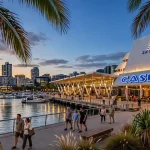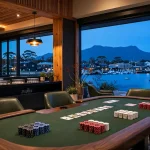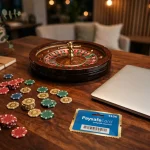
Game rules, theoretical RTP, venue access and Australian online-pokies rules all affect what a South Australia guide can confirm.
“Best” is a slippery label. One player may want simple rules and a steady pace; another may prefer bonus features and more going on between wins. Neither preference makes a pokie objectively better. So when you compare pokies in South Australia, start with what you want from the game rather than trusting a broad label such as “best paying”.
A useful comparison begins with the information attached to the game. Read its paytable and rules before playing: they explain what combinations can pay and how features work. If a return-to-player figure, or RTP, is shown, treat it as a theoretical measure over a large number of plays, not a promise about your own session. It cannot tell you what the next spin will do, or whether you will get a return at all.
There is another detail that can make comparisons less straightforward. A specialist gaming review has reported that some providers let casinos choose among different RTP settings for the same pokie. If that applies, a game with one name may not have the same return percentage everywhere. Check the information for the specific game and venue rather than relying on a figure copied from a general review. No guesswork required.
If you’re looking for pokies options in South Australia in 2026, this list gives you a concise reference point for reviewing operators. Check the details that matter to you before choosing where to play.
Roby Casino
Roby Casino lists a Curacao eGaming license held by Roby Games Ltd.
Wild Tokyo
Wild Tokyo lists a minimum deposit of A$10. Its stated payout times are 30–60 minutes for crypto and 1–5 days for fiat.
Playfina Casino
Playfina Casino lists a Curacao eGaming license held by Hollycorn N.V. since 2017. Its minimum deposit is A$20–30, depending on the offer.
Kingmaker
Kingmaker lists a minimum deposit of A$30. Its stated payout times are around 90 minutes for crypto and 1–5 days for fiat.
MrPacho
MrPacho lists a minimum deposit of A$30. Its stated payout times are 30–120 minutes for crypto and 24–72 hours for fiat.
JustCasino
JustCasino lists a license from the Curacao Gaming Control Board.
Thor Casino
Thor Casino lists a Curacao license from Antillephone N.V. (Versus Odds B.V.). Its stated minimum deposit is EUR 20.
SkyCrown
SkyCrown lists a license from the Tobique Gaming Commission and a minimum deposit of A$30. Its stated payout times are around 10–15 minutes for crypto and 1–5 days for fiat.
LuckyVibe
LuckyVibe lists a Curacao Gaming Control Board license, OGL/2023/176/0095, held by Hollycorn N.V.
Uptown Pokies
Uptown Pokies lists a Curacao license and has been operating since 2017. Its stated minimum deposit is A$20.
That distinction matters when people talk about the best-paying pokies in South Australia. A title’s reputation, a familiar theme or a story about someone’s win does not establish its RTP setting. Nor does a high theoretical return guarantee a better result for an individual player. If the relevant figure is not clearly available, you cannot make a sound comparison on that basis. It is better to leave the question open than to treat a confident claim as proof.
RTP is only one part of the choice, and it is not a forecast. A game may have rules or features you find easy to follow, while another may feel busy or hard to track. Take time to understand what triggers a feature and what the paytable says before staking money. If the explanation is unclear, that is a practical reason to pause, not a puzzle you need to solve while playing.
Most importantly, every spin stands alone. A Random Number Generator determines each result, and one spin does not influence the next. A run of wins does not make a loss “due”; a string of losses does not mean a win is waiting. Past outcomes can make a pattern feel persuasive, but they do not change the random result of the next spin. The machine has no memory to read.
This is why “best pokies in South Australia” should not be read as a ranking that can settle the matter for everyone. Without reliable, game-specific details, a list can give a false sense of precision. I would compare the rules and any clearly stated RTP for the exact version available, then decide whether the game suits my preferences. A title that looks appealing is not automatically the one with the best return, and a higher stated RTP is not a personal advantage you can bank on.
The same approach applies whether you are looking at a pokie in a South Australian venue or considering a game described as an online option. A name or theme alone does not tell you which settings apply, and a broad recommendation cannot substitute for the information attached to the particular game. Keep the comparison focused on facts you can actually check, not claims built around a memorable win or a “hot” streak.
When you see “best”, ask what the word is measuring. Is it a stated RTP, straightforward rules, features you enjoy, or simply somebody’s preference? Those are different standards. A careful comparison separates them instead of rolling them into one promise. And if a description suggests that one pokie is due to pay because it has not paid lately, set that claim aside. Each spin starts fresh.
A venue’s usual schedule is not a reliable answer to whether it is open today. Hours can change, and a listing that looks current may not reflect a temporary closure or a change to the venue’s arrangements. If you are planning a trip for pokies in South Australia, check with the venue directly before setting out. I would treat a search result as a starting point, not confirmation.
The simplest check is to use the venue’s own website or an official social media page, then call if anything is unclear. Look for a recent update rather than relying on a page that only gives general information. If the site lists a phone number, ask whether the venue is open at the time you intend to arrive. A quick call can save a wasted drive.
Be precise about what you are asking. “Are you open?” may get you an answer about the venue as a whole, not necessarily the part you plan to visit. Ask whether the relevant area is accessible to patrons and whether anything has changed for that day. You do not need to explain your plans in detail; you just need a clear answer before you leave.
Opening information can appear in several places: a venue’s own website, social channels, map listings, booking pages or third-party directories. These do not always update at the same time. If two sources disagree, give more weight to the venue’s direct confirmation than to a copied listing. If no direct update is available, calling is the safer option.
Pay attention to the date attached to an announcement. A post about a closure or changed arrangements may refer to a past occasion, while a standing page may not mention a temporary change at all. If the information is ambiguous, do not assume it applies to today. Confirm with staff before travelling.
Map apps are useful for finding a contact number or checking the general status shown online, but their labels are not a promise that the doors will be open when you arrive. Nor does a venue’s normal schedule prove that every area or service is available. Treat those details as clues to verify, not the final word.
Before calling, have the venue name and your intended arrival time in mind. Then ask a direct question: “Can you confirm you’ll be open when I arrive?” If you are making a longer trip, you can also ask whether there are any temporary changes that could affect your visit. That gives staff a chance to clarify details a generic listing cannot cover.
If nobody answers, try the venue’s official online channels or check for a recent notice. Do not take silence as confirmation. If you still cannot establish the current status, consider delaying the trip until you can speak to someone. It is a small inconvenience compared with arriving to find the information was out of date.
Keep the answer in context. A staff member confirming that the venue is open does not necessarily confirm that every facility is available or that arrangements will remain unchanged for the rest of the day. If you are travelling later, ask about the time you expect to get there rather than relying on a check made much earlier. For a visit planned around a particular activity, ask whether that activity is available, too.
A result marked “open now” can be wrong, especially if it comes from a directory that the venue does not manage. It may also reflect the venue’s general trading status rather than the specific area you intend to visit. Check the source, look for a recent update and, when in doubt, contact the venue itself.
The same goes for searches for early or late access. A search result may show a schedule, but it does not tell you whether there has been a temporary change. This is not a reason to assume a venue is closed; it is a reason to confirm before you make the trip. Straightforward enough.
I would also avoid relying on an old screenshot, a past review or a friend’s recollection as proof of today’s status. Those can help you identify a place or a contact route, but they cannot confirm current arrangements. The venue is the best place to ask.
Before leaving, make one final check if your plans depend on the visit going ahead. Use a direct source, ask about your expected arrival and make sure the answer refers to the day you are travelling. That is the practical way to find out whether a South Australian venue is open now: confirm with the venue, rather than treating an online label as a guarantee.
If you are looking for pokies near a South Australian airport or in a central business district, start by pinning down the place you mean. “Near the airport” could mean somewhere close to your terminal, or a venue elsewhere on the route into town. Those are different trips, even if both sound nearby on a phone screen.
For an airport search, set the map around the airport entrance or the point where you will be picked up, then look at the route to any venue you are considering. A pin that appears close in a broad map view may sit on the other side of a main road, beyond an industrial area, or in a direction you would not otherwise travel. Check the actual route and transport options, rather than judging by the map’s zoom level.
The same applies if you are arriving by air and heading into the Adelaide CBD. Decide whether you want to stop on the way or reach the city first. Then compare the route from your arrival point with the route to the place you are staying. It is an easy detail to miss when you search only for “pokies near me”: your phone may be using your current location, not the airport, hotel or suburb you have in mind.
For the CBD, be precise about the area. A result described as central may be outside the part of town you plan to visit, or inconvenient from your accommodation. Search around a recognisable street, landmark or public transport stop, then check the walking or driving route. If you are travelling with someone, agree on a meeting point before you set off. “Somewhere in the centre” is a poor meeting plan.
Finding a Venue
Set the map
Center your map around the specific terminal, street, or landmark you intend to visit.
Verify the route
Check the actual driving or walking path to ensure the venue is not blocked by industrial areas or main roads.
Confirm the address
Match the map pin with the full street address on the venue's own official listing.
The same map-first approach works for suburbs and regional locations. If you are looking in northern South Australia, use the town or locality name as well as the state. That narrows the map to the place you actually mean instead of pulling in results from a wider region. If you are near the Victorian border, make sure the result is on the side of the border you intend to visit. A short location label can be ambiguous; the full address is clearer.
Some place names can also point you outside South Australia. Parkes, for instance, is in New South Wales, so a result tied to that name is not a South Australian location. If a listing seems out of place, check its address and state before planning around it. The same goes for abbreviations: a mention of “Vic” may refer to Victoria, not a South Australian suburb or district.
I would use a map to establish where a venue is, then check the venue’s own listing for its full address. A map pin is a useful starting point, not proof that the listing is current or that the name has been matched correctly. Be wary of results that omit a street address or show a broad area rather than a precise location. If the address is unclear, contact the venue directly before travelling.
That keeps the decision practical: choose the area first, confirm the address, and work out how you will get there. “Near me” is only useful when your device is actually in the place you mean.
Searching for online pokies while you are in South Australia can make the options look much like a local casino menu: real-money games, bonus offers, high betting limits and claims about generous payouts. The legal position is different. A website being available on your screen does not make its gambling service lawful in Australia.
The Interactive Gambling Act 2001 prohibits operators from providing real-money online casino games, including pokies, to people physically located in Australia. No Australian licence has been issued for an online casino, so there is no locally licensed online casino where you can play pokies for real money. That is the key distinction between online play and visiting a land-based venue: the rules governing an online service do not become local simply because you are in South Australia or the site mentions the state.
The law is aimed at the operators, not at individual players. Australians are not criminally liable simply for playing on an offshore site that accepts them. But that does not mean an offshore casino has Australian approval or that you have the protections you might expect from a local service. Legal exposure and practical risk are separate issues.
The practical risk is clearest when something goes wrong. If an offshore casino refuses to pay winnings, Australian players have no legal recourse in Australia to make it pay. A polished website, familiar-looking games or a promise of a no-deposit bonus does not change that position. Nor does a claim that a pokie is among the best-paying games available to South Australian players. An advertised return or bonus is not a guarantee of a win, and it does not supply a local regulator or a way to recover withheld money.
Legal Risk
Real-money online pokies are prohibited for operators under the Interactive Gambling Act 2001, leaving players without legal recourse in Australia if disputes arise.
I would treat offers for online pokies near South Australia with the same caution. “Near” describes a search phrase, not a legal category: a remote gambling service is still an online service, wherever its operator is based. Likewise, labels such as “high-limit” or “maximum bet” describe how a site presents its games; they do not establish that the operator is licensed in Australia.
The law does not turn on whether you use a bonus, play without one, or stake a small or large amount. A promotion can make a site look more inviting, but it cannot create an Australian licence. And because no such online-casino licence exists here, there is no local licensed option to verify against.
That leaves a simple but important distinction. Real-money online pokies offered to people in Australia are prohibited services for operators under the federal law. An individual player is not the target of that prohibition, but choosing to play offshore can leave you without an Australian remedy if a dispute arises. Attractive terms are not much comfort when there is nowhere local to take the dispute.
A venue is more than a room with pokies. It also has responsibilities when gambling may be causing harm, and those safeguards are worth considering when you choose where to spend time. They do not tell you which place has the “best” pokies; they tell you something about how a venue is expected to respond when a patron appears to be struggling.
A report published by regionriverina.com.au says that, from 1 July, venues operating more than 20 gaming machines must have a dedicated responsible gambling officer (RGO) on duty while those machines are running. The report also describes a one-month grace period for venues to remove signage and introduce the officers. Treat those details as a reported change, not as proof that every South Australian venue has the same arrangements. The practical point is to look for clear, accessible information about who patrons can approach if they need help.
An RGO is a venue-level contact for responsible gambling concerns. If you want to understand what support is available, ask staff who handles those concerns and how to speak with them. You should not have to guess which person to approach. A calm, direct answer is more useful than a poster that simply tells people to gamble responsibly.
The same report says venues will be required to keep a gambling incident register. It is intended to record occurrences that may indicate a patron is at risk of, or affected by, gambling harm. That makes the response to behaviour part of venue practice, rather than something left entirely to a patron to manage alone. A register is not a guarantee that harm will be prevented, but it gives the venue a way to record concerns and take them seriously.
There are also practical details in how a venue communicates with patrons. Signage directing people to gaming areas should not be placed where it is in the line of sight of ATMs or EFTPOS terminals. Signs pointing patrons to ATMs should likewise not be visible from gaming machines. These are small placement rules with a sensible purpose: avoid steering people between access to money and gambling.
When comparing South Australia pokies venues, I would look for straightforward answers about staff support and responsible gambling procedures before treating atmosphere or machine choice as the whole story. If a venue cannot explain who is available to help, that is useful information in itself. The safeguards matter.
A venue that serves patrons late is not automatically a place where the pokies run through the night. When you are planning around a late finish, treat the venue’s general opening hours and the hours for gaming as separate details to confirm. A headline or map listing can make a place look like an all-night option while leaving the practical question unanswered: will the gaming area be operating when you arrive?
I would not build a trip around the phrase “24-hour pokies” alone. Check the venue’s own current information and look for hours that apply specifically to gaming, rather than relying only on a broad listing for the building, bar or dining area. If the information is unclear, contact the venue and ask directly whether its pokies will be available at the time you plan to visit. A quick call beats a long detour.
Pay attention to the day as well as the time. Hours shown for one day may not apply to another, and public holiday or special-event arrangements can be different. If you are travelling late, check the date you intend to go rather than assuming the regular schedule covers it. Keep the answer handy if you are coordinating a ride or meeting someone; a vague “open late” is not much of a plan.
There is another small distinction worth making: a venue may be open while a particular part of it is not available. Ask about the gaming area, not just whether the doors are open. That is the detail that matters if pokies are the reason for the visit.
For South Australian pokies opening hours, rely on information from the venue itself and check again before setting out if your plans depend on a late session. Listings can be useful for finding a starting point, but they are not a promise that machines will be operating at a particular hour. Nor does a search result describing a venue as open all night settle the question for every day or every area inside it.
So, if you are looking for a venue that stays open overnight, make the hours part of your plan rather than an assumption. Confirm the schedule for the exact night, verify that gaming is included, and have another plan if it is not. Less guesswork, fewer wasted kilometres.
Crown-related searches can leave you with a name but not a clear answer about what is available in South Australia. A reference to Crown does not, by itself, establish that there is a Crown venue in the state or that Crown pokies are available at a particular local venue. Check what the listing actually identifies before planning around it.
The same care applies to phrases such as “Crown casino” or “Crown pokies”. A result might refer to a venue outside South Australia, use Crown as part of a broader description, or point to information that does not establish a local machine offering. Read the location and venue details, rather than relying on the headline or a snippet.
If you are trying to find a particular room, make sure the venue’s own information connects the Crown name with a South Australian address and with pokies on site. If those details are not clear, contact the venue and ask directly. That is more useful than travelling on the strength of a vague directory entry.
“Best pokies room” is another phrase that needs unpacking. It might mean a room someone prefers, a venue with a certain atmosphere, or simply a place with pokies. The label does not tell you what machines are there, what their settings are, or whether the room suits what you want. I would treat it as an opinion, not a confirmed comparison.
The same goes for claims about a maximum cash payout on Crown pokies in South Australia. A figure without clear context can be misleading: it may refer to a different machine, venue, location or set of conditions. Don’t assume one number applies to every pokie or to a Crown-branded venue in this state. If a payout rule matters to you, ask the venue how it applies to the specific machine and check the displayed game information before playing.
There is no shortcut in the name. Confirm the South Australian location, the venue’s connection to Crown and the details of the particular pokie you have in mind. If any of those points are unclear, pause rather than filling in the blanks yourself. A familiar brand is not a local address.
If you are looking for pokies in a South Australian CBD club, separate two things: whether a particular club has gaming machines, and whether its setting suits you. A club’s name or location alone does not answer the first question. Check the club’s own current information, or contact it directly, and ask specifically whether pokies are available to guests. That is more useful than relying on an old directory entry or a passing mention online.
I would also clarify any conditions before setting out. Ask whether access is limited to members or guests, and what identification or sign-in process applies. Those are club-specific details; do not assume that one venue’s arrangements apply to another. If you are comparing clubs, use the same questions each time rather than treating a search result or a polished venue page as a recommendation.
“Best” is personal here. You might care about the atmosphere, accessibility, food, or whether you feel comfortable in the club. None of that tells you the likely result of a spin. Each pokie spin is an independent random event, so a machine’s recent results do not make a future win due.
If gambling is becoming difficult to manage, ask the club what self-exclusion process it offers and how to use it. Deposit limits, loss limits, session time limits and self-exclusion are standard responsible-gambling tools, but you should confirm the actual arrangements with the venue rather than assume they are identical everywhere. Make the request before you play, not after a difficult session. A clear boundary helps.
BetStop is a separate service: it applies to Australian-licensed operators and does not bind offshore sites. It should not be treated as confirmation of a club’s own exclusion arrangements.
For a CBD club, the practical check is simple: confirm that pokies are offered, establish the entry conditions, and decide in advance what boundaries you want to keep. Avoid relying on machine counts, rankings or claims about which club pays best unless you can verify what they mean and where the information came from. A claim about past payouts cannot predict what happens on your next spin.
Cashless pokies and online payments are different things. A payment option used on a website does not tell you whether a pub, club or casino venue has machines that accept cashless play. Nor does it establish how a land-based machine works or what payment arrangements a venue offers.
That distinction matters if you are looking into cashless gaming in South Australia. The phrase can refer to different arrangements, so pin down what you mean before relying on a venue’s description: are you asking whether a pokie can be played without inserting cash, or whether you can pay for something at the venue without cash? Those are not necessarily the same feature.
I’d check directly with the venue about the specific machine or process you have in mind. Ask what payment method is accepted, whether it is available for pokies, and what steps are involved. A general reference to “cashless” is not enough to answer those practical questions.
Don’t use online casino payment methods as a shortcut to that answer. PayID, for instance, is a way to transfer money through Australia’s New Payments Platform; its existence says nothing about a pokie on a venue floor. Online payments and land-based gaming are separate arrangements. Simple, but easy to mix up.
If you are comparing venues around South Australia, keep the question specific and confirm the details with the venue before setting out. That is more useful than assuming a cashless option is standard—or assuming that a payment method you know from elsewhere applies to local pokies.
You must be at least 18 to gamble in Australia, including at a venue with pokies. If you are choosing a place to play in South Australia, keep that age requirement in mind and take a moment to decide what boundaries you want before you start.
Deposit limits can cap how much you put in; loss limits can set a ceiling on what you are prepared to lose; and session time limits can help you keep track of how long you have been playing. Self-exclusion is another standard option if you need to stop access to gambling. These tools work best when you choose limits in advance, rather than changing them in the middle of a session because you want to keep playing.
I find it useful to treat a limit as a firm stopping point, not a target to reach. If you notice yourself chasing losses, borrowing to gamble, or struggling to stop when you intended to, step away and seek support. A break is often the clearest next move.
BetStop is a self-exclusion service, but it only applies to Australian-licensed operators. It does not bind offshore gambling sites, so do not assume registering there will block access to every gambling service. That distinction matters when you are setting boundaries.
Whether you are comparing pokies in South Australia or already at a venue, decide your spending and time limits before play, and stick to them. If a tool is offered, read what it covers and how to activate it; do not assume one limit automatically controls every form of gambling. Small decisions made beforehand can be easier to keep than rules improvised after a session has begun.
You must be at least 18 years old to gamble online in Australia.
Australian players can legally play on offshore sites that accept them, but companies cannot legally offer real-money online pokies to Australians without a domestic licence, and none have been issued. If an offshore casino refuses to pay, you have no legal recourse in Australia.
It is the amount you must bet before bonus winnings can be withdrawn, usually expressed as a multiplier. For example, a 40x requirement on a $500 bonus means you must place $20,000 in bets before withdrawing winnings.
Yes, PayID is treated like any other qualifying deposit method at the recommended sites, so it qualifies when the offer’s deposit conditions are met.