A practical overview of crash-game mechanics, Australian access rules, payments, free play and limits on strategy.

A crash game strips a casino round back to one moving number and one decision. A round begins, a multiplier rises, and you choose when to cash out. The tension comes from not knowing how long the climb will last: the game can crash before you act, or you can leave earlier and take the multiplier shown at that moment.
That is the basic idea behind a casino crash game. It is not a reel spinning through symbols, nor a hand of cards dealt against a dealer. The screen usually centres on a rising curve, line or multiplier, with the round’s progress visible as it happens. Your attention stays on that changing figure. No bonus feature or pattern of symbols is needed to explain the central mechanic.
In a typical round, a player places a stake before the action starts. The multiplier begins at its starting point and increases while the round continues. If you cash out while it is still running, the displayed multiplier is applied to your stake to determine the return. The longer you wait, the larger that potential return becomes. But the multiplier does not promise to keep climbing: if the crash arrives first, a player who has not cashed out loses the stake for that round.
Choosing a crash casino game in Australia in 2026 calls for more than a quick look at the game itself. Use this list as a reference for the operator details provided, and check the terms that matter to you before signing up.
Roby Casino
Roby Casino is listed with a Curacao eGaming license held by Roby Games Ltd. You can use that licensing detail as a starting point when assessing the operator.
Wild Tokyo
Wild Tokyo is listed with a Curacao license, a minimum deposit of A$10, and stated payout times of 30–60 minutes for crypto and 1–5 days for fiat. These details give you a snapshot of its licensing, entry deposit, and withdrawal timing.
Playfina Casino
Playfina Casino is listed with a Curacao eGaming license held by Hollycorn N.V. since 2017. Its stated minimum deposit is A$20–30, depending on the offer.
Kingmaker
Kingmaker lists a minimum deposit of A$30 and payout times of about 90 minutes for crypto and 1–5 days for fiat. Check the applicable payment terms before you deposit.
MrPacho
MrPacho lists a minimum deposit of A$30, with stated payout times of 30–120 minutes for crypto and 24–72 hours for fiat. You can use these figures to check whether its stated payment options suit you.
JustCasino
JustCasino is listed with a Curacao Gaming Control Board license. You can consider that licensing information when reviewing the operator.
Thor Casino
Thor Casino is listed with a Curacao license from Antillephone N.V. (Versus Odds B.V.). Its stated minimum deposit is EUR 20.
SkyCrown
SkyCrown is listed with a Tobique Gaming Commission license and a minimum deposit of A$30. Its stated payout times are about 10–15 minutes for crypto and 1–5 days for fiat.
LuckyVibe
LuckyVibe is listed with a Curacao Gaming Control Board license, OGL/2023/176/0095, held by Hollycorn N.V. You can use those details as a reference when checking the operator.
Uptown Pokies
Uptown Pokies is listed as operating since 2017 under a Curacao license. Its stated minimum deposit is A$20.
That creates a compact trade-off. Cashing out early can secure a smaller return; waiting can produce a larger one, but leaves more room for the round to end before you exit. The choice is made in real time rather than after a reel has stopped or a completed hand has been settled. A rising number looks simple. The decision is not.
The word “crash” refers to the sudden end of the climb. The exact presentation varies between games, but the important point is that the round has a stopping moment, and a cash-out must happen before it. Once the round ends, a late click cannot change its result. This makes timing part of the interface, not just decoration around a conventional casino game.
A useful comparison is a reel-based game. In a slot-style game, you generally set the stake, start the spin, and wait for the reels to stop; the symbols and the game’s rules determine the result. In a crash round, the multiplier itself is the focal point, and the player chooses when to end their participation in the rising sequence. One format asks you to read a settled outcome. The other puts a decision in the middle of an unfolding round.
That difference can make crash games seem more hands-on. You may be watching the multiplier rise and judging whether to cash out, rather than waiting for a spin to finish. But having a choice to make does not mean you control where the round ends. The interface shows the climb; it does not give you a reliable way to know when the crash will occur. A fast decision is still a decision under uncertainty.
The round’s simplicity can also make it easy to misunderstand. A multiplier that has risen for a while can look as if it is “due” to continue, while a low multiplier can look as if a bigger one must be coming. Neither impression changes the next round’s outcome. The number on screen describes what is happening now; it is not a forecast. This is the point where a clean interface can make uncertainty feel deceptively manageable.
You may also see two participants or betting fields on a single screen, depending on the game. That does not alter the central mechanic: a stake is in play, the multiplier rises, and cashing out before the crash is what determines whether the player leaves with a return. Other interface details can differ, so it is worth understanding the particular game’s rules before interpreting its display. The core idea remains the same.
For someone who has only seen pokies, the easiest mental picture is not “a slot with a different theme”. Think of a rising multiplier that keeps offering a choice: take the current return, or remain in the round and accept the possibility that it ends first. That is why the casino crash game feels distinct from a conventional reel game even when both are presented on a casino-style screen.
Legal Warning
Under the Interactive Gambling Act 2001, it is prohibited for operators to provide real-money casino-style games to people physically located in Australia.
In Australia, the phrase “crash casino game” describes a format people may encounter in online gambling searches, not a guarantee that a game is lawful to offer here. The mechanic itself is straightforward to describe, but the surrounding legal and access context matters. And it is still gambling: outcomes can mean losing money, and gambling can cause serious harm, particularly for vulnerable people. Players must be at least eighteen to gamble. The animation is the easy part.
A “best” crash game sounds like a neat thing to rank. In practice, the label tells you very little. Two games can share the same rising-multiplier idea and still differ in their presentation, controls and published rules. Without reliable, comparable information about particular titles, a numbered table would look useful while telling you almost nothing.
I’d start by separating the game itself from the place presenting it. A casino may offer several crash-style titles, but that does not make the games interchangeable, or make the venue a good choice. A familiar name, colourful rocket or polished screen is not evidence of better terms. Nor does a list of titles, by itself, tell you how a round works.
The useful comparison is more modest: what does the game clearly explain before you interact with it? Look for rules that describe when a round begins, how the multiplier changes, what ends the round and what happens if you do not cash out in time. Those details should be understandable without relying on a promotional slogan. If the explanation leaves you guessing about a basic outcome, that is a reason to pause, not a puzzle you need to solve with a larger stake.
The interface matters because the decision window can feel hurried. Check whether the cash-out control is easy to identify, whether the game shows the current round state clearly, and whether instructions distinguish your own action from the round ending. If the screen is crowded with flashing effects or competing buttons, it may be harder to follow what you are doing. A rocket theme is decoration; it does not make the rules clearer.
Also notice whether the game explains its available settings in plain language. You should be able to tell what a control changes before using it. Labels that sound like features but do not explain their effect are not much help. This is not a claim that a particular layout is safer or more profitable. It is simply a way to judge whether the interface lets you understand the choices it presents.
A game may be described casually as a crash slot or a rocket crash game, but those labels do not establish how it is built. “Rocket” might describe the artwork, while “crash” points to the rising multiplier and sudden end. Read the actual rules rather than assuming that a familiar theme means familiar mechanics.
When you compare two descriptions, ask the same questions of each: Are the round rules explicit? Are the controls labelled clearly? Can you tell what happens when the round ends before you act? Does the description explain the game’s limits, rather than relying on claims about excitement or big wins? Keeping the questions consistent is more useful than scoring games by flashy features.
Be cautious with claims that a title is the best, most generous or easiest to win. Those are promotional judgements unless they are backed by clear, relevant evidence. A high multiplier shown in a headline does not tell you how often it appears, and an attractive theme says nothing about the likelihood of a particular result. Marketing copy is not a comparison method.
The same applies when you see a crash-game demo mentioned. The word “demo” alone does not tell you what the version includes or whether it behaves like any real-money version. It may show you where controls sit, but a sample experience cannot establish what future rounds will do. The controls are learnable; outcomes are not something a display can promise.
I would not rank named games from theme names or screenshots. That would give a false sense of precision. If a title’s rules are hard to find, or the description leans on spectacle instead of explaining the round, you have learned something important about how clearly it is presented. Not a verdict on its results.
For a reader looking for a crash game, the practical comparison is therefore about transparency and usability, not a trophy for “best”. Read the rules, inspect the controls and treat broad claims with care. No clever label turns uncertainty into an edge.
An online crash game may look like a simple browser game, but offering it for real money to people in Australia puts it in the online casino category. Under the Interactive Gambling Act 2001, operators cannot provide real-money casino-style games to customers who are physically in Australia. That covers crash games as well as familiar casino formats such as poker, blackjack, roulette and pokies.
The rule is about the service offered here, not just where its operator is based. Offshore casinos may accept Australian payments while holding a licence from another jurisdiction, but that does not make their real-money casino service lawful to offer to Australians. Nor does an overseas licence turn it into a locally regulated Australian casino. The legal target is the operator; Australians are not criminalised simply for using an offshore site.
That distinction matters. A site appearing online, or accepting an Australian payment, is not proof that it is authorised to provide casino games here. There is no local legal online casino market for real-money crash games to sit within. And an operator’s promotion of such services to Australian audiences is prohibited too.
The Australian Communications and Media Authority, or ACMA, is the federal regulator responsible for enforcing the Interactive Gambling Act and overseeing compliance with federal interactive-gambling rules. One of its practical tools is website blocking. When a site provides prohibited gambling services to Australians, or advertises them here, ACMA can ask internet service providers to block access.
That is why an offshore casino page can disappear from an Australian connection even if the operator is still active elsewhere. Blocking follows enforcement action; it is not a guarantee that every prohibited site has vanished from the internet. ACMA says it has blocked more than 1,455 illegal gambling and affiliate websites since November 2019.
There is also a reported count of services that have left the Australian market after enforcement began in 2017, but published figures disagree. One account puts the total above 210; another reports more than 190. In both versions, the count refers to services withdrawing from Australia, not to a new permission for others to operate.
ACMA Enforcement
The ACMA can request internet service providers to block access to sites that provide prohibited gambling services or advertise them to Australians.
The Act also carries substantial daily penalties for breaches: up to A$360,000 for an individual and A$1.8 million for a corporation. Those penalties concern people and companies violating the law; they do not mean a player faces that fine merely for visiting an offshore casino.
If a site labels its offering an online crash casino, the label does not change the Australian position. A rising multiplier, a plane animation or a different name for the game does not take a real-money casino service outside the law. The relevant point is whether an operator is offering prohibited interactive gambling to people in Australia.
ACMA’s blocking actions are part of how that restriction is enforced, alongside action against operators and advertising. Access can therefore be interrupted, and a site’s availability at one moment should not be mistaken for legal approval. If you are under 18, gambling is not for you; and for adults, the fact that a foreign site can be found or accepts a payment does not make its casino games lawful to offer here.
The line is straightforward, even if the internet makes it look blurry: Australian law restricts operators, and ACMA has tools to act on that restriction. A plane-crash theme does not change the rule.
A crash game and a pokie can share a casino setting, bright graphics or even a similar theme, but they do not play the same way. In a crash game, a multiplier rises during a round and you decide when to cash out before the round ends. A pokie spins reels and resolves a result from its symbols and rules. One asks you to make a timing decision; the other is built around spins.
That distinction helps when a game’s name includes words such as “thunder” or “crash”. A slot with a crash-themed title is still a slot if its play is based on spinning reels. A crash game is defined by its rising multiplier and cash-out point, not by its artwork. The label alone can be misleading.
The same goes for a casino simulator: the phrase might describe a practice environment, a slot-style product or a crash-game interface. Look at what happens during play rather than assuming the title tells you the format. If you see reels and symbol combinations, you are looking at slot-style play. If you see a multiplier climbing and a decision about when to exit, that is the crash mechanic.
Pokies also have details that do not map neatly onto crash games. One is return to player, or RTP: a theoretical percentage describing how much a slot is designed to return over extensive play. It is not a promise about what you will get from a particular session. KA Gaming slots are reported with RTP figures typically between 94% and 96%. That range relates to those slots, not to crash games generally, and it cannot predict an individual result.
Progressive jackpots are another slot feature. The prize grows as people play machines connected to the same jackpot. Some progressives are local to a single machine; others link many machines or a wider network, which can include an online operator’s fleet. The jackpot structure tells you how the prize builds, not how likely you are to win it.
Attention: A progressive jackpot may require a specific minimum bet or contribution rate to qualify; not every spin necessarily contributes.
There can also be conditions for qualifying. A specialist review advises checking both the contribution rate and the minimum bet for a progressive jackpot. Those terms matter: a game may have a jackpot displayed, but your wager may not qualify unless it meets the stated conditions. Read the specific rules rather than assuming every spin contributes in the same way. Small print, large consequences.
These slot details should not be borrowed to judge a crash game. An RTP figure for a slot says nothing about a crash game’s multiplier or when a round will end. Likewise, a progressive jackpot is not the same thing as a crash-game payout. They are different formats with different rules.
If you are comparing what a game actually is, start with its core action, then read the rules attached to that format. Keep play to adults aged 18 or over, and remember that gambling can cause serious harm.
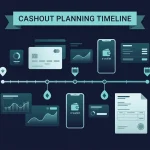
When a crash game page mentions crypto, it is easy to focus on how quickly a withdrawal might arrive. That is only half the calculation. The amount that reaches your wallet can be lower than the balance you asked to withdraw, because network fees and conversion spreads affect the final result.
A specialist review describes crypto withdrawals as often clearing fastest. That is a reported tendency, not a promise about a particular payment or service. Processing can involve more than one step: a withdrawal is authorised, sent through a blockchain network and, if you want to spend it in Australian dollars, converted afterwards. Each step can affect timing or value.
The network fee is charged for processing a transaction on the relevant blockchain. Its size can vary with network conditions and the currency being sent. A conversion spread is different: it is the gap between the exchange rate used for the conversion and the rate you might see elsewhere. Even if the withdrawal itself clears quickly, that gap can leave you with less in dollars than a simple balance calculation suggests.
Before treating the displayed amount as what you will receive, check the payment terms and the withdrawal screen. Look for whether a fee is taken from the amount sent, whether conversion happens before or after the transfer, and which exchange rate is applied. If the service shows a final amount after deductions, compare that figure with the original balance. If it does not, you cannot work out the net result from the headline balance alone.
There is a practical distinction between speed and value. A transfer may arrive promptly but still cost more than expected once fees and conversion are accounted for. Conversely, a slower payment method is not automatically worse if the amount received is clearer. Compare the net amount and the stated processing conditions, not just the word “fast”.
Crypto can also make a balance harder to read if the page displays it in one currency while your wallet or bank account uses another. Treat the displayed figure as a starting point, not a guaranteed cash equivalent. Check the currency at each stage, and do not assume the exchange rate will remain unchanged between requesting a withdrawal and converting the funds.
Net returns are affected by network fees charged for blockchain processing and conversion spreads, which is the gap between the exchange rate used and the market rate.
That is the payment question behind searches for crash games with crypto options: not whether crypto makes a game better, but what arrives after the transfer is complete. Fast is useful. Net matters more.
When people talk about Bitcoin and crash games in the same breath, two separate things can get muddled: how money is transferred and how a game round works. Bitcoin belongs to the payment side. It does not change the game’s rules, tell you when to cash out or improve the chance of a particular result.
That distinction matters whether you have come across a crash game described as a Bitcoin casino game or one advertised with a balloon or chicken theme. The theme is a label for the game’s presentation; Bitcoin is a payment method. Neither tells you what the multiplier will do in a round. A chicken on screen is not a forecast. Dry, but worth remembering.
I’d keep the questions separate. First, what does the game itself show you, and what decisions does it let you make? Separately, what payment conditions apply, including fees and any conversion between currencies? A payment option cannot answer the first question, and a game’s theme cannot tell you what you will receive after a payment is processed.
Nor does the word “Bitcoin” guarantee that a transaction will be quicker, safer or more favourable. The time and amount received can depend on the payment route and its costs. Treat any claim about those details as something to check in the relevant terms, not as a feature of the crash game. The same goes for claims that using Bitcoin somehow gives you an edge: a payment method is not a betting system.
There is also an Australian context that a payment label does not erase. The Interactive Gambling Act 2001 restricts operators from providing real-money online casino games to people in Australia. Using cryptocurrency does not turn an online casino game into a different kind of service or make the rules disappear. The legal position concerns the service being offered, not just the currency used. Players themselves are not criminalised for using offshore sites, but that does not make those services lawful for operators to provide here.
So, if you are looking at a crash game with a balloon or chicken motif, judge the description as a game description—not as a promise attached to Bitcoin. If you are considering any gambling, you must be at least eighteen, and remember that gambling can cause serious harm, particularly for people who are vulnerable. Keep the payment question and the game question in separate boxes. One is plumbing; the other is chance.
A free-play screen can be useful for one narrow job: showing you where the buttons are. If you come across a crash-game practice mode, you can see how a round starts, where a cash-out control sits and what information stays on screen as the multiplier rises. That can make the interface less unfamiliar.
It cannot tell you what will happen in a real-money round. A run of practice results is not a forecast, and getting comfortable with a button does not improve your chance of choosing the right moment to cash out. Treat the screen as a controls tutorial, not a rehearsal that reveals a pattern.
I’d pay attention to the small practical details. Is the cash-out control easy to identify? Does the screen clearly show whether a round is active? Can you tell what action you have taken, rather than guessing from a changing display? If the layout feels confusing, that is useful to know before putting money at risk. No need to make a game of the tutorial itself.
The label “free” also deserves a careful read. It may describe play without a cash stake, but it does not tell you what happens to any bonus or promotional balance elsewhere. Bonus funds are not cash, and they can carry wagering requirements before bonus-derived winnings become withdrawable. Read the conditions rather than treating a displayed balance as money you can take out.
There is no reason to assume that every title has a demo, or that a practice screen matches every feature of a paid version. The controls and presentation may differ; the only sensible conclusion is what you have directly seen on that screen. It says nothing dependable about real-money outcomes.
In Australia, real-money online casino services are prohibited for people located here. A free mode should not be read as an invitation to move on to offshore gambling. If gambling is causing distress, it can seriously harm vulnerable people; step away and seek support rather than trying to recover losses. Gambling is for adults aged eighteen or over.
Learn the buttons. Leave the prediction to nobody.
“Cash or crash” can point to two different things. Someone may mean a slot-style game built around a cash-or-crash theme; someone else may be looking for a crash game, where the central feature is a rising multiplier and a decision about when to cash out. The wording overlaps, but the formats are not interchangeable.
That distinction matters when you are trying to understand what a game actually involves. A themed pokie follows the familiar reel-based format, even if its name uses “crash” to suggest risk or sudden change. A crash game is defined by its round structure, not by a slot theme. Adding “casino” or “live casino” to the phrase does not settle the question either: those words alone do not tell you which format is meant.
The local pokies debate is about more than names. Poker machines are a familiar part of Australian venues, and the sums reported around them show why proposed changes attract attention. A report published by gamble.com.au put Victorian poker-machine losses at $2.6 billion for the year it covered. It compared that with 2015, when the figure was more than $44.7 million lower. Those are figures from a particular report and period, not a timeless measure of what players lose.
The same report said the Epping Plaza Hotel in Melbourne’s north generated more than $21 million from 100 machines during the year it examined. That is a venue-level figure, not a description of what any individual player lost. Still, it is a striking concentration of money in one place. Dry numbers, large consequences.
Reform proposals have included a bet cap. Senator Nick Xenophon and MP Andrew Wilkie proposed limiting poker-machine bets to $1. That was a proposal, not a rule you should assume is in force. It belongs to the continuing argument over how machine design and betting limits might reduce harm.
For you, the practical point is simple: check whether a title refers to a themed pokie or to a crash format before drawing conclusions from its name. Neither label makes gambling harmless. Poker-machine gambling can cause serious harm, particularly for people who are vulnerable, so keep the distinction clear—and do not treat either format as a way to make money.
A sensible crash-game strategy starts before a round: decide what you can afford to lose, and treat that amount as entertainment spending, not money you expect to win back. Set a stopping point for the session too. Once you reach either boundary, stop. It is easier to follow a decision made calmly than one made after a run of losses.
The rising multiplier can make waiting feel like a skill. But choosing when to cash out does not give you a reliable way to predict when a round will end. A low cash-out target may feel cautious; holding out for a larger one may feel bold. Neither choice turns the next result into a certainty. There is no dependable winning system hidden in a pattern of previous rounds.
That matters most after a loss. Raising your stake to recover it, or staying longer because the multiplier “owes” you, can turn a small entertainment budget into a larger problem. The game owes you nothing. Take a break if you feel pushed to win money back, and do not borrow or use money set aside for bills.
Before playing, read the rules for the specific game so you know what the controls do and when a cash-out takes effect. Then make your limit fit your own circumstances, not someone else’s staking formula. A strategy can help you keep to a boundary; it cannot change the odds or make gambling a source of income.
Gambling can cause serious harm, particularly for people who are vulnerable. If play is affecting your finances, mood or relationships, step away and seek support. A limit is not a prediction.
“Provably fair” sounds like a firm assurance, but the label alone does not show how a crash game produces or checks its outcomes. It is a claim that needs an explanation behind it, not a substitute for one.
To assess such a claim, you would need to know what information is used to generate an outcome, what is disclosed before and after a round, and how a player can independently check that the published result matches the stated method. The rules should make clear what the check can confirm and what it cannot. If the explanation is vague, or the check depends entirely on the game operator’s own display, the wording does not give you much to verify.
Even a clearly described verification process has limits. It may help establish that a particular result followed a stated procedure; it does not prove that the game is profitable, that a future result can be predicted, or that every part of the service is trustworthy. Fairness and a favourable outcome are different things. A tidy explanation is not a winning system.
I would treat the phrase as a prompt to inspect the method, not as a badge that settles the matter. Look for a precise account of the verification process and whether the steps can be repeated independently. If those details are absent, do not fill the gap with assumptions about encryption or random-number technology. A technical-sounding label is still just a label until its claim can be checked.
For Australians, that wording also does not change the legal status of an online casino service. And no fairness claim removes the risk of gambling harm. If you gamble, you must be at least 18; if it is affecting you or someone close to you, take that seriously. Clear enough.