Winshark games: slots, tables and live casino
 Available in US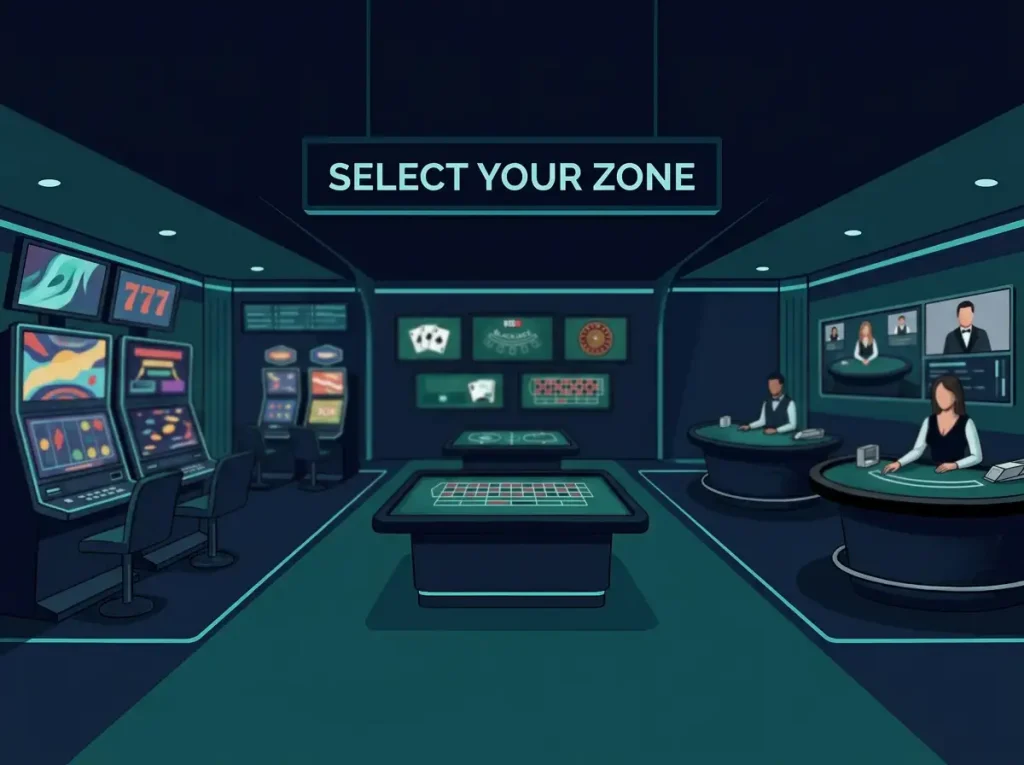
Winshark’s catalogue combines slots, blackjack, roulette, poker-style table categories and live-dealer games under one casino product. The useful way to understand that range is by format and provider rather than by chasing a single total game count. Casino catalogues change as studios rotate titles, so category structure gives a more durable picture of what a player actually encounters when browsing the lobby.
The provider list is broad enough to show that the catalogue is not built around one studio. Pragmatic Play, Play’n GO, Quickspin, BGaming, Yggdrasil, Nolimit City, Evoplay, Ezugi and Playtech all appear in the Winshark provider mix. Live-dealer content includes Pragmatic Play Live and Ezugi, while the wider catalogue spans the core casino formats. That combination makes provider filters and category navigation more useful than a headline total.
Table of Contents
- Major studios appear across the catalogue
- Live dealer tables add a distinct layer to the game mix
- Categories and providers organise the library
- Slots, blackjack, roulette and poker-style tables cover the core formats
- Questions about Winshark games
- The game range is defined by category and provider breadth
Major studios appear across the catalogue
A multi-provider library changes how a casino lobby behaves. Instead of one visual language or one set of mechanics repeating across the whole catalogue, different studios bring different pacing, interface conventions and game families. At Winshark, the named provider lineup includes Pragmatic Play, Play’n GO, Quickspin, BGaming, Yggdrasil, Nolimit City, Evoplay, Ezugi and Playtech.
The practical consequence is that provider navigation can be just as useful as broad game categories. Someone who already knows a studio’s interface or game family can narrow the catalogue quickly, while a player comparing unfamiliar providers can use the studio name as a stable reference point. This is especially helpful when a large lobby mixes slots, table-style titles and live content in the same discovery flow.
Provider breadth also affects how often the catalogue feels repetitive. Studios differ in art direction, volatility patterns, bonus mechanics, table presentation and mobile layouts. Those differences are game-level characteristics rather than a casino-wide guarantee, but a wider studio mix increases the number of distinct design approaches a player can encounter.
On a phone or smaller laptop screen, provider filters can reduce the amount of scrolling needed to find a familiar title family. The same logic works in reverse for discovery: choosing a provider first creates a smaller comparison set, making it easier to compare visual style, game rules and stake controls without jumping across unrelated categories. The catalogue therefore becomes more usable when provider and format filters work as two separate navigation layers.
That two-layer structure also helps when returning to the lobby after a break. A player who remembers the studio but not the exact title can search by provider; someone who remembers only the format can begin with slots, tables or live casino. Neither route depends on a fixed catalogue size, and both remain useful as individual games are added or removed over time.
For browsing, a sensible order is:
- Choose the format first: slots, table games or live dealer.
- Use the provider filter to narrow the result set.
- Open the individual game information panel before playing, because rules and return settings belong to the game itself.
- Keep session limits and payment decisions separate from game discovery.
That last point matters because a broad game library does not change the mechanics of deposits, withdrawals or account checks. Those sit in different parts of the product. The payment methods guide covers the cashier side, while this page stays focused on game selection and catalogue structure.
Live dealer tables add a distinct layer to the game mix
Live casino is a different experience from software-only slots or digital table games. A live-dealer table uses a streamed studio or physical table presentation with a human dealer, while the player interacts through the browser interface. Winshark lists live-dealer content and includes Pragmatic Play Live and Ezugi among the providers associated with that part of the catalogue.
The difference is practical, not merely visual. Live tables usually run on a continuous schedule, seats or table limits can vary, and the pace is tied to the dealer and other table activity. Software-based slots and digital tables can begin immediately and run at the player’s own pace. That makes live casino more session-like, while RNG formats behave more like individual game launches.
When comparing live tables, useful checks include:
- the table game type, such as blackjack or roulette;
- the displayed betting range for that specific table;
- the provider running the studio;
- the language and table presentation;
- the game rules shown before joining.
These checks are more informative than treating live casino as one homogeneous category. Two roulette tables can use different limits, presentation styles or side bets even when they sit next to each other in the same lobby. The same applies to blackjack variants. The catalogue category gets a player to the right part of the product, but the table-level information determines the actual rules of the session.
Live content also places more emphasis on connection quality. Video streaming is heavier than a simple game interface, so a stable connection matters more for the viewing experience. That is a general property of live-dealer play rather than a special Winshark requirement, but it affects how the category feels on mobile networks or slower connections.
Session pace is another useful distinction. A live table has a natural rhythm set by dealing, betting windows and other participants, whereas a digital game can often move as quickly as the player initiates the next round. That difference changes how time is perceived. A 30-minute session can contain very different numbers of decisions depending on the format, so time limits are a more consistent control than trying to compare sessions by round count alone.
For players moving between live and software-based games, it is useful to reset expectations at the category boundary. The interface may look similar in the lobby, but the interaction model changes once a streamed dealer, table availability and betting windows become part of the experience. Treating live casino as its own format makes the navigation clearer and the session easier to plan.
Categories and providers organise the library
The strongest catalogue structure uses two dimensions at once: what type of game the player wants and who made it. Winshark’s mix supports that approach because the catalogue spans several core formats and several named studios. A player can start broad with slots or live casino, then narrow by provider instead of scrolling through an undifferentiated wall of titles.
Category navigation is also useful because the decision criteria change by format. With slots, players usually compare theme, mechanics, volatility information and feature structure at the game level. With blackjack or roulette, rules and table limits carry more weight. With live casino, the provider, studio presentation and table conditions become part of the experience. One universal comparison rule does not fit all three.
| Catalogue area | What defines the format | Useful browsing focus |
|---|---|---|
| Slots | Software-based reel games | Provider, game mechanics and title-level information |
| Table games | Digital blackjack, roulette and poker-style categories | Rules, variant and betting structure |
| Live casino | Dealer-led streamed tables | Provider, table type, limits and live presentation |
This format-first approach also avoids a common catalogue problem: treating every tile as equivalent. A slot, a digital roulette game and a live blackjack table may all appear in the same lobby, but they involve different session rhythms and different information needs. The category label is therefore functional, not decorative.
Provider filters can then act as a second pass. Pragmatic Play, Play’n GO, Quickspin, BGaming, Yggdrasil, Nolimit City, Evoplay, Ezugi and Playtech give the catalogue multiple studio identities. For live casino specifically, Pragmatic Play Live and Ezugi provide named anchors inside the dealer-led segment. Using those filters reduces search time without requiring a fixed count of how many titles are currently loaded.
A useful catalogue habit is to make the filter do the work before opening individual games. Starting with a broad category and then applying a provider narrows the comparison to titles that share at least two relevant traits. That is more efficient than opening many unrelated games one by one, and it keeps the player focused on the part of the library they actually intended to explore.
Search and filter functions also help separate discovery from play. Browsing can be treated as its own step: compare game type, rules and provider first, then decide whether to open a title. This small separation reduces impulsive switching between formats and makes it easier to keep a session within a chosen time or spending boundary.
Slots, blackjack, roulette and poker-style tables cover the core formats
Slots form one major part of the Winshark catalogue, but they sit alongside familiar table-game categories rather than replacing them. Blackjack and roulette are listed, and poker-style table categories add another branch to the software-based side of the lobby. Live dealer then adds a separate presentation layer for players who prefer streamed tables.
These formats differ in how much decision-making happens during a round. Slots are generally driven by the rules and random outcomes built into the game. Blackjack involves player decisions within the rules of the variant. Roulette centres on the structure of the betting layout and wheel outcome. Poker-style casino tables use their own fixed rule sets and paytables. Those differences mean that casino games is a broad product label, not a single type of play.
Before opening a game, the most useful checks are local to that title:
- read the rules or paytable presented by the game;
- check the displayed minimum and maximum stake;
- look for any feature-specific conditions inside the game interface;
- set a session budget before play rather than adjusting it to short-term outcomes.
The last point is especially important across a mixed catalogue. Fast software games can make it easy to move rapidly between titles, while live tables can encourage longer seated sessions. A fixed budget and time boundary create a consistent control that does not depend on the format being played.
Switching formats can also change the feel of risk without changing the underlying need for limits. A slot may present many quick rounds, while roulette or blackjack structures decisions differently and a live table adds social and streaming elements. Because the tempo changes, using the same pre-set session boundary across formats gives the player one constant reference point.
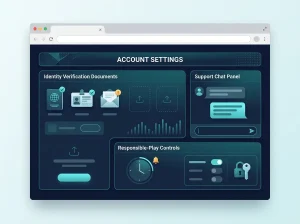
Account-level tools sit alongside those game-level habits. Winshark lists self-exclusion and reality-check functions, and live chat is listed as available around the clock. Those controls belong to the account rather than to an individual slot or table. The account guide explains how verification, support and player-control functions fit together beyond the game lobby.
Questions about Winshark games
Does Winshark have slots?
Yes. Slots are part of the Winshark game catalogue.
Does Winshark have live casino games?
Yes. Winshark lists live-dealer content, including games from Pragmatic Play Live and Ezugi.
Which game providers appear at Winshark?
The provider catalogue includes Pragmatic Play, Play’n GO, Quickspin, BGaming, Yggdrasil, Nolimit City, Evoplay, Ezugi and Playtech among other studios.
What table-game categories are listed?
Blackjack, roulette and poker-style table categories are listed alongside slots and live-dealer games.
The game range is defined by category and provider breadth
Winshark’s casino catalogue is best understood as a combination of core formats and a broad provider mix. Slots, blackjack, roulette, poker-style tables and live-dealer games cover the main ways the lobby is organised, while studios such as Pragmatic Play, Play’n GO, Quickspin, BGaming, Yggdrasil, Nolimit City, Evoplay, Ezugi and Playtech give players several provider paths through those categories. Live content from Pragmatic Play Live and Ezugi adds a clearly different session format from software-only games. For practical navigation, choosing the format first and the provider second gives a clearer route through the catalogue than relying on a changing headline total.