Search listings and payment logos may not reflect account- and location-specific cashier options or confirm how withdrawals work.
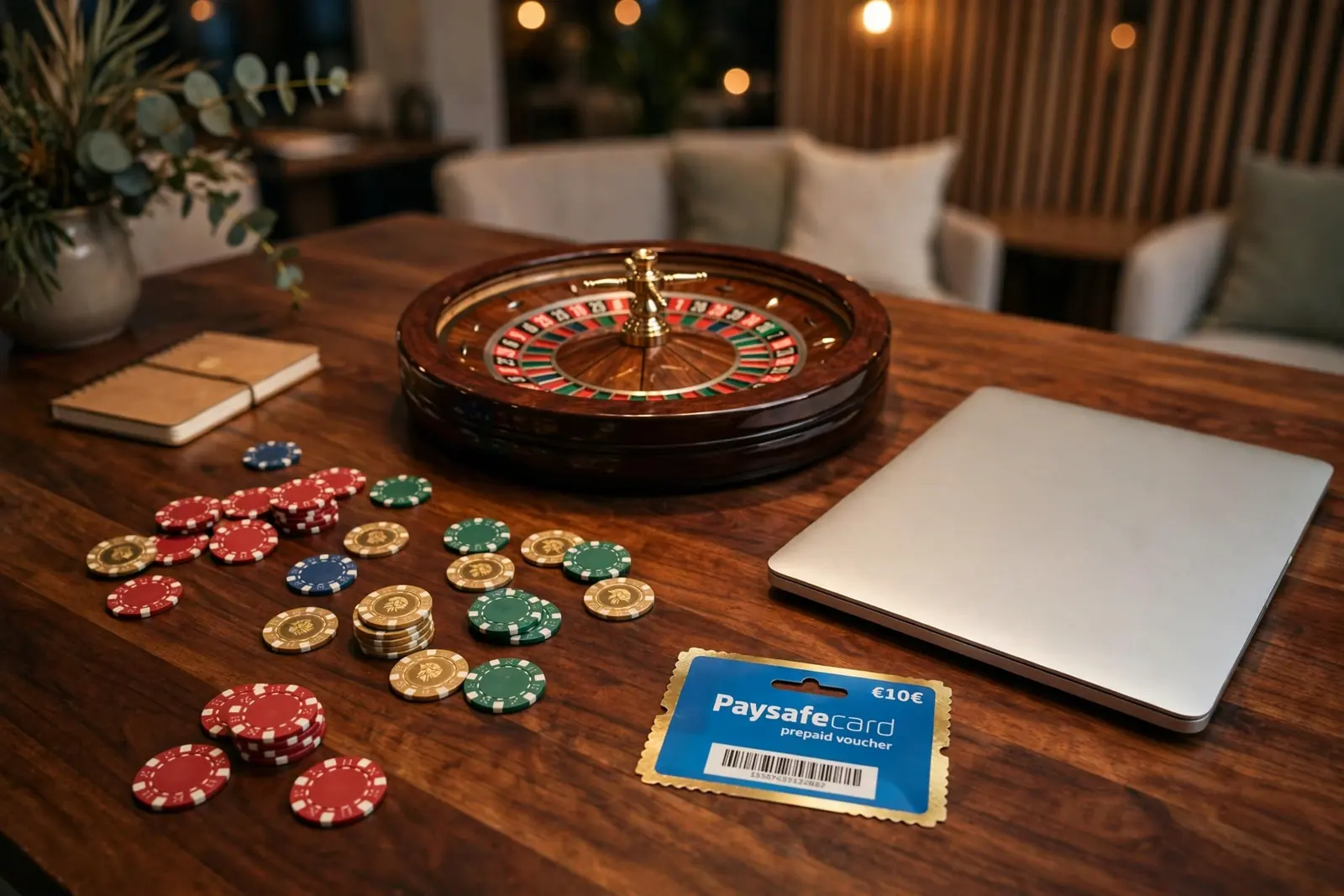
When you look for Australian pokies connected with Paysafecard, you are combining two separate ideas: a type of online gambling and a payment method. That wording can describe what someone hopes to find, but it does not establish that a particular casino accepts Paysafecard. I can’t responsibly name an operator as accepting it.
That distinction matters because a payment method can appear in a search result, an old review, or a general list without being available in a particular cashier. Even a page that uses the words “Australian casino” may be speaking to Australian readers rather than describing an Australian-based service. The label alone leaves too much unclear.
The practical question is not simply whether a site mentions Paysafecard somewhere. It is whether its current payment information identifies Paysafecard as an available option for the relevant account and location. Without that detail, you cannot treat the mention as confirmation. A logo or a broad payment-method description is not the same thing as a working option presented for a transaction.
If you want to use paysafecard at an Australian-facing casino, check that the payment method is currently available to you before depositing. Use these notes to review the operators’ stated details, while confirming payment options and terms directly.
Roby Casino
Roby Casino is listed with a Curacao eGaming license held by Roby Games Ltd.
Wild Tokyo
Wild Tokyo lists a minimum deposit of A$10. Its stated payout times are 30–60 minutes for crypto and 1–5 days for fiat.
Playfina Casino
Playfina Casino is listed as licensed by Curacao eGaming through Hollycorn N.V., since 2017. Its minimum deposit is A$20–30, depending on the offer.
Kingmaker
Kingmaker lists a minimum deposit of A$30. Its stated payout times are about 90 minutes for crypto and 1–5 days for fiat.
MrPacho
MrPacho lists a minimum deposit of A$30. Its stated payout times are 30–120 minutes for crypto and 24–72 hours for fiat.
JustCasino
JustCasino is listed with a Curacao Gaming Control Board license.
Thor Casino
Thor Casino is listed as licensed by Antillephone N.V. in Curacao, under Versus Odds B.V. Its stated minimum deposit is EUR 20.
SkyCrown
SkyCrown is listed with a Tobique Gaming Commission license and a minimum deposit of A$30. Its stated payout times are about 10–15 minutes for crypto and 1–5 days for fiat.
LuckyVibe
LuckyVibe is listed with a Curacao Gaming Control Board license, OGL/2023/176/0095, held by Hollycorn N.V.
Uptown Pokies
Uptown Pokies is listed as operating since 2017 under a Curacao license. Its stated minimum deposit is A$20.
I would also keep “pokies” and “casino” in their proper places. In Australian everyday speech, “pokies” commonly means slot-style games. “Online casino” is broader and may refer to a service offering several kinds of games. A search that joins either term to Paysafecard does not tell you which games or payment functions are actually supported. It expresses a topic, not a confirmed combination.
The word “Australian” needs the same care. It might mean a page is written for people in Australia, uses Australian spelling, or discusses Australian payment habits. It does not, by itself, prove that a service is based in Australia or that its payment options are available to Australian users. Those are different claims, and the wording of a page can blur them.
A mobile reference adds another layer but does not settle the payment question. A site being described as mobile-friendly, or accessible on a phone, says something about how its pages display. It does not show that Paysafecard is supported, nor does it establish that the same payment choices appear across devices. Interface and payment availability are separate matters.
You may see wording that promises a “best” or “new” option. Those labels do not answer the basic question either. “Best” is a judgement, while “new” is a claim about timing; neither one demonstrates that Paysafecard can be used. I would not treat a ranking or a confident headline as a substitute for a clear, current statement about the payment method.
 Skrill Casinos in Australia: Check Payment AvailabilityLearn why a Skrill logo or general payment claim does not confirm cashier availability, and what a displayed option can—and cannot—establish.
 Casinos That Accept Apple Pay in AustraliaLearn why Apple Pay’s everyday use in Australia does not prove casino support, and why deposit options should not be assumed to…
There is a familiar trap here: a page can make a combination sound settled simply by putting the words beside each other. “Australian,” “pokies,” and “Paysafecard” may all appear in the same sentence while the actual relationship between them remains vague. Read the claim narrowly. Does it say that Paysafecard is accepted, or does it merely mention the method while describing casino payments in general? That small difference changes what the statement supports.
The same caution applies when information is repeated across pages. Several mentions can look like confirmation, but repetition does not necessarily mean that each page checked the same detail independently. A copied description can travel a long way. I would look for a direct, specific statement rather than counting how many times the payment name appears.
I also separate a claim about accepting a payment method from any other claim about a casino. One does not prove the other. Knowing that a page discusses Paysafecard says nothing, on its own, about the operator’s games, its wider payment arrangements, or what happens after a transaction. Those are distinct questions and need distinct answers.
So the useful takeaway from this kind of wording is limited: it tells you that someone is looking for a connection between Australian online pokies and Paysafecard. It does not identify a verified casino that accepts the method. Keep the difference between a search phrase and a demonstrated payment option in view. The wording can point you toward a question; it cannot answer that question by itself.
A search for a small Paysafecard deposit can make the payment sound straightforward: choose a casino, enter a voucher and get on with it. The part worth slowing down over is whether the cashier actually offers that method to you, and on what terms. A payment label alone does not answer either question.
Attention: A payment label alone does not confirm that a method is available to you or specify the terms and minimums of a deposit.
If you have a $10 Paysafecard in mind, treat that amount as your budget, not as proof that a casino will accept a deposit of exactly that size. The cashier may show a minimum, a permitted range, or no Paysafecard option at all. Those details belong to the particular operator and can change. Don’t assume that a voucher’s value sets the casino’s minimum, or that a site accepting Paysafecard will accept every amount you might want to use.
A Paysafecard is a payment product; the cashier is where an operator displays the methods it makes available for an account and transaction. Finding a casino described somewhere as “Paysafecard-friendly” does not confirm that the method appears when you check. Nor does a payment logo on a general page tell you whether it applies to Australian customers.
Before putting money aside for a deposit, look for the method in the cashier and read the operator’s own payment terms. Check whether the information is specifically about deposits, rather than a broad list of payment brands. If the wording is unclear, ask the operator to confirm the method and the amount you intend to use before you proceed. A clear answer matters more than a familiar logo.
There is no sound basis for treating a particular figure as a standard Paysafecard casino minimum across sites. Deposit minimums are not interchangeable: a number mentioned in a discussion, review or old page may describe one operator at one point, not the cashier you are looking at now. If the cashier does not clearly state a minimum for Paysafecard, don’t fill the gap with a guess.
 Casino sites that accept BPAY in Australia: what to verifyLearn why reports of Amex deposits at some Australian-facing casinos do not confirm BPAY acceptance, and what current cashier checks can establish.
 Casinos That Accept CashToCode in AustraliaLearn how to verify whether CashToCode is selectable for an Australian account, and why deposit availability does not establish a matching withdrawal…
Keep the checks practical. First, confirm that Paysafecard is actually offered for deposits in the cashier available to you. Then read the terms attached to that option: the accepted deposit amount, any stated charges, and any conditions that could affect whether the payment is accepted. Make sure the terms are current and apply to your account, rather than relying on a general description written for a different market.
Pay attention to the currency shown. A figure displayed in a currency other than AUD may not match the amount you have in mind, and the displayed amount may not tell you how the transaction will be handled. If the cashier does not explain the conversion or final amount clearly, pause rather than assuming the figures line up.
Also check whether the operator requires account verification before it will process financial activity. Online casinos commonly require a Know Your Customer assessment before financial transactions. That is separate from the payment method itself: having a voucher does not tell you whether your account is ready for a transaction. Read the account requirements before making a decision, and use accurate details if you choose to create an account.
If you see a payment method listed but cannot find the minimum, currency or relevant conditions, ask support a direct question and keep the reply. Avoid sending a voucher code or other payment credentials in an ordinary support message. A request for clarification should not require you to expose sensitive payment information.
The appeal of a $10 deposit is that it sets a limit on what you plan to put in. It does not settle whether that amount is accepted, whether a fee applies, or whether the cashier will present the same terms you saw elsewhere. Those are separate points. Don’t infer one from another.
I would make the decision in this order: confirm the cashier lists Paysafecard for your account; confirm the minimum and currency; read the payment conditions; then decide whether the amount and terms suit you. If any of those pieces are vague, leave the transaction there. No need to turn an uncertain payment into a test run.
Search wording can bundle “best,” “accepts Paysafecard” and a specific deposit amount into one neat phrase. In practice, those are different checks. A favourable description does not establish a method’s current availability, and a small intended deposit does not prove that the cashier accepts it. Get the terms from the cashier itself before committing. Better to pause.
A Paysafecard deposit and a Paysafecard payout are separate things. Seeing a payment method mentioned for adding funds does not mean it can also receive winnings. The cashier may treat deposits and withdrawals differently, so don’t read one as proof of the other.
That distinction matters when you’re looking for an instant withdrawal. “Instant” can sound like the whole journey, but a payout may involve more than a payment provider moving money. The operator may first review the request, and the method it permits for withdrawals may not match the one used to deposit. A label alone tells you little about the actual route or timing.
Before relying on any payout claim, look for the operator’s written withdrawal terms and check that they explicitly cover Paysafecard. Read the section about withdrawals, not just a general payments page or a deposit prompt. If the wording is unclear, treat it as unclear; don’t fill the gap with an assumption based on what happened when money went in.
 Casino Sites That Accept Credit Cards in AustraliaAmex deposits are available at some Australian-facing casino services but not others. Learn how acceptance varies and what to check before paying.
 Casinos That Accept Google Pay in AustraliaLearn how Google Pay fits Australian payment habits, why a payment listing may not confirm availability, and what to check about deposits…
A fast-sounding label is not a processing commitment by itself. Check what the operator means by it: does it describe the time to approve a request, the time for a payment to be sent, or the time until you can actually access the funds? Those are different stages. Without a clear definition and stated conditions, “instant Paysafecard withdrawal” is not enough to plan around.
I’d also separate an operator’s handling time from the payment method’s role. A request can be pending before it is sent, and a payment can take time to become available after it leaves the operator. The word “instant” does not explain either stage. Small distinction. Big difference.
Casinos typically require customers to complete a Know Your Customer assessment before financial transactions. That can make account verification relevant to a payout request, so check what documents and account details the operator asks for before you depend on a quick result. Keep your information consistent and use the operator’s stated process; a payment-method label cannot substitute for completing account checks.
A no-deposit offer or a deposit promotion does not establish how a withdrawal works. It is a separate set of terms, and the payment route may have its own conditions. Read the withdrawal rules alongside any offer terms rather than assuming that a way to receive funds is included.
A no-deposit offer or deposit promotion is a separate set of terms and does not establish how a withdrawal works.
Likewise, a balance displayed in an account is not the same as money already paid out. Check whether the request has been approved and what status the operator shows. If the terms do not explain the next step, ask the operator directly and keep a record of the answer. Avoid making spending plans around a payout until you know what the operator’s rules say.
If you are comparing options, compare explicit withdrawal terms, not claims about deposits. Look for a direct statement that names Paysafecard as a withdrawal method, any stated eligibility conditions, and a clear explanation of timing. If those details are absent, you cannot safely infer them from a deposit page, an advertisement, or another player’s experience. Payment arrangements can differ between operators and can change, so check the terms that apply to the account you are considering.
For Australians, there is another practical boundary: Australian consumer law does not protect players using offshore casinos. That makes it especially important not to treat a broad promise about speed as a dependable payout arrangement. Keep the distinction simple: a deposit method is not automatically a withdrawal method, and “instant” is not a substitute for clear terms.
If you cannot confirm the route and conditions in writing, don’t count on that payout path. A cautious answer is better than building a plan around a word on a page.
A payment option does not change the legal status of an online casino. If you are in Australia and looking at an offshore site because it appears to accept Paysafecard, keep the distinction clear: a site’s payment arrangements are one matter; whether it may offer real-money casino games to people here is another.
 Amex casino sites in Australia: acceptance limitsLearn why Amex availability can vary, how deposits and withdrawals differ, and what Australia’s Interactive Gambling Act 2001 says about offshore casino…
 Casinos That Accept Neosurf in Australia: What to CheckLearn why a Neosurf logo does not confirm Australian availability, what to check before depositing, and why withdrawals and bonuses remain unverified.
The Interactive Gambling Act 2001 makes it illegal for operators to provide real-money online casino games to people physically in Australia. That covers casino-style services such as poker, blackjack, roulette and pokies. The law is directed at the operators supplying those services, rather than explicitly making it a criminal offence for an individual to use an offshore casino.
That distinction matters, but it is not a sign that offshore gambling is authorised or protected. The Australian Communications and Media Authority, known as ACMA, enforces the Act. The regime also provides for action against prohibited services, and access to offshore casino sites may be blocked. A site that loads, or displays a payment logo, is not thereby approved for Australian customers. A web page can look settled and still leave you with little recourse. Not the same thing.
There is a separate restriction on advertising. Real-money online casino services cannot be advertised to Australian audiences, including through promotions that present an offshore operator as a recommended option. That is why a list of purportedly “best” casino sites is not a substitute for legal clarity. Nor does a payment method make an operator lawful: Paysafecard, cards or any other means of transferring money do not alter the rule about providing casino games to people in Australia.
The practical risk for a player is different from the operator’s legal position. Australian consumer law does not protect you when you use an offshore casino. If a dispute arises over an account, a balance or a payment, you should not assume the protections and complaint routes available for an Australian consumer transaction will apply. The fact that a company accepts Australian customers, uses Australian currency, or is reachable from an Australian connection does not establish that Australian consumer protections cover your dealings with it.
Legal Risk
Australian consumer law does not protect players using offshore casinos, leaving you with little recourse in disputes.
I would treat claims of local suitability with care, especially when they rely on a payment badge or a familiar-looking cashier. Those details can tell you what an operator says it supports; they do not establish that the service is lawful here, that an Australian regulator oversees it, or that you can rely on local consumer remedies. Those are separate questions, and the payment screen cannot answer them.
So, when a site describes itself as available to Australians, read that as the operator’s claim, not as evidence of authorisation. The legal framework is clear about the operator’s restriction, while the position of an individual player is not the same as the operator’s. You are not explicitly criminalised merely for using an offshore site under the Act, but you are also not covered by Australian consumer law if you choose to use one. That is a meaningful gap, not a technical footnote.
A “best” label sounds like a verdict, but it is only useful when you know what was compared and how. For a Paysafecard-related casino ranking, the central question would be whether the payment method is actually supported for the relevant customer and transaction. That alone would not establish that a site is suitable, reliable or worth using.
I would not turn a payment label into a recommendation. A list of sites can look authoritative while leaving out the details that matter: whether the stated payment option applies to Australian customers, what the operator’s terms say, and whether the information is current. A name on a list does not answer those questions.
The same goes for a page calling itself the best Paysafecard casino in Australia. “Best” could refer to payment access, game selection, customer support or something else entirely. Without a clear definition and comparable evidence for each claim, the ranking is opinion dressed up as measurement. Neat table, shaky foundation.
Bonuses do not fix that problem. A promotion associated with a payment method is not proof that the method works for every customer, nor does it establish the full conditions attached to an offer. Treating a bonus headline as a reason to choose a site leaves out the small print that can change what the headline means.
A useful comparison would need to separate claims rather than bundle them together. Payment acceptance is one claim; the operator’s terms, the available services and the conditions attached to an offer are others. Each would need its own current, specific support. Even then, a comparison would not turn into a personal recommendation: what matters to you may not match the ranking’s chosen criteria.
Be wary of lists that present several websites as interchangeable simply because they use the same payment label. The label says little by itself about the operator, the terms or what an Australian reader would encounter. A longer list is not a stronger one. It can just multiply the number of claims that need checking.
I’d also separate a broad comparison from a recommendation. A comparison explains its criteria and shows what they measure. A recommendation asks you to trust the publisher’s judgement. If the page does not make the distinction clear, its ranking may be doing more persuasive work than informative work.
So, when you see a claim that one Paysafecard casino or website is “best”, read it as a claim to examine, not as a settled conclusion. Look at what the ranking actually measures, whether the information is specific to Australia, and whether its statements can be traced to current operator terms. If those points are not clear, the ranking cannot carry much weight.
There is no need to force a winner out of a payment-method label. A responsible page can explain what a comparison would have to establish without presenting a list as though it had already proved the case. That is less flashy. It is also more honest.
A game and a payment method sit at different points in the experience. You choose a game to play; you use a payment option, if one is offered, to move money to or from an account. Seeing the two mentioned together does not show that a particular game has a special Paysafecard function. Payment acceptance is a cashier question, not a feature of the game itself.
That distinction matters when you see a title described as a Paysafecard slot or casino game. It may simply mean the writer is discussing a casino alongside a payment method, rather than confirming a direct link between Paysafecard and that game. A game’s name, provider or style cannot tell you which payment methods an operator accepts. Nor does a payment label establish that every game on a site can be funded in the same way.
I’d keep the checks separate. First, identify whether the operator offers the payment method at all; then look at any conditions it applies to game access, if stated. Don’t infer one from the other. A list of pokies, blackjack tables or other casino games is not a list of payment options, and a payment logo is not proof about individual titles. Two different details. Easy to mix up.
The same caution applies to wording such as “Paysafecard casino payments” beside game names. That phrasing can make the connection sound more specific than it is. Unless the operator clearly explains what the payment covers, treat it as a broad association rather than evidence that Paysafecard works with a named game, a particular category, or every game in a lobby. The cashier and the game information answer different questions.
For Australian readers, the distinction doesn’t change the legal setting: the Interactive Gambling Act 2001 makes it illegal for operators to provide real-money online casino games to people in Australia. The Australian Communications and Media Authority enforces the Act. Australian consumer law does not protect players using offshore casinos. Keep that in mind before treating a game listing or payment description as an invitation to play.
So if you’re looking at a game and wondering whether Paysafecard applies, don’t rely on the game label alone. A game title tells you what may be offered to play; it does not, by itself, explain the cashier’s payment arrangements. And a payment reference does not confirm support for a specific game. The two details need to be assessed separately.
A payment method shown for deposits does not automatically work for withdrawals. That distinction matters when you are trying to establish whether a casino pays winnings back to Paysafecard: the deposit and payout rules are separate, and one cannot be inferred from the other.
Attention: The ability to deposit using Paysafecard does not automatically mean the operator supports withdrawals to the same method.
Even if a cashier displayed Paysafecard as a way to add funds, that would not establish that withdrawals to it are supported. Nor would it tell you whether a payout must use another route, whether additional conditions apply, or how long a transfer would take. Those details need to be stated by the operator; a payment logo or deposit option is not enough.
I would look for explicit wording in the withdrawal rules, not rely on a general list of payment methods. Check that the wording refers to Paysafecard withdrawals specifically, and read any conditions attached to that method. If the rules mention Paysafecard only in connection with deposits, treat the payout question as unanswered. No guesswork required.
The same caution applies to searches for Paysafecard withdrawals at Australian pokies sites. A page describing a deposit facility does not confirm a withdrawal facility, and a broad “all Paysafecard casinos” claim would need current, operator-specific evidence. Without that, naming a casino as one that pays out through Paysafecard would be misleading.
There is also a separate point for Australians: Australian consumer law does not protect players using offshore casinos. That makes it especially important not to treat an unclear payment description as a promise about getting money back. A payout method is a material term, not a small detail.
So keep the two questions apart: can you deposit using Paysafecard, and can you withdraw to Paysafecard? An answer to the first is not an answer to the second. If the withdrawal terms do not clearly confirm Paysafecard, you cannot safely assume that a Paysafecard withdrawal is available.
When a site is described as a “Paysafecard casino”, the label links a casino service with a payment brand. It does not, by itself, tell you exactly what that relationship is. The site might mention Paysafecard in a general payment list, a page about payment options, or a description aimed at a particular audience. Those mentions are not the same as a clear statement that you can use it from Australia.
I’d treat the wording as a starting point, not a promise. Payment options can be presented broadly, while the options shown to an individual customer may depend on the operator’s current arrangements and the customer’s location. A label may also remain visible after the details behind it change. The name alone settles none of that.
The same caution applies when a site says it “accepts Paysafecard”. That phrase sounds definite, but it can leave important questions unanswered: does it refer to the casino as a whole, a particular service, or a payment option available only in some circumstances? Unless the operator’s current information spells out the scope, it is safer not to read more into the label than it says.
There is another distinction worth keeping clear. A casino associated with a payment method is not necessarily a casino where every payment-related feature works with that method. The broad label does not establish anything about payouts, games, fees, or timing. Those are separate details, and one does not follow from another.
For a reader in Australia, the useful test is the operator’s current, Australia-specific information—not a heading, an old comparison page, or a general claim that happens to include the word Paysafecard. If that information is unclear, the sensible conclusion is simply that the label has not answered the question. No need to guess.
Adding “Australian” to a casino search tells you where the reader is, not where an operator is based or which payment options it supports. That distinction matters when you are trying to find a casino associated with Paysafecard: a local-sounding label is not evidence that a cashier will accept it.
I would treat “Australian casino with Paysafecard” as two separate claims to check. First, does the service accept customers in Australia? Second, does its current cashier list Paysafecard as a payment option for those customers? One answer does not establish the other. Payment methods can depend on the operator, the customer’s location and the terms shown at the time.
The wording on a page can blur those questions. A page may describe a service as Australian-facing without confirming where the company operates from; it may mention Paysafecard without showing whether Australian customers can use it. The useful detail is a clear, current statement from the operator, not a broad label or an old mention elsewhere.
For an Australian reader, local payment habits can also set an unhelpful expectation. Contactless card payments and mobile wallets are accepted almost everywhere in Australia, and people are comfortable moving between cards, mobile wallets and bank-linked services such as PayPal. That general familiarity does not tell you whether a particular online casino supports Paysafecard. Different setting, different rules.
So, when a site is described as an Australian Paysafecard casino, read the description narrowly. It might refer to an intended audience, a payment method, or both—but the phrase alone does not settle either point. Look for the operator’s own current payment information and confirm that it applies to customers in Australia. If the cashier does not clearly show Paysafecard for your location, do not assume the label means you can use it.
Keep the distinction simple: “Australian” describes the context of your search; acceptance is a specific feature that needs confirmation. No shortcut in the wording.
A Paysafecard label can sound like a complete payment option, but it leaves practical questions unanswered. Before treating it as a way to pay, you would need to establish whether the operator actually accepts it for Australian customers and whether that acceptance applies to the transaction you have in mind. A logo or a payment-method mention, on its own, does not settle those points.
The distinction matters because “Paysafecard accepted” can be read too broadly. It does not, by itself, tell you whether the method is available when you reach the cashier, whether it applies to every account, or whether the operator’s terms impose conditions. Those details can differ from a general mention of the brand. The wording is easy; the qualification is where the useful information lives.
I would also separate a payment method from the activity attached to it. A reference to Paysafecard does not establish that any particular game accepts it, or that a payment can be made while using a particular game. Game availability and payment acceptance are separate claims, and neither should be inferred from the other.
If you encounter a claim about using Paysafecard, look for clear, current wording from the operator that identifies the relevant customer location and transaction type. Read the payment terms alongside the cashier information, rather than relying on a logo, an old review or a broad headline. If the details are not clear, do not assume the method will work.
There is a wider Australian point, too. The Interactive Gambling Act 2001 prohibits operators from providing real-money online casino games to people in Australia, and the Australian Communications and Media Authority enforces that law. Australian consumer law does not protect players who use offshore casinos. A payment method does not change that position.
So the sensible reading of “pay with Paysafecard” is narrow: it is a claim about a possible payment arrangement, not proof of where it is available, what it covers or what conditions apply. Check the precise terms. Don’t fill in the blanks.
Check the casino’s cashier for American Express as a deposit option, and review its payment terms. Some casinos do not accept Amex.
Limits are set by each casino and can vary. Check the cashier or the casino’s payment terms for the limits that apply to your account.
Yes, at casinos that accept American Express, but gift cards can be used for deposits only.
Yes, Amex casino deposits are processed instantly. Withdrawals to Amex can take up to five days to clear.
Check whether American Express or your bank is blocking gambling payments to that website. Australian banks may block gambling-related Amex transactions, and Amex may block payments to particular sites.
Yes, some Australian online casinos accept Amex deposits, but not all do, and some may not allow withdrawals to the card.