A practical guide to checking gaming-area hours, transport options and venue details before visiting Adelaide pokies venues.
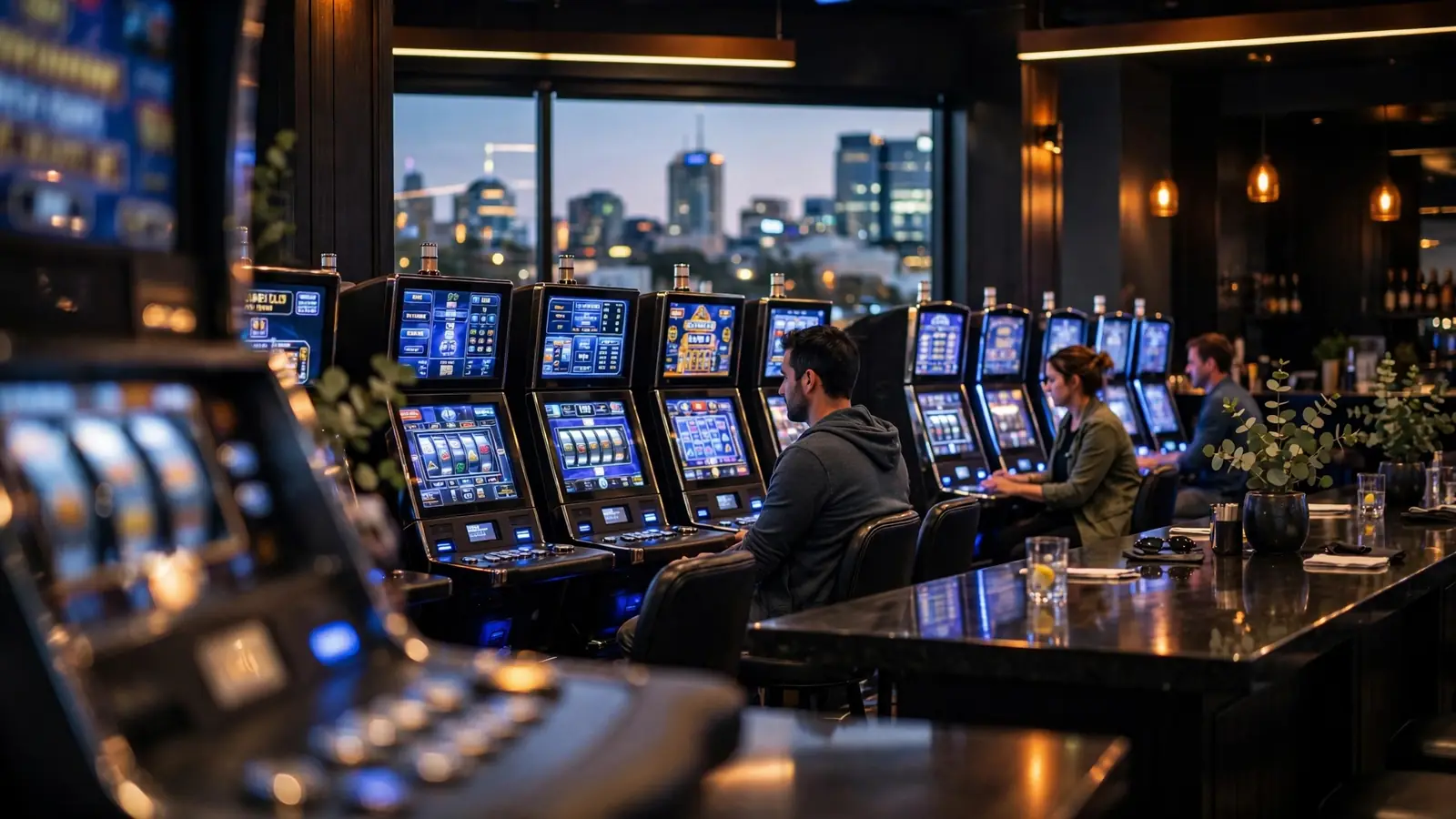
Before setting off for a pokie session, check the venue’s current opening information rather than relying on an old listing or assuming the gaming area keeps the same hours as the rest of the venue. A club, hotel or casino may have several parts with different schedules. A restaurant or bar being open does not, by itself, confirm that its gaming area is available.
I’d start with the venue’s own website and look for a page that specifically covers opening hours or gaming facilities. Check that the information appears current, and read any notes about different days, public holidays or temporary changes. A general business listing can be useful as a first check, but it may not distinguish between a venue’s overall hours and access to pokies.
If the details are unclear, contact the venue directly before travelling. Ask plainly whether the gaming area is open at the time you plan to arrive, not just whether the building is open. If you are going early, late or on a public holiday, make that clear; it helps avoid getting an answer about ordinary daytime trading when you need something more specific. Keep the answer in mind alongside any notice on the venue’s own channels, since schedules can change.
There is no single Adelaide-wide timetable to rely on. Hours can differ from one venue to another, and the information you find may not say whether a particular area is operating. A quick call is less glamorous than turning up on instinct, but it can save a wasted trip.
Opening-hour details copied between directories can linger after a venue has changed its schedule. Treat those listings as a lead, then look for confirmation from the venue itself. Check the date of a recent update where one is shown, and make sure the page you are reading refers to the Adelaide venue you intend to visit. Similar names and old saved links can send you to the wrong details.
 Pokies in Brisbane: Hours, Venues and Online LimitsLearn why an “open now” listing may cover meals but not an operating gaming area, and what to confirm before travelling or…
 Queensland Casino Guide: Stays and Online PlayLearn how casino hotel bookings differ from online gambling, and what to verify about room types, dates, cancellation terms and inclusions.
If a venue posts updates on its own social channels, check for a recent notice before leaving. That can be useful when ordinary hours have been altered for a public holiday, a private function or another temporary reason. If the post is ambiguous, call rather than guessing. A photograph of a printed notice can also be out of date, so check when it was posted.
It is worth asking whether the schedule applies to the whole venue or specifically to the gaming area. This matters even when the front doors are open: food service, bars and pokies do not necessarily share one timetable. If you cannot get a clear answer, plan around the uncertainty instead of treating an unconfirmed listing as a promise.
Before you go, have the address and contact details open so you can confirm you are checking the right place. If you are travelling with someone, agree on a backup plan in case the gaming area is closed or its hours have changed. Avoid building the rest of your evening around an assumption that a venue will be open when you arrive.
It is also sensible to decide your own boundaries before entering. Responsible-gambling tools to look for include deposit limits, loss limits and session time limits, as well as self-exclusion options. These are different ways to set limits or step away; check what the venue makes available and how to use the options before you start playing. Having a limit in mind is more useful than trying to settle one after a long session.
You must be at least 18 to gamble in Australia. If you are unsure whether you meet the age requirement or what identification a venue accepts, contact it before travelling rather than finding out at the door. Staff can confirm the venue’s entry process.
Finally, keep the check focused. You are confirming whether the gaming area is open when you expect to arrive, not trying to infer its hours from a restaurant listing, a review or an old memory. Verify the details close to your visit, especially when timing matters. A little checking first. Much less guesswork.
Choosing a pokies site in Adelaide means checking the details that matter to you before you play. Use this list as a starting point and review each operator’s stated terms for yourself.
Roby Casino
Roby Casino is listed with a Curacao eGaming license held by Roby Games Ltd.
Wild Tokyo
Wild Tokyo lists a A$10 minimum deposit. Its stated payout times are 30–60 minutes for crypto and 1–5 days for fiat.
Playfina Casino
Playfina Casino has operated under a Curacao eGaming license held by Hollycorn N.V. since 2017. Its minimum deposit is A$20–30, depending on the offer.
Kingmaker
Kingmaker lists a A$30 minimum deposit. Its stated payout times are around 90 minutes for crypto and 1–5 days for fiat.
MrPacho
MrPacho lists a A$30 minimum deposit. Its stated payout times are 30–120 minutes for crypto and 24–72 hours for fiat.
JustCasino
JustCasino is listed with a Curacao Gaming Control Board license.
Thor Casino
Thor Casino is listed under a Curacao license from Antillephone N.V. (Versus Odds B.V.). Its minimum deposit is EUR 20.
SkyCrown
SkyCrown is listed with a Tobique Gaming Commission license and a A$30 minimum deposit. Its stated payout times are around 10–15 minutes for crypto and 1–5 days for fiat.
LuckyVibe
LuckyVibe is listed with a Curacao Gaming Control Board license, OGL/2023/176/0095, held by Hollycorn N.V.
Uptown Pokies
Uptown Pokies has operated since 2017 under a Curacao license. Its minimum deposit is A$20.
“Best paying” sounds like a clean way to choose Adelaide pokies: find the biggest return figure, pick that game and expect better results. The catch is that a game’s name, by itself, may not tell you which return setting is in use. A specialist review reports that some game providers give casinos a choice of RTP settings for the same pokie. As a result, the same title can have different stated return percentages at different casinos.
RTP, or return to player, is a theoretical measure of how much a game pays back across a very large number of plays. It is not a forecast for your visit, and it does not promise that a particular player will get a set share of their stake back. If you see an RTP figure attached to a game, treat it as useful only when you know it applies to that game at that venue. A number without that context can look more decisive than it is.
A theoretical measure of how much a game pays back across a very large number of plays, rather than a forecast for an individual visit.
That is where comparisons often go astray. Two people can talk about the same pokie and assume they are comparing like with like, while referring to different casinos or different settings. If a venue can confirm the setting for a game, that gives you a clearer point of comparison. If it cannot, I would not fill the gap with an assumption based on the game’s name or on a figure seen elsewhere.
The other limit is the way each spin works. A pokie uses a Random Number Generator to determine its result, and each spin is separate from the one before it. A run of losses does not make a win due, and a win does not mean another is more likely on the next press. The machine has no memory of your last spin. That matters when you are weighing up claims about which pokies pay best: a return figure describes a theoretical pattern over extensive play, not what is about to happen.
So, when comparing Adelaide casino pokies, I would separate the question into two parts. First: is the RTP information specific to the version and setting available at that venue? Second: am I treating that long-run figure as background information, rather than a prediction for tonight? If either answer is unclear, the comparison is limited. Simple enough.
This is also why a list of “best paying” games can be misleading when it ranks titles without showing where the figures came from or whether they apply locally. A ranking might suggest that one pokie is universally better, but the setting may differ between casinos, and the random result of an individual spin remains just that: random. A neat order on a page cannot remove either qualification.
For someone looking for the best pokies in Adelaide, the practical takeaway is modest: ask what return information is available for the specific game at the venue you are considering, and check that it refers to the setting actually in use there. Do not assume that a figure attached to a game elsewhere carries over. And do not mistake a higher theoretical return for a reliable way to make a session pay. It is information, not an edge you can count on.
Attention: A higher theoretical return figure is information, not a reliable edge or a guarantee that a session will pay.
I’d keep the comparison grounded in what can be confirmed, rather than chasing a supposed sure thing. Pokies are designed around chance, and no RTP label can tell you how your next spin will land. If the figure is clear, it can help describe the game’s long-run return profile. If it is not clear, the honest answer is that you do not have enough to rank that pokie confidently. Better to know the limits than to dress a guess up as a recommendation.
If you’re arriving in Adelaide and want to fit in a visit to a pokie venue, sort out the destination before planning the trip around it. A map result, an old directory entry or a venue name mentioned in a discussion is not enough to build a travel plan around.
From Adelaide Airport, the practical first step is to find a venue’s own current address, then check the route from the airport to that exact pin. Don’t treat a result labelled “near the airport” as proof that the venue is inside the terminal or an easy walk away. “Near” can mean different things on different maps, and an airport search may also return businesses that have nothing to do with gaming. Check the location itself, not just the wording attached to the result.
The same goes if you’re already in the CBD. A venue described as close to the city centre may still be inconvenient from your hotel, meeting place or transport stop. Once you have an address you trust, compare the route from your actual starting point and check that the map has selected the right entrance or building. A pin placed on a large property can be less helpful than it looks.
North Adelaide is another area people may consider when looking beyond the city centre. I wouldn’t assume that a venue is there, or that it is close to your route, just because a result combines the suburb name with pokies. Confirm the address first. If the listing is vague, duplicated or attached to a business with a different name, contact the venue and ask for its location before setting off.
For any trip, separate three questions: where the venue is, how you’ll get there, and whether the destination is the one you meant to choose. That keeps an airport stop from turning into a detour based on an imprecise map label. If you’re travelling with someone else, share the exact address rather than a broad search result; it gives both of you the same destination to check.
There’s one straightforward eligibility point to keep in mind: gambling in Australia is for adults aged 18 or over. If you’re making plans for a group, don’t assume every person can enter or take part; check the venue’s entry conditions directly.
I’d keep the journey flexible until the address is confirmed. Don’t choose transport, set a meeting point or promise someone a quick stop based on a phrase such as “near Adelaide Airport” or “near the CBD”. Those labels are useful for narrowing down an area, not for confirming a destination. A precise address first; the route second.
A venue’s name or reputation won’t tell you what support is available on the floor. If you’re comparing Adelaide gaming venues, look for practical safeguards and ask staff how they work. I’d start with whether you can find someone responsible for gambling-related concerns, and whether the venue can explain what happens if a patron appears distressed or unable to stop.
A report by regionriverina.com.au describes a requirement for venues with more than 20 gaming machines to have a dedicated responsible gambling officer (RGO) on duty while those machines are operating. The report also describes a one-month grace period for venues to introduce officers and remove relevant signage. Treat those details as a reported rule, not proof that any particular Adelaide venue has an RGO on shift. If the role matters to you, ask who is available and how to contact them while you are there.
The same report says venues will be required to keep a gambling incident register. It is intended to record occurrences, including signs that a patron may be at risk of, or affected by, gambling harm. That is a behind-the-scenes record, so you may not see it yourself. What you can check is whether staff can tell you how they respond to concerns and whether there is a clear way to request help. A register matters only as part of a response, not as a display item.
Notice the placement of signs as well. Information about support should be accessible without steering people towards more gambling. Signage directing patrons to gaming lounges should not be within eyesight of ATMs or EFTPOS terminals; signs directing patrons to ATMs should not be within eyesight of gaming machines. If you spot a confusing arrangement, you can raise it with staff rather than assuming it reflects the venue’s full policy.
You can also ask whether the venue offers deposit limits, loss limits, session time limits or self-exclusion. These are standard responsible-gambling tools, but their availability and operation are venue-level details; don’t assume that every option is offered in the same way everywhere. Ask how a limit is set, whether staff can explain the process, and what self-exclusion means for returning to the gaming area. A straightforward answer is more useful than a wall of general statements.
You must be at least 18 to gamble in Australia. If you’re checking a venue’s arrangements, ask about age checks too, particularly if the entry process is unclear. The point is not to turn a visit into an inspection. It’s to know who to speak to and what choices are available before you need them. I wouldn’t call any Adelaide venue the best on this basis alone: protections are worth checking, but they don’t establish that one place is safer or more suitable than another.
When you compare payment options for online pokies, treat the deposit screen as a practical detail—not a sign that a site is safe, fair or properly authorised. PayID appearing at checkout tells you how a transfer may be made; it does not tell you who is operating the site or how it handles play and payouts. I would keep those questions separate.
PayID is an alias layer connected to Australia’s New Payments Platform (NPP) that allows transfers using an email, mobile number, or ABN.
PayID is an alias layer connected to Australia’s New Payments Platform (NPP). It lets someone send a transfer using an email address, mobile number or ABN rather than entering the recipient’s bank details. For real-money play at an Australian online casino, using PayID first requires linking it to a bank account. That link is easy to overlook when you are focused on a deposit button.
There is another practical snag: a specialist review has reported that some Australian banks, including the Big Four, sometimes block PayID transfers to gambling merchants they recognise. That is a reported possibility, not a promise that a transfer will be blocked—or that changing payment methods will solve the problem. Check with your bank about its current rules before making a transfer, and don’t try to work around a block without understanding why it occurred.
Cards deserve their own pause. A specialist review has also warned that a bank or card issuer may treat a gambling deposit as a cash advance rather than an ordinary purchase. In that case, a fee of 3–5% and interest from the time of the transaction may apply. Your card agreement and issuer’s policy decide the outcome, so check both before using a card. The deposit amount on a checkout page may not show the full cost. Not a small detail.
People looking for a no-deposit offer may be weighing up different terms from those attached to an ordinary deposit. Don’t assume that an offer is cash you can withdraw: read its conditions, including any restrictions on winnings, before sharing payment or identity details. A headline offer is not a payment guarantee.
For Adelaide players, the distinction between a payment route and a trustworthy service matters whether the search is about pokies near home or online real-money play. A familiar bank-transfer option cannot verify the operator, prove that a game is fair or secure a payout. Nor does a payment method settle the legal status of the service. Keep those checks separate from the choice of how money might move.
Before entering account details, check the recipient shown in the payment flow, your bank’s rules and the provider’s written terms. If anything does not match what you expected, stop and ask your bank rather than sending money first and sorting it out later. PayID is a way to address a transfer. It is not a seal of approval.
Searching for online pokies from Adelaide can blur two different things: gaming machines at a physical venue and real-money casino games offered over the internet. The legal rules are not the same. A phone or tablet does not turn an offshore website into an Adelaide venue, and being able to open a page does not mean its operator is authorised to serve Australians.
Under the Interactive Gambling Act 2001, companies cannot legally offer real-money online pokies to people in Australia without a domestic licence. No Australian online casino licences have been issued, so there is no locally licensed online casino market. The restriction is aimed at operators, rather than individual players. Australians are not criminally liable simply for playing on an offshore site that accepts them.
Legal Risk
If an offshore casino refuses to pay winnings, Australian players have no legal recourse in Australia to recover them.
That distinction can sound reassuring until you consider what happens if something goes wrong. If an offshore casino refuses to pay winnings, an Australian player has no legal recourse in Australia to recover them. A site may look polished and work smoothly on a mobile screen; neither appearance nor access provides the protection of an Australian licence. There is no local online-casino licence to check.
The Australian Communications and Media Authority (ACMA) enforces the law and can block access to illegal offshore gambling sites. Internet service providers are required to comply with ACMA’s blocklist. A site being unavailable may therefore reflect a block, while a site that still loads is not thereby made lawful or trustworthy. Access is not approval. That is the part easy to miss.
This is separate from playing pokies at a venue in Adelaide. A physical venue’s gaming area is not an online casino, and the online rules do not establish which local venues are open or what machines they offer. If you mean an in-person visit, that is a venue question; if you mean wagering through a website or app, the operator’s location and the Australian law matter.
Mobile access changes the screen, not the legal position. Before entering personal or payment details on an offshore site, weigh the lack of Australian recourse if a dispute arises. A familiar payment option, a responsive app or an advertised game selection does not create domestic licensing or guarantee a payout. None of those signals replaces legal protection.
So, if you are looking for online play while in Adelaide, keep the distinction clear: operators are prohibited from offering real-money online pokies to Australians without a domestic licence, and none has been issued. Individual players are not the target of that prohibition, but offshore play comes with a serious practical risk if a withdrawal is disputed. For venue-based gaming, make checks directly with the venue; a website’s mobile availability is not a substitute.
A claim that a venue is open around the clock can sound straightforward, but it may not tell you whether its gaming area is operating when you arrive. Venue hours and pokies hours are not automatically the same thing. If you are planning a late visit, check both rather than relying on a general description.
I would confirm the details directly with the venue before setting out. Its own website may list current opening information, but if the wording is unclear, call and ask whether the gaming area will be open at the time you plan to arrive. That small distinction can save a wasted trip.
Opening details can also change. A public holiday, a private event, maintenance or a temporary operational change may affect what is available, even if a page you saw earlier still looks current. Check the date of any online information and, when timing matters, confirm by phone on the day. A search result or old directory listing is a starting point, not a promise.
Be precise about the question you ask. “Are you open?” may refer to the broader venue, while you want to know whether pokies are available. Ask specifically about the gaming area and the hours that apply to your planned visit. If the answer is uncertain, ask when the information was last updated or whether someone can confirm closer to the time.
The same approach applies when you are looking for Adelaide pokies that are open now. Availability can depend on the particular venue and the time, so avoid treating “24-hour” wording as proof that every part of a venue operates continuously. I can’t recommend a venue as open all day and night without current confirmation. Check directly, and make sure the answer covers the gaming area rather than just the main premises.
It is also worth deciding in advance how long you intend to stay. Deposit limits, loss limits, session time limits and self-exclusion are tools people can look for, but they do not tell you whether a venue is open. Keep the practical checks separate: first confirm the hours, then decide what boundaries you want for yourself.
A quick call is less glamorous than turning up and hoping. It is also more reliable. If no one can confirm the hours, do not assume the venue or its pokies will be available; check again before travelling. That is the sensible way to handle any claim of round-the-clock access.
Crown-related searches can leave you expecting a particular Adelaide venue, a pokie room and a set of machines. I can’t confirm Crown Adelaide’s venue status, whether it has pokies, or what its specific offerings might be. So I wouldn’t treat a name appearing in a search result as confirmation that a venue or gaming floor is operating as you expect.
The same caution applies to claims about a “best” pokie room or a maximum cash payout. Without reliable, venue-specific details, there’s no sound basis for comparing a room or stating what a machine at a named location can pay. A headline figure, where one is advertised, would not tell you what a particular play will return. Check any claim with the venue and read the rules that apply to the machine or offer; don’t assume a general description settles the detail.
There is another point worth separating from the Crown question. A pokie’s return-to-player percentage, or RTP, is not necessarily fixed everywhere the same game appears. A specialist review reports that some providers give casinos a choice of RTP settings for a particular game. If that option is used, the same title can have different stated return percentages at different casinos. That does not establish which setting any Adelaide venue uses, and it says nothing specific about Crown.
Even a published RTP is a long-run statistical measure, not a forecast for your session. Each spin is an independent random event, so a percentage cannot tell you when a win will happen or guarantee a particular payout. That distinction matters when a search result makes a game sound like a sure bet. It isn’t.
If you are trying to verify a Crown-related claim, look for information that identifies the actual venue and the particular detail being claimed, rather than relying on a name or broad promotional wording alone. For machine availability, ask the venue directly. For payout claims, look for the applicable machine rules and any stated conditions. If those details are not clear, there is no reason to fill in the gaps with assumptions.
I’d keep the question narrow: is the venue and offering confirmed, and can the specific claim be checked? Without that, “Crown Adelaide” is just a label, not evidence of a room, a machine selection or a maximum payout.
If you are considering a club in Adelaide’s CBD for pokies, the useful details are specific to that venue: whether it has gaming machines, what its entry conditions are and what support is available if gambling stops feeling manageable. A broad description of “CBD gaming” cannot answer those questions for an individual club, so treat each venue as its own case rather than assuming its facilities or policies from the word “club”.
That matters when you are weighing up what suits you. A name, a polished website or a familiar location does not tell you what the gaming area is like, what machines are available or how staff handle a request for help. Check the venue’s own current information, and contact it directly if a detail affects your decision. Small practical details are worth confirming before you go.
For anyone looking for the “best” pokies in the CBD, it helps to separate a venue choice from a claim about game quality or returns. A club may offer pokies, but that alone does not establish that its games pay more or that one venue is better for every player. Keep the choice grounded in what you can confirm about the venue and in your own limits. A shortlist is not a guarantee.
Self-exclusion is also a venue-level matter worth asking about if you want to stop access to gambling. Ask what process the club uses and what the request covers; do not assume that asking at one venue automatically applies elsewhere. If you are not comfortable making the request in person, check whether the venue can explain its process by phone or through its official contact channel.
One clear baseline applies across Australia: you must be at least 18 to gamble, including on pokies. If you are going with someone else, that age rule is not a grey area. Before setting out, decide how much time and money you are prepared to spend, and leave room to walk away if the visit is no longer enjoyable. That is the part you control.
“Cashless” can mean different things: a venue may offer a way to pay without notes or coins, while PayID is a bank-transfer method. They are not interchangeable. If you are checking whether an Adelaide venue accepts cashless payments, confirm the available methods with the venue rather than assuming that PayID is accepted at its gaming machines.
PayID works as an alias layer on the New Payments Platform (NPP). It lets someone send a bank transfer using an email address, mobile number or ABN instead of entering the recipient’s account details. That describes how the transfer is addressed; it does not tell you whether a particular venue accepts it or how its machines handle payment.
The distinction matters even more when you see PayID offered by an online gambling site. A payment option is not evidence that an operator is licensed, that its games are fair, or that it explains its terms transparently. The Australian legal position for real-money online pokies is separate from the mechanics of sending a bank transfer. A familiar payment method does not settle that question.
I would also keep Newcastle searches separate from Adelaide venue checks. Newcastle is not an Adelaide suburb, and a result about one city cannot establish what is available in the other. If you want to compare locations, look for current venue-level details for each place rather than treating a shared payment method as proof that the venues, machines or arrangements are alike.
For a practical check, ask the venue what payment options apply on site and whether they cover gaming-machine play specifically. For PayID, check which recipient details the transfer uses and confirm them before sending money. Small distinction, real difference.
There is no Australian-licensed online casino, and if an offshore casino refuses to pay you, you have no legal recourse in Australia. ACMA blocks access to illegal offshore gambling sites, so playing online does not come with the protections of a domestically licensed casino.
Australian law makes it illegal for companies to offer real-money online pokies to Australian residents without a domestic licence, and no such licences have been issued. The law targets operators, not individual players, and Australians can play on offshore sites that accept them, but they have no legal recourse in Australia if a site withholds winnings.
It is the amount you must bet before you can withdraw bonus-related winnings, usually expressed as a multiple of the bonus or deposit plus bonus. For example, a $500 bonus with a 40x requirement means you must place $20,000 in bets before withdrawing those winnings.