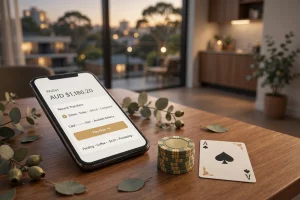
A wallet can be one payment route, but its presence alone does not establish that deposits and withdrawals are both supported.
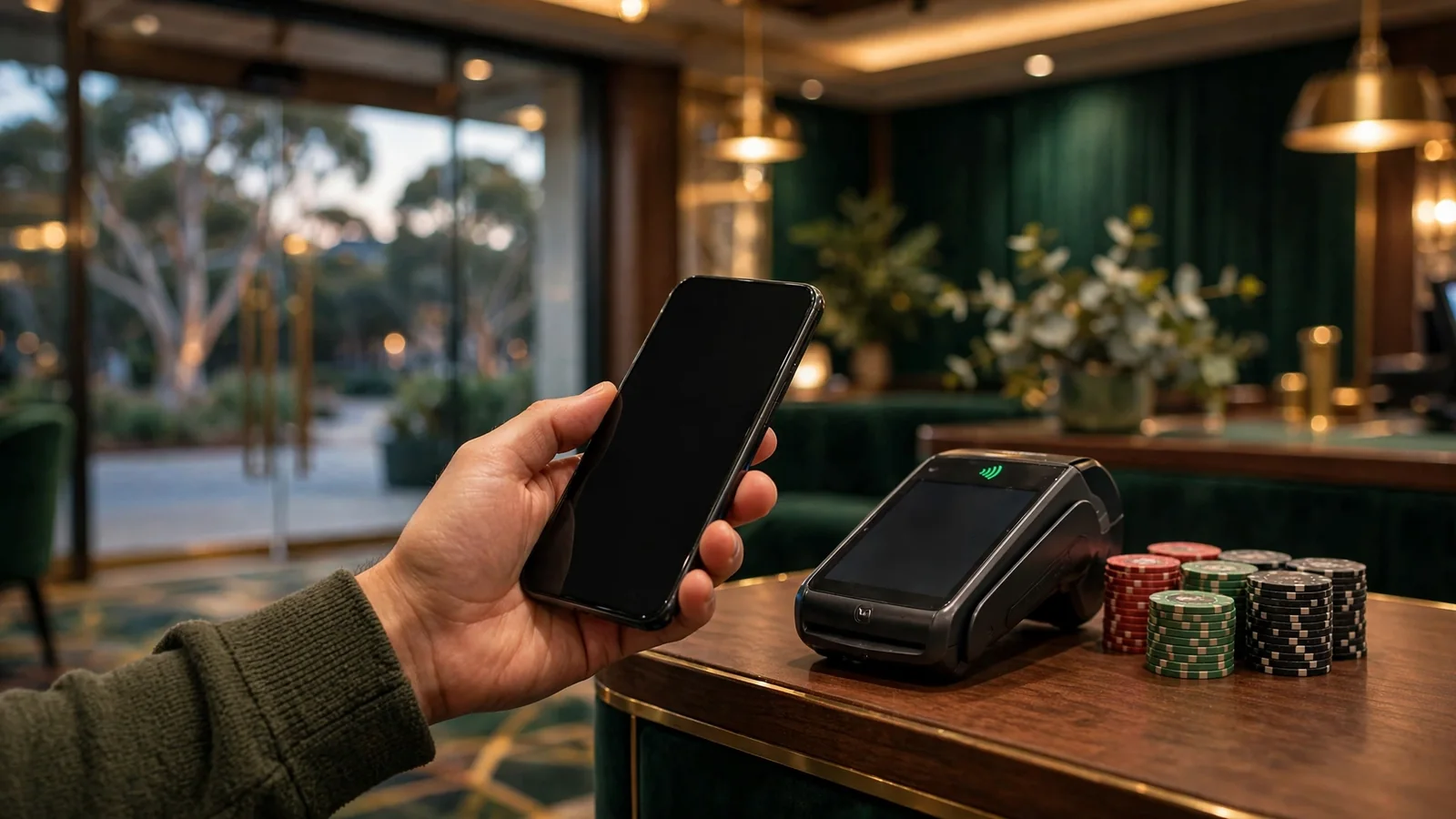
In Australia, paying by tapping a card or phone is part of ordinary day-to-day life. Contactless credit and debit cards are accepted almost everywhere, and mobile wallets such as Google Pay and Apple Pay are similarly widespread. That makes a phone-based payment feel familiar to many people: it sits alongside the physical card rather than replacing it.
The distinction matters when you come across a payment method in a different setting. A habit formed at shops, cafés or other everyday businesses can make Google Pay seem like an obvious option wherever electronic payments appear. But familiarity with the wallet in general is not the same thing as knowing where it is available. Its place in Australia’s broader payment culture tells you about local habits, not about every service that might display a payment menu.
I tend to think of the Australian approach as practical rather than loyal to one method. People are comfortable moving between a card, a mobile wallet and services linked to a bank, such as PayPal. The choice can depend on what is to hand and what the particular payment screen offers. A wallet is one part of that mix, not a rule that every transaction must follow.
If you’re looking for casinos that accept Google Pay in Australia, check the payment options available to you before depositing. This list gives you a reference point, with the available licensing and payment details noted for each operator.
Roby Casino
Roby Casino is listed with a Curacao eGaming license held by Roby Games Ltd.
Wild Tokyo
Wild Tokyo is listed with a Curacao license and a minimum deposit of A$10. Its stated payout times are 30–60 minutes for crypto and 1–5 days for fiat.
Playfina Casino
Playfina Casino is listed with a Curacao eGaming license held by Hollycorn N.V., which has operated since 2017. Its minimum deposit is A$20–30, depending on the offer.
Kingmaker
Kingmaker lists a minimum deposit of A$30. Its stated payout times are around 90 minutes for crypto and 1–5 days for fiat.
MrPacho
MrPacho lists a minimum deposit of A$30. Its stated payout times are 30–120 minutes for crypto and 24–72 hours for fiat.
JustCasino
JustCasino is listed with a Curacao Gaming Control Board license.
Thor Casino
Thor Casino is listed with a Curacao license from Antillephone N.V. (Versus Odds B.V.). Its minimum deposit is EUR 20.
SkyCrown
SkyCrown is listed with a Tobique Gaming Commission license and a minimum deposit of A$30. Its stated payout times are around 10–15 minutes for crypto and 1–5 days for fiat.
LuckyVibe
LuckyVibe is listed with a Curacao Gaming Control Board license, OGL/2023/176/0095, held by Hollycorn N.V.
Uptown Pokies
Uptown Pokies is listed with a Curacao license, has operated since 2017, and has a minimum deposit of A$20.
That flexibility helps explain why Google Pay has a visible place in everyday payments without making it universal. Someone may tap a phone for one purchase, use a physical card for another, then use a bank-linked service elsewhere. There is no contradiction in that. People switch according to the situation; they do not need to settle on one payment route and stick with it.
For Australian readers, this context can make payment language feel familiar even when the setting is unfamiliar. Seeing Google Pay mentioned may bring to mind the simple act of tapping a phone at a counter. That association is understandable, but the everyday use of a wallet does not carry over automatically to every online service. Local familiarity is background, not a guarantee.
There is also a difference between a payment method being common in the country and a particular business making it available. The first describes a broad pattern among consumers and merchants. The second is specific to an individual service. Keeping those ideas separate is useful whenever a payment option is discussed outside the everyday situations where you already know how it works.
I would not read Australia’s contactless habits as evidence that all payment systems are interchangeable. Cards, mobile wallets and bank-linked services are distinct routes, even if they can all be part of the same person’s routine. Being comfortable switching between them means people can adapt to the choices presented; it does not mean every route will appear in every setting.
Google Pay’s familiarity comes from its place among widely used mobile wallets. Apple Pay belongs to the same broad category, while a contactless card offers another familiar way to pay. The point is not that one is better than another. It is that Australians have several established ways to make electronic payments and are accustomed to moving between them.
That makes “mobile payment” a broad idea, not a promise about a specific transaction. A person might use a phone wallet in one context and a card in another, while relying on a bank-linked service elsewhere. The method they choose can vary from one payment to the next. Routine flexibility, rather than a single preferred tool, is the useful local context.
It is easy to let a familiar tap-to-pay experience stand in for a more specific question about availability. I have made that mental leap myself: if a wallet works in the places I visit, it can feel as though it should work everywhere. That is a shortcut, not a reliable way to understand a service. Everyday acceptance and a particular online payment route are different matters.
So, when Google Pay comes up in an Australian payment conversation, it is fair to recognise it as part of a widely used mobile-wallet landscape. Cards remain part of that landscape too, and people commonly move between them and services connected to their banks. None of that requires a reader to treat one method as the default for every situation.
The local picture is straightforward: contactless cards and mobile wallets are familiar across Australia, and consumers are used to switching among payment options. That helps explain why Google Pay feels recognisable here. It does not, on its own, tell you whether a particular online service offers it. Familiar, yes. Universal, no.
A mobile wallet working at shops around Australia does not mean it is available in an online casino cashier. Those are separate questions. If you see Google Pay mentioned on a general payments page, treat that as a claim to check, not confirmation that you can use it for a deposit.
For Australians, there is an important boundary before any payment check: the Interactive Gambling Act 2001 prohibits operators from offering real-money online casino games to people in Australia.
A useful check starts with the payment choices actually shown in the cashier, rather than a banner or broad statement about mobile wallets. Look for Google Pay as a named option and note whether the information refers to deposits specifically. A wallet logo elsewhere on a site does not tell you what the cashier supports.
Even a named option is only one part of the picture. Read the accompanying terms and any instructions on the payment screen before taking them as applicable. If the details are unclear, do not fill in the gaps by assuming that the method works in the way it does at a local retailer. A familiar logo is not a complete set of terms.
The same care applies to pages that mention “Google Pay deposits” in general. They may not describe the exact cashier you are viewing, and broad wording does not establish that an option is currently available to a particular customer. Avoid treating a general claim as a promise.
If the cashier names Google Pay, check what it says about the transaction conditions before relying on that route. The amount field, currency and any stated fees should be visible before you decide whether to continue. Do not assume a particular minimum or maximum deposit, or that the figure you have in mind will be accepted; those details need to be stated for the specific cashier.
Also pay attention to whether the screen is describing a deposit or another kind of transaction. The word “payment” can be broad, while your question is narrower: whether a deposit can be made through that route. Keep the distinction clear. A mention of Google Pay, without a clear description of its purpose, leaves room for misunderstanding.
If the cashier presents a choice you do not recognise, or its terms do not match what you expected, stop rather than guessing. A payment decision should rest on what the screen actually says, not on assumptions drawn from using the wallet elsewhere.
Payment access is not the only condition that may affect financial transactions. Online casinos commonly ask customers to complete a Know Your Customer assessment before handling financial activity. In plain terms, identity checks may be part of the process, so the presence of a payment option does not mean every other requirement has been satisfied.
Read any explanation of verification requirements before sharing personal or payment details. Do not assume that a wallet bypasses identity checks, or that a deposit option guarantees an account can transact. The cashier and the verification process address different things.
A search for a small Google Pay deposit can make a particular amount feel like a standard, but no amount should be assumed from the payment method alone. A cashier needs to state the applicable conditions clearly. If it does not show the amount you had in mind, that is not a reason to infer that the transaction will be accepted anyway.
This is a simple distinction, but an easy one to miss: general Australian use of mobile wallets says nothing about the terms of a particular gambling cashier. Check what is explicitly presented, and do not proceed on the strength of a logo, a headline, or a familiar payment routine. Familiarity is not permission.
A Google Pay label sounds like a clear yes-or-no answer. In practice, it can leave important questions unanswered. It does not, by itself, tell you which services are offered, whether they are lawful for someone in Australia to use, or whether the payment route would suit your circumstances. Treat the wording as a narrow claim about a payment method, not as a recommendation or an assurance about the whole service.
There is a useful distinction between a wallet being familiar to Australian shoppers and a particular gambling operator accepting it. Those are separate claims. Contactless payments and mobile wallets are part of everyday life here, but that background does not confirm that any given site supports Google Pay. Nor does a logo or a line of promotional text tell you when the information was checked or whether it applies to customers in Australia.
The word “accepts” can also hide different meanings. It might refer to a payment method shown somewhere on a site, a route available only to some customers, or a claim repeated by a third-party listing. Those descriptions are not interchangeable. A payment logo is not a detailed statement of terms, and a third-party mention is not the same as a clear, current explanation from the service itself. Read the wording carefully; don’t fill in the gaps for it.
Even a genuine statement about payment support would tell you very little about the service beyond that specific point. It would not establish that you can open an account, complete the required checks, or use the service lawfully from Australia. Online gambling operators commonly ask customers to verify their identity before carrying out financial activity. That can make a broad acceptance claim a poor guide to what an individual customer will actually be able to do.
Attention: A Google Pay label is a narrow claim about a payment method and does not prove the legality, suitability, or accessibility of a service for users in Australia.
There is a more basic limit in the Australian context. The Interactive Gambling Act 2001 prohibits operators from providing real-money online casino games to people in Australia. A payment label cannot change that boundary. And if an offshore casino is involved, Australian consumer law does not protect players who use it. Those are not minor details to set aside while comparing payment methods; they affect whether the service is appropriate for you at all.
I would be wary of treating phrases such as “best” or “instant” as meaningful proof. “Best” has no fixed standard unless the writer explains what is being compared, and “instant” may refer to one part of a payment process rather than the customer’s overall experience. A short label rarely explains its scope. That is a thin basis for a decision.
The same caution applies when a site is described as suitable for Australian customers. A familiar currency, Australian wording, or a widely used wallet does not establish that the operator is authorised to provide online casino services here. Familiar packaging is not a legal green light.
So, when you encounter a Google Pay acceptance claim, separate what it actually says from what you might hope it means. It may be a claim about one payment method. It is not proof of suitability, legality, or access to every service advertised alongside it. A label is only a label.
Seeing Google Pay at a deposit stage would tell you only that the cashier presents it as a way to pay in. It would not tell you whether winnings can later be sent back to that wallet, whether another withdrawal route is required, or how long the process would take. Deposit and withdrawal rules are separate; treating them as one feature is an easy way to misread a payment label.
That distinction matters when you are weighing up how money might leave an account. A cashier can offer a route for adding funds without offering the same route for withdrawals. The payout method may depend on the operator’s terms, the payment provider, and the details of your account. A displayed Google Pay option at deposit is not a promise of a matching cash-out option.
Nor does “instant” at one point in a payment process settle the timing of another. A deposit confirmation and a withdrawal arriving in your bank-linked account are different events, handled through different checks and instructions. If you see a claim about instant Google Pay withdrawals, read it as a claim that needs specific confirmation, not as something implied by the wallet name.
Before making plans around a payout, look for the cashier’s withdrawal choices and the payment terms that apply to them. Check whether Google Pay is named specifically for withdrawals, whether the route depends on how you deposited, and whether the stated timing describes approval or arrival. Those are not interchangeable. A withdrawal can be reviewed before it is sent, and the wording should make clear which stage a time estimate refers to.
You may also be asked to complete a Know Your Customer assessment before financial transactions. That generally means confirming identity or account details as part of the operator’s checks. If verification is incomplete, the next step may be to provide the requested information before a transaction can proceed. It is sensible to understand that requirement early rather than assume a displayed payment method settles every later step.
Keep your own records of what the cashier shows and what the terms say, especially if the available withdrawal options differ from deposit options. If an instruction is unclear, ask the operator to explain it before relying on a particular route. A vague answer does not turn a deposit method into a confirmed withdrawal method.
I would separate three things when reading any payment claim: the option shown for a deposit, the route permitted for a withdrawal, and the time attached to that withdrawal. Each needs its own clear statement. Without that separation, “Google Pay accepted” can sound broader than it is.
The practical point is simple: do not build a cash-out expectation from a deposit screen. Confirm the withdrawal route and the relevant processing stages independently, and treat timing language with care. Payment labels are not payout instructions.
A payment method does not change the legal position of the service taking it. Whether a website displays Google Pay, a card option or another way to pay, the central issue for Australian readers is what the operator is offering and where its customers are located.
The Interactive Gambling Act 2001 prohibits operators from providing online casino games to people in Australia. That includes real-money casino-style services such as poker and table games, as well as pokies. The rule is about the operator’s offer to people physically in Australia; a site’s overseas location or payment arrangements do not make that offer lawful here.
The Act does not explicitly make an Australian player’s use of an offshore casino a criminal offence. That distinction matters: the legal prohibition is directed at operators providing the service, rather than being a statement that a player is committing the same offence simply by accessing it. It is not a green light or an endorsement. The service remains prohibited for operators to provide to people in Australia.
The Australian Communications and Media Authority, usually called ACMA, is responsible for enforcing the Act. Its role is not the same as approving a payment option or confirming that an overseas site is lawful for Australian customers. A Google Pay button is a payment interface, not evidence of local authorisation. That is the line to keep clear.
There is a separate practical concern: Australian consumer law does not protect players using offshore casinos. If a dispute arises with an overseas operator, you cannot assume that the safeguards and avenues available in an Australian consumer transaction will apply. The fact that a site accepts a familiar wallet does not give it Australian consumer-law coverage, and it does not turn an offshore gambling service into a locally protected one.
I would keep those points together rather than treating a familiar checkout as a sign of safety. Payment convenience and legal status are different questions. A wallet can move money; it cannot change what the operator is permitted to offer in Australia.
Legal Prohibition
The Interactive Gambling Act 2001 prohibits operators from providing real-money online casino games to people in Australia, and Australian consumer law does not protect players using offshore casinos.
So, when you see claims about casinos taking Google Pay, read them in that context. They say something about a payment route, if accurate, but they do not settle the legality of the underlying online casino service or provide Australian consumer protection. This is the legal boundary for the topic, not a recommendation to use an offshore service.
It is easy to run two separate questions together: whether a payment route is accepted, and what a service offers. They are not the same. Google Pay is a way to make a payment; its presence in a cashier would not, by itself, tell you what content or services are available on a site.
That distinction matters when you see wording that links Google Pay with casino games. The phrase can sound as if the wallet unlocks a particular kind of play, but a payment method does not determine a site’s catalogue. Nor does a mobile-friendly payment option establish that a service is lawful or suitable for someone in Australia. I keep those claims in separate boxes.
The local context can make the wording seem more persuasive than it is. Mobile wallets, including Google Pay and Apple Pay, are accepted almost everywhere in Australia for everyday payments. That broad familiarity is about how people pay across the country; it is not evidence that a gambling service accepts a wallet or makes any particular offering available.
So, “Google Pay casino payment” describes a possible relationship between a wallet and a cashier, not a feature of the games themselves. Likewise, calling something a mobile casino does not tell you which payment methods it supports. One label cannot answer both questions.
For an Australian reader, there is an additional boundary: real-money online casino games cannot lawfully be offered to people in Australia. A wallet label should not blur that point or make an unavailable service sound like an ordinary purchase. Payment technology does not change the rules around the service being paid for.
I would treat claims about payment and claims about content as different statements, each needing its own scrutiny. A wallet may be familiar and widely used for everyday transactions; that says nothing about game availability. And a reference to games does not prove that Google Pay can be used with them. Separate the route from the destination. Clear enough.
A reference to Google Pay alongside casino-style games can sound like a straightforward statement about payment. It is not enough to establish that a particular service accepts the wallet, or that any particular games are available to Australian readers. Those are separate claims, and one label cannot safely stand in for both.
Google Pay is part of everyday payment life in Australia: mobile wallets, including Google Pay and Apple Pay, are accepted at businesses across the country. That familiarity can make a phrase linking a wallet with online games seem plausible. But acceptance in ordinary retail settings tells you nothing about whether a gambling operator supports the same payment route. Nor does it confirm that a game can be accessed.
The wording may also blur together two different things: a payment method and the content or service being described. A wallet label is about how a payment might be handled; it does not verify a game catalogue, an account’s access, or the legality of a service for someone in Australia. I would not read a payment reference as a green light for any of those.
That distinction matters when a page combines wallet language with bonus language. A mention of a casino bonus does not prove that Google Pay is accepted, that the offer is available to you, or that the underlying service may lawfully be provided in Australia. A bundle of labels can look convincing. It still needs evidence for each claim.
For Australian readers, the narrow conclusion is the useful one: broad use of mobile wallets locally is not proof of Google Pay support at an online casino, and it says nothing about whether that casino offers particular games. The payment method and the game description should not be treated as interchangeable. Familiar wallet, separate question.
So if you encounter wording that joins Google Pay to slots or other casino-style games, take it as a description to scrutinise, not confirmation of access. It does not establish that a service is available to you or that a payment would be accepted. Those are distinct matters, and a wallet’s everyday presence in Australia cannot settle them.
Seeing Google Pay listed for a deposit does not tell you how a withdrawal would be paid. A casino may treat money going in and money coming out as separate processes, with different payment routes and conditions. So “Google Pay accepted” is not enough to conclude that a Google Pay withdrawal is available.
That distinction matters when you are assessing a payment option. A wallet can be used to authorise a card-funded payment without being the route used to return funds. The label alone does not tell you whether a payout would go back to Google Pay, to the underlying card, or through another method. Nor does it establish how long any payout would take.
I would avoid treating a deposit confirmation as a promise about cashing out. Before relying on a payment route, look for withdrawal terms that name the method itself and explain any conditions. If those terms do not clearly cover Google Pay withdrawals, do not assume the deposit option answers the question. Check the operator’s stated rules rather than inferring them from a logo in the cashier.
There is also an identity-check step to keep in mind. Online gambling services commonly ask customers to complete Know Your Customer checks before handling financial transactions. That assessment can be separate from the payment method, so having made a deposit does not by itself mean any later payment will be processed.
For anyone asking whether an online casino with Google Pay also supports withdrawals on Google Pay, the careful answer is that the two capabilities must be confirmed independently. A payment method being available at one end of a transaction is not proof that it is available at the other. And without explicit withdrawal terms, there is no sound basis for estimating arrival time.
Keep the questions separate: can a deposit be made through Google Pay, and does the withdrawal policy specifically allow payouts through it? The first answer cannot stand in for the second. Cashing out is its own process.
In Australia, paying by phone is ordinary. Google Pay and Apple Pay are accepted across much of everyday commerce, and people move between mobile wallets, cards and bank-linked services such as PayPal without treating them as competing habits. That familiarity can make a Google Pay option on a casino page sound straightforward.
It is important to keep the two settings separate. Broad acceptance of a wallet in Australian shops does not show that an online gambling operator accepts it, or that a service is lawful for someone in Australia to use. A familiar payment logo can describe a payment route; it does not settle the status of the site behind it.
That distinction matters especially with offshore casinos. The Interactive Gambling Act 2001 prohibits operators from providing real-money online casino games to people physically located in Australia. Australian consumer law also does not protect players who use offshore casinos. A wallet’s presence cannot replace those protections or make them apply.
So, if you are considering whether an Australian casino accepts Google Pay, don’t read general local wallet use as proof of casino availability. Nor does the fact that Australians commonly switch between cards, wallets and bank-linked services tell you whether a particular gambling service is accessible, lawful or covered by Australian consumer protections. The payment method and the consumer-protection position are separate questions.
I would treat a Google Pay reference as a narrow statement about payment only, not as reassurance about the wider service. Even where a wallet is commonplace in daily life, using it does not change the legal boundary or extend Australian consumer law to an offshore operator. The distinction is easy to miss when the same phone handles routine purchases and other online transactions. But the setting matters.
For an Australian reader, the practical point is not that mobile wallets are unusual; they are familiar. It is that familiarity should not be mistaken for protection. A payment option cannot make an offshore casino an Australian-protected service.
Google Pay is widely accepted across Australia, but that describes everyday payment use—not whether a particular casino accepts it. The same wallet can be common at shops and other businesses while remaining unavailable as a payment option on a specific website. Those are separate questions.
So, seeing Google Pay mentioned alongside a casino does not establish that you can use it there. A general statement about mobile wallets in Australia cannot confirm that a casino accepts Google Pay, whether the option is available to Australian users, or whether it works for a particular transaction. The wording may sound definite; the detail behind it matters.
I would treat “Google Pay accepted” as a claim about a specific service only when it clearly refers to that service and its current payment options. A wallet’s broad acceptance in Australia is useful context, but it is not evidence of acceptance at every online business. Familiar payment method, different setting.
The same distinction applies to phrases connecting Google Pay with casino payments or payouts. Mentioning the wallet does not, on its own, establish a working payment route or say what transactions it covers. Those details need to be stated directly; they cannot be inferred from how often Australians use mobile wallets elsewhere.
In short, Google Pay is a familiar option in Australia, but familiarity is not confirmation. A casino’s acceptance cannot be concluded from the wallet’s general popularity.
Limits are set by each casino and can vary. Check the casino’s cashier or payment terms for its Amex limits.
Look for American Express as a deposit option in the casino’s cashier. Check the payment instructions and terms before submitting a payment.
Jackpot City Casino, Spin Palace, Ruby Fortune, Ignition Casino, Joe Fortune, and PlayAmo support Amex deposits for Australian players.
Amex deposits are processed instantly.
Amex may block payments to a particular website, and Australian banks may also block gambling-related Amex transactions. Acceptance can vary between casinos.
Yes, at casinos that accept American Express, but gift cards can be used for deposits only.