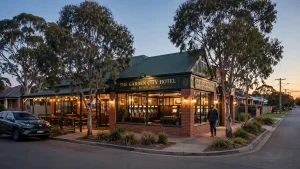
A practical guide to checking venue hours, location searches, legal limits, and cashless payment terminology around Canberra.
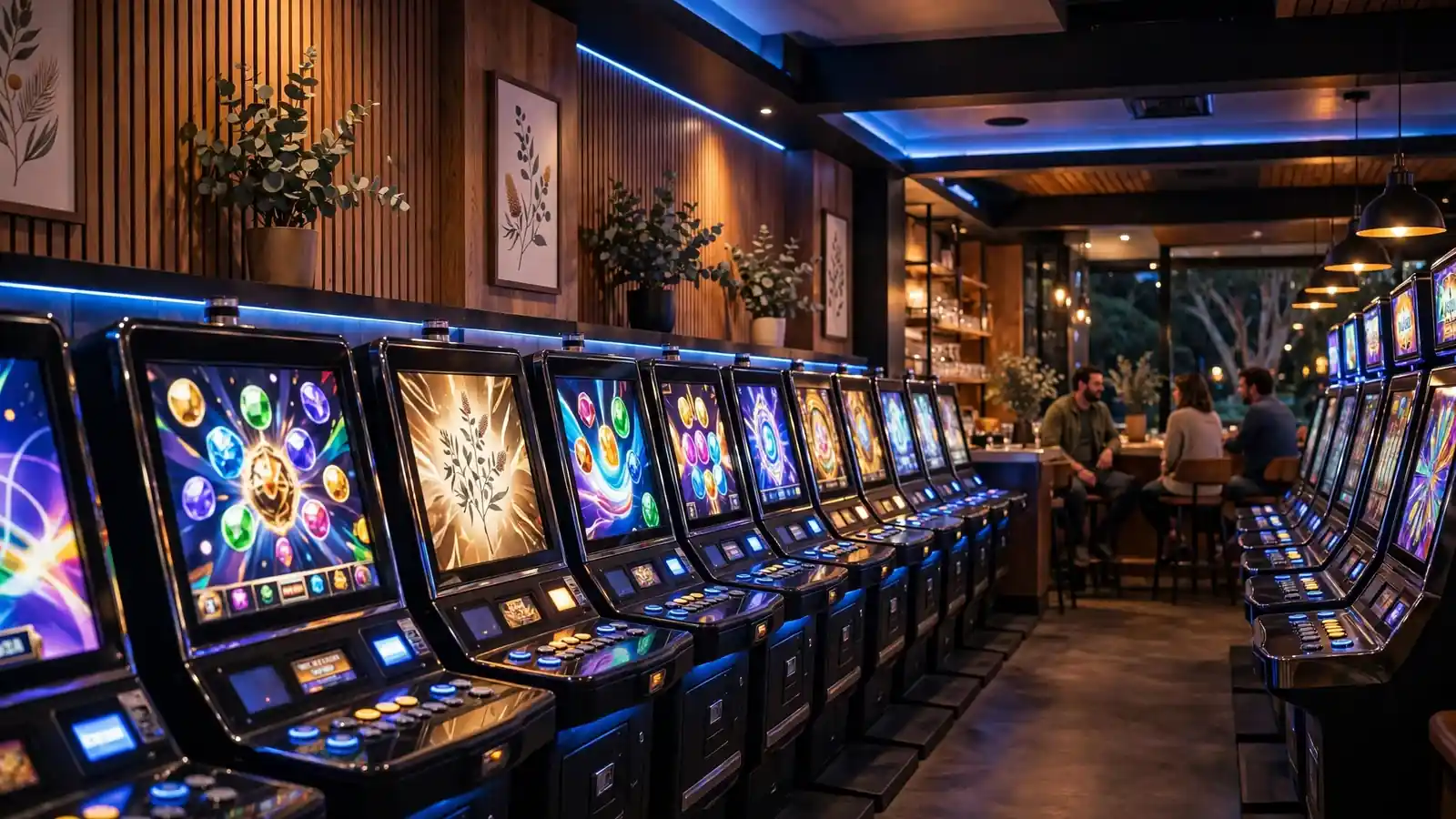
If you are planning a trip for pokies in Canberra, “open now” is a starting point, not a guarantee that the machines you want to use are available at that moment. A venue’s hours can change, and an old listing may remain visible after the information has become outdated. I’d check the specific venue’s own current notices before leaving, rather than treating a search result as a live status update.
Look for the venue’s official website or its own social media page, and check that the information applies to the day you plan to go. If it is unclear, contact the venue directly. A listing that gives general trading hours may not explain whether the gaming area is operating at the time you intend to visit. That distinction matters if you are setting out early, heading over late, or making the trip specifically to play.
It is also worth checking the date of any hours you find. A page can be accurate in general and still miss a temporary change, such as a special closure or altered schedule. Read the notice itself rather than relying on a short preview. If the venue has posted an update more recently, use that in preference to an older directory entry.
If you’re looking for pokies options to consider from Canberra, this list gives you a concise reference to each operator’s stated details. Check the terms and availability for yourself before choosing.
Roby Casino
Roby Casino lists a Curacao eGaming license held by Roby Games Ltd.
Wild Tokyo
Wild Tokyo lists a Curacao license and a minimum deposit of A$10. Its stated payout times are 30–60 minutes for crypto and 1–5 days for fiat.
Playfina Casino
Playfina Casino lists a Curacao eGaming license held by Hollycorn N.V. since 2017. Its minimum deposit is A$20–30, depending on the offer.
Kingmaker
Kingmaker lists a minimum deposit of A$30. Its stated payout times are around 90 minutes for crypto and 1–5 days for fiat.
MrPacho
MrPacho lists a minimum deposit of A$30. Its stated payout times are 30–120 minutes for crypto and 24–72 hours for fiat.
JustCasino
JustCasino lists a Curacao Gaming Control Board license.
Thor Casino
Thor Casino lists a Curacao license from Antillephone N.V. (Versus Odds B.V.) and a minimum deposit of EUR 20.
SkyCrown
SkyCrown lists a Tobique Gaming Commission license and a minimum deposit of A$30. Its stated payout times are around 10–15 minutes for crypto and 1–5 days for fiat.
LuckyVibe
LuckyVibe lists a Curacao Gaming Control Board license, OGL/2023/176/0095, held by Hollycorn N.V.
Uptown Pokies
Uptown Pokies lists a Curacao license, has operated since 2017, and has a minimum deposit of A$20.
For searches asking whether pokies are open in Canberra right now, the useful answer is venue-specific. Canberra is not one single venue with one shared schedule. Confirm the place you intend to visit, and make sure you are reading its current information. If you cannot confirm that the gaming area is operating, avoid assuming that the venue’s general opening status answers the question.
There is a separate operating rule for larger venues. A report published by regionriverina.com.au says that, from 1 July, venues with more than 20 gaming machines are required to have a dedicated responsible gambling officer (RGO) on duty whenever those machines are running. That requirement concerns staffing while the machines operate; it is not a timetable for when a venue opens, and it does not tell you whether a particular Canberra venue is open today.
So keep the practical checks simple: confirm the venue, check its latest notice, and contact it if the status is uncertain. If you are already nearby, an up-to-date notice at the venue may help, but it is still sensible to verify before making a longer trip. A venue being open for another part of its business does not, by itself, confirm that its gaming area is running.
The same distinction applies when a listing uses broad labels such as “open” or “open now”. Those labels can refer to the venue as a whole, not necessarily to the specific facilities you have in mind. Read the details and, when there is no clear answer, ask directly. A quick check is less frustrating than arriving with the wrong assumption.
Early-morning searches deserve the same care. If you are wondering whether you can play at six or seven in the morning, do not infer a schedule from another venue’s hours or from a generic Canberra listing. Check the individual venue’s current information for the day in question. The wording of a short listing may not make clear which areas are open or whether the information has been updated.
Late-night plans call for no different method. Confirm the venue’s own current details rather than assuming that a past visit or an old listing still applies. If you cannot get a definite answer, make another plan instead of treating “open now” as confirmation.
One other point: opening information cannot answer questions about a pokie’s payout percentage. A venue’s operating status tells you about access, not the return settings of a particular game. Keep those questions separate; an “open” label is not evidence about how a game is configured.
The habit I’d keep is straightforward: check the exact venue, check the latest information, and confirm directly when it is ambiguous. That is more useful than guessing from a broad Canberra result. Nothing clever about it.
“Best paying” sounds like a clear label, but it can hide an important detail: the return setting attached to a pokie may not be identical everywhere it appears. Some game providers let casinos choose between different return-to-player (RTP) settings for the same game. A specialist review has reported this practice, so the game’s name alone is not enough to establish its return at a particular venue.
That matters when you are comparing pokies in Canberra or looking at claims about the best options in the city or CBD. A figure quoted for one version of a game does not automatically describe another version installed elsewhere. If a venue or game listing publishes an RTP, check that the information applies to the specific game setup you are considering. If it does not say which setting it refers to, treat the claim as incomplete rather than filling in the gap yourself.
RTP is not a promise about what you will get back during a visit. It describes a theoretical return across play, not a prediction for your next session or a personal payout target. Even where a stated figure is accurate for a particular configuration, it cannot tell you whether your own run will be up or down. That is a different question from the game’s published return.
Every spin is generated separately: the outcome of one spin does not set up, improve or worsen the odds of the next. A run of losses does not mean a win is due, and a recent win does not make another one more likely. The machine has no memory of the sequence you have just watched.
I used to find it tempting to read a pattern into a quiet stretch, as if the game were “holding back”. That feeling is understandable, but it is not a useful way to judge what happens next. The next result remains uncertain regardless of how the previous spins went. Past results can make a session feel as if it is moving towards a turning point; they do not provide a reliable signal that one is coming.
This is why claims about the best pokies in Canberra should be read as claims, not as a forecast. A game described as high-return, generous or popular may still produce a losing session. Equally, a short run of wins does not prove that the game has a better setting or is likely to keep paying. What you saw in one session is evidence only of those outcomes, not a dependable guide to future spins.
When you see a payout claim, separate what it actually tells you from what the wording suggests. Is there a stated RTP? Does the information identify the version or setting it applies to? Is it specific to the game available at the venue, or is it a general description? These checks help you avoid treating a broad marketing phrase as a verified comparison.
If the setting is not made clear, you may not have enough information to compare that pokie with another. That does not mean the game is necessarily worse; it means the claim does not settle the comparison. “Best” is especially slippery when it leaves out the basis for ranking. Best by published return, by theme, by features or simply by someone’s recent experience? Those are not interchangeable measures.
The same caution applies whether you are considering a Canberra casino pokie, a game elsewhere in the city, or a real-money online option. A search result or a confident-sounding description cannot establish the exact setting on a particular machine. Nor can it turn past results into a forecast. Keep the distinction between a game’s stated theoretical return and the unpredictable result of each spin firmly in view.
If you choose to play, decide what you are comfortable spending before you start and avoid increasing it because a win feels overdue. A return claim cannot remove chance, and a losing streak cannot tell you that the next spin will repair it. The machine owes you nothing.
Searching for online pokies while you are in Canberra can blur an important distinction: what a website offers is not necessarily lawful in Australia. Under the Interactive Gambling Act 2001, companies cannot provide real-money online casino games, including pokies, to people in Australia. No Australian licence has been issued for an online casino, so there is no locally licensed site where you can play real-money online pokies.
That applies whether a site presents itself as a Canberra casino, advertises a welcome offer, or lets you choose a stake. A “no deposit” offer does not change the legal status of the service. Nor does a claim about high limits or bigger potential returns. These are site promotions, not evidence that the operator is licensed to offer online casino games to Australians.
The Act is aimed at operators that provide prohibited services, not at individual players. That does not make an offshore casino a safe or locally regulated option. If an offshore operator accepts an Australian customer and later refuses to pay winnings, the player has no legal recourse in Australia to recover that money through the domestic system.
That is the practical risk I would keep in mind before trusting a site’s promises. A page can look polished and still leave you with little help if a dispute arises. The absence of an Australian-licensed online casino also means there is no domestic online casino regulator overseeing a site as an Australian operator.
The Australian Communications and Media Authority (ACMA) enforces the Interactive Gambling Act. It blocks access to illegal offshore gambling sites, and internet service providers must follow ACMA’s blocklist. As a result, a site that appears in a search or opens for someone else may not remain accessible from your connection.
A blocked page is not a sign that you should look for another route around the restriction. Access can change, and a site’s availability does not establish that it is lawful, trustworthy or able to resolve a payment dispute. I would not treat a working link as a green light.
Canberra venues with physical pokies are a different matter from a website taking real-money bets. A local venue does not make an online casino licensed, and an offshore website does not become a Canberra venue because it uses the city in its name or advertising.
Legal Risk
Under the Interactive Gambling Act 2001, no Australian licence has been issued for online casinos, meaning offshore sites may offer no legal recourse for recovering unpaid winnings.
If you are weighing an online offer against playing in person, do not let familiar language such as “best paying” or “real money” do the legal checking for you. Those phrases say nothing about Australian authorisation. For online pokies, the key point is plain: companies cannot lawfully offer them to people in Australia, and no Australian-licensed online casino exists.
The law places the restriction on operators rather than imposing a penalty on individual players. Still, that distinction is not a promise of protection if you send money to an offshore site. ACMA’s blocking measures can interrupt access, and Australian authorities cannot provide a route to recover unpaid winnings from an offshore casino. Keep that risk in view; a bonus headline is no safeguard.
If you’re arriving at Canberra Airport and hoping to visit a pokies venue, treat “near the airport” as a starting point, not a travel plan. A result can look close on a map yet still require a different route depending on whether you’re driving, taking public transport or arranging a pickup. The useful detail is the destination’s exact address.
I’d check the venue’s own location information first, then put that address into a map app and choose the way you intend to travel. Check the route itself, not just the distance shown in a search result. A straight-line measurement can be misleading, and travel time can change with traffic or service conditions. If you’re being collected, give the driver the venue address rather than asking for a vague “pokies near the airport” destination.
The same approach works if you’re already in Canberra and looking for somewhere nearby. Set your starting point to where you actually are, then compare the route to a named destination. “Near me” shifts as you move around, and “near the CBD” can mean different things to different people. A map pin is only useful once you know it refers to the place you intend to visit.
North Canberra searches need the same small check: make sure the result is in the part of Canberra you mean, and that the address matches the venue information. If you’re travelling from another town or state, be careful with place names that look similar. A search that includes “Canberra, VIC” may not be referring to Canberra in the ACT. Read the location details before setting off. Easy mistake.
I wouldn’t plan around a general label such as “Canberra Airport pokies” or “pokies in Canberra Airport”. Those words don’t establish that a venue is inside the airport, nor do they give you a usable destination. Look for a specific address and confirm it against the venue’s own information. If you can’t match the details, don’t rely on a map pin alone.
For a simple trip check, confirm your starting point, the destination address and the route mode. If you’re using public transport, check the relevant service information before leaving; if someone else is driving, share the address rather than a broad area name. Keep the destination handy in case you need to check directions again.
Planning Your Trip
Find the address
Look for the venue's own location information rather than relying on broad search labels.
Map the route
Input the exact address into a map app and select your specific mode of travel.
Verify the details
Check the route and travel time to avoid relying on misleading straight-line distance measurements.
This is a practical location question, not a reason to assume every search result is a suitable stop. You also need to be at least eighteen to gamble in Australia. If you’re under that age, don’t plan a pokies visit.
A little care before you leave saves the familiar nuisance of heading toward the wrong suburb or discovering that “nearby” was doing a lot of work. Use the address, check the route, and let the map guide the journey—not the wording of a search result.
When you are weighing up a venue, I would look past the room’s appearance and check how it handles the practical side of pokies. That will not tell you which machine will pay, but it can tell you whether the venue is taking its responsibilities seriously.
Start with the help available on the floor. A reported requirement says venues with more than 20 gaming machines must have a Responsible gambling officer (RGO) on duty while those machines are operating. The report, published by regionriverina.com.au, also describes a one-month grace period for venues to remove certain signage and introduce RGOs. That transition detail is tied to the report; it is not a reason to assume every Canberra venue has the same arrangements today.
If you visit, notice whether staff can explain how to speak with the RGO or raise a concern. You do not need to share personal details just to ask what support is available. A clear answer is more useful than a wall of notices that nobody can point you through.
There is also a venue-level record-keeping requirement in the same report: venues are to keep a gambling incident register. It is intended to record occurrences, including situations where a patron’s behaviour indicates they may be at risk of, or affected by, gambling harm. That makes the response to a problem worth noticing. If someone appears distressed, does staff know how to respond and where to take the concern? The register is not a public diary, but its purpose is to ensure incidents are recorded rather than simply forgotten once the moment passes.
Look at signage placement as well. Signs directing patrons to gaming lounges should not be within eyeshot of ATMs or EFTPOS terminals. Signs pointing patrons towards ATMs should not be in eyesight of gaming machines. These are specific placement safeguards, not a general promise that every sign in a venue is appropriate. If the layout makes the direction obvious, that is a useful thing to notice.
For your own play, check whether the venue offers tools such as deposit limits, loss limits, session time limits or self-exclusion. These are standard responsible-gambling tools, but their presence does not make gambling risk-free. I would rather know where the controls are before sitting down than try to find them after I have lost track of time.
A useful checklist is simple: can you identify the person to approach, understand how a concern is handled, and find the available play controls without being sent around in circles? Those checks apply whether you are considering a venue in the city centre or elsewhere in Canberra. They are a better basis for judging venue practice than calling any one place the “best pokies venue” in Canberra. No magic checklist.
A late-night search for pokies in Canberra can make it sound as though a venue’s machines are available whenever you arrive. Don’t read it that way. A venue’s trading hours and the hours when its pokies are operating are separate details, and neither should be assumed to cover the whole day.
Before setting out, check the specific venue’s current information and confirm the hours that matter to your visit. If the listing only gives general venue hours, contact the venue to ask whether the gaming area is open then. A venue may be open without every area or service operating. “Open” is not a precise enough answer.
The rules about staff on duty are another separate matter. A report by regionriverina.com.au says that, from 1 July, venues with more than 20 gaming machines are required to have a dedicated responsible gambling officer (RGO) present whenever those machines are operating. That describes a staffing requirement during machine operation; it does not set a venue’s opening time or say that the machines run around the clock.
So if you are checking whether a Canberra venue is open late, don’t treat the RGO requirement as evidence of overnight access. It tells you what qualifying venues must provide while their machines are on, not when they choose to trade. Different question.
I’d also be wary of relying on an old listing or a search result that simply labels a place “open now”. Hours can change, and that label may not tell you whether the pokies are available at the time you plan to go. Check the venue’s own current notice, then confirm directly if the distinction is unclear. That small check is less frustrating than arriving to find the gaming area unavailable.
For a visit outside ordinary daytime hours, make the question specific: ask whether the venue is open and whether its pokies are operating at your intended time. Don’t infer either answer from a general opening-hours entry, a staffing rule or another venue’s schedule. There is no universal Canberra timetable to apply across venues.
The practical answer to “Are there 24-hour pokies in Canberra?” is not to assume there are. Confirm the hours with the venue you have in mind, and treat its own current information as the useful guide for that visit.
If you have Crown in mind, pause before planning a trip. The name “Crown” in a Canberra pokies search does not, by itself, establish that there is a Crown pokies venue in the city. I would treat it as a name to verify, not as a local destination confirmed by the wording.
Check the exact venue name against its own current information before relying on a map pin, directory entry or a copied description. Make sure the address and venue identity match, rather than assuming that a result mentioning Crown is describing a Canberra location. A familiar brand name is not a substitute for confirming where you are going.
The same applies if you are looking for a particular pokies room. “Best” can mean different things to different people: the setting, the facilities or simply whether the venue suits the visit you have planned. A phrase linking Crown and Canberra cannot answer those questions, and it cannot confirm that the venue exists locally. Keep the name question separate from any assessment of Canberra venues.
If you are asking about a maximum cash payout, do not take a general figure from a page that does not clearly identify the venue and its terms. Check the relevant venue’s own information or ask staff directly about how payouts are handled there. I would not treat an amount attached to a different venue, or to a vaguely named “Crown” result, as applicable in Canberra. Details matter.
There is a separate venue safeguard worth knowing about. A report by regionriverina.com.au says venues will be required to keep a gambling incident register, including records of situations where a patron’s behaviour indicates possible gambling harm. That is a venue-level recordkeeping measure; it does not verify a particular venue’s name, location or machines. Keep those questions distinct.
Before acting on a Crown-related result, confirm the exact venue identity and then check any information that belongs to that venue specifically. If the name or location is unclear, do not fill in the gaps yourself. Search wording can join places and brands together; it cannot establish that they share an address.
If you’re looking at clubs or other venues in central Canberra, don’t treat “best pokies” as a reliable label for a particular place. It doesn’t tell you what safeguards are in place, and I wouldn’t use it as a reason to choose a venue. Check the venue’s own information and, if you visit, pay attention to whether staff can explain the support available on site.
One specific safeguard concerns larger venues. A report by regionriverina.com.au says that, from 1 July, venues with more than 20 gaming machines are required to have a dedicated responsible gambling officer (RGO) working while those machines are operating. That’s a conditional requirement, not a claim that every club in the CBD has an RGO. If you’re unsure whether a venue falls within that rule, ask staff rather than guessing from the size of the building.
An RGO is a point of contact for responsible-gambling matters while machines are in use. You can ask how to speak with the officer, or what options the venue offers if you want to limit or stop your own play. Keep it straightforward; you don’t need to explain more than you’re comfortable sharing. Responsible-gambling tools include self-exclusion, as well as limits on deposits, losses and session time. The practical detail is whether you can find out how those options work before you need them.
If you’re searching for pokies around the Canberra CBD, keep the question narrow: what safeguards does this venue provide, and who can explain them? A club’s name, location or reputation doesn’t answer that. Nor should a polished sign or a friendly greeting be mistaken for a clear explanation of the support available.
For anyone considering self-exclusion, ask the venue directly what its process involves and what it covers. Don’t assume that one venue’s arrangements automatically apply elsewhere. A clear answer matters more than a confident claim that the place is “the best”.
Parkes in a Canberra venue search is a place reference, not enough on its own to tell you which venue someone means. I would not treat a result mentioning Parkes as proof that a particular pokies venue is there, or as a guide to how many machines it has. Check the venue’s own name and address before making plans; a broad area label can blur the distinction between a suburb and the place you intend to visit.
The same caution applies when you are looking across Canberra for pokies. A list or map result may help you identify a name to check, but it does not tell you what safeguards operate inside that venue. The important distinction is whether a requirement applies to that venue, not whether a search result happens to place it under Parkes or the wider Canberra area.
A report by regionriverina.com.au described a requirement for venues with more than 20 gaming machines to have a responsible gambling officer on duty while the machines are operating. It also reported that venues would have a one-month grace period to remove relevant signage and introduce those officers. That is a rule tied to qualifying venues, not a statement that every Canberra venue—or any venue specifically in Parkes—has that number of machines or the same arrangements.
So, if you are checking a Parkes-area venue, look for information that identifies the actual premises and explains its current responsible-gambling arrangements. Don’t infer those details from a suburb name, a broad Canberra listing or an unverified machine count. The geographic label is only a starting point.
That keeps the question practical: first establish which venue the listing refers to, then check what applies there. A Parkes reference does not establish a venue’s size, its operating arrangements or whether a particular requirement applies. Those details belong to the venue itself. A label isn’t a guarantee.
When people ask about cashless pokies in Canberra, PayID can sound like a feature of the machines. It isn’t. PayID is an alias service for bank transfers: a payment can be directed using an email address, mobile number or ABN instead of entering account details. It sits on Australia’s New Payments Platform (NPP), which all major banks support; the platform encrypts transfers from end to end.
That tells you how a transfer may be addressed, not what happens inside a venue. PayID does not show whether pokies accept cashless payment, what machines a venue has, or how those games operate. I’d keep those questions separate. A payment label is not a machine specification.
Nor does seeing PayID mentioned establish anything about a provider’s legal status or a game’s fairness. It is a bank-transfer mechanism, not a licence, audit or explanation of game settings. Don’t read more into the name than it can tell you.
A search that combines Canberra with Newcastle may also muddle two different places into one phrase. It doesn’t make them a single market, or confirm that a venue, machine or payment option in one city is available in the other. Check the location and the specific service being described before drawing a conclusion.
For a local venue, ask directly how its machines accept payment and what options are available there. For any payment service, check with your bank how transfers are handled. Those are separate checks, and neither can be answered just by spotting the PayID name.
In short: PayID identifies a way to route a bank transfer. It does not tell you whether a venue has cashless pokies, and it is no shortcut for judging a game. Bank plumbing, not a promise.
Yes, Australian players can legally play on offshore sites that accept them. However, no Australian-licensed online casino exists, and you have no legal recourse in Australia if an offshore casino refuses to pay your winnings.
Each spin is an independent random event generated by a Random Number Generator, so previous results do not influence the next spin. The same game may also have different RTP settings at different casinos.
No strategy can predict or improve the outcome of the next spin, because each spin is random and independent. You can use deposit, loss and session limits to manage your play.
You must be at least 18 years old to gamble online in Australia.