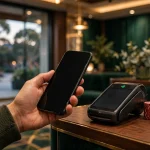
Encryption can protect information in transit, but it does not verify an operator or determine whether its casino games are lawful in Australia.

When you ask whether an online casino is safe in Australia, it helps to separate two questions: what a website does to protect information, and whether it is allowed to offer the games to people here. Those are not the same test. A secure-looking page does not settle the legal question.
The starting point is the Interactive Gambling Act 2001. It prohibits domestic operators from offering online casino games to Australian residents. So “safe” cannot simply mean that a service looks polished, loads without a warning, or accepts a deposit. Those details say little about whether the service is lawful or what recourse you may have if something goes wrong.
Casinos use SSL encryption to help safeguard transactions and sensitive information as it moves between your device and the website. That is a useful security measure: it is meant to make information harder for outsiders to read while it is being transmitted.
But encryption has a narrow job. It does not confirm who runs the site, establish that the operator is honest, or change the rules under the Interactive Gambling Act. A protected connection can still lead to a service that is not authorised to offer online casino games in Australia. Think of SSL as one part of handling data, not a certificate of good conduct.
If you’re choosing an online casino in Australia for 2026, check the available licensing and payment details before deciding where to play. These verdicts summarise the information provided for each operator.
Roby Casino
Roby Casino is listed with a Curacao eGaming license held by Roby Games Ltd. This is the licensing information available for assessing the operator.
Wild Tokyo
Wild Tokyo lists a Curacao license and a minimum deposit of A$10. Its stated payout times are 30–60 minutes for crypto and 1–5 days for fiat.
Playfina Casino
Playfina Casino lists a Curacao eGaming license held by Hollycorn N.V., dating from 2017. Its minimum deposit is A$20–30, depending on the offer.
Kingmaker
Kingmaker lists a minimum deposit of A$30. Its stated payout times are around 90 minutes for crypto and 1–5 days for fiat.
MrPacho
MrPacho lists a minimum deposit of A$30. Its stated payout times are 30–120 minutes for crypto and 24–72 hours for fiat.
JustCasino
JustCasino lists a Curacao Gaming Control Board license. That licensing detail is the available information to consider when reviewing the operator.
Thor Casino
Thor Casino lists a Curacao license held by Antillephone N.V. (Versus Odds B.V.). Its stated minimum deposit is EUR 20.
SkyCrown
SkyCrown lists a Tobique Gaming Commission license and a minimum deposit of A$30. Its stated payout times are around 10–15 minutes for crypto and 1–5 days for fiat.
LuckyVibe
LuckyVibe lists a Curacao Gaming Control Board license, OGL/2023/176/0095, held by Hollycorn N.V. This licensing information is the available basis for reviewing the operator.
Uptown Pokies
Uptown Pokies lists a Curacao license and has been operating since 2017. Its stated minimum deposit is A$20.
I would keep that distinction in mind whenever a site puts security language front and centre. A technical safeguard may reduce one kind of risk while leaving other risks untouched. It is not a substitute for asking what the service is, who is operating it, and whether it can lawfully offer those games to Australian residents.
The word can cover several different things: protection of personal information, payment security, fair handling of an account, or confidence that a service follows Australian law. Evidence for one does not automatically prove the others.
For instance, a claim about encrypted transactions tells you something about information in transit. It does not prove that a dispute will be resolved in your favour, or that Australian law will provide a remedy if winnings are withheld. Unlicensed gambling services lack consumer protections, and Australian laws may not assist you in that situation. That is a practical risk, not a technical detail.
Be wary of treating badges, reassuring wording, or a neat website as a complete safety check. None of those, by themselves, establishes that an online casino is licensed in Australia. The legal position matters even when the site’s security features appear sound. A lock symbol is not a licence.
There is another shortcut to avoid: using a VPN to get around a block or access restriction. Doing so may lead to voided winnings, account closure, and loss of your deposit. It does not make the service lawful or give you stronger protection. A workaround can create another problem.
A sensible baseline is therefore modest. Treat encryption as a measure for protecting information, not proof that an online casino is safe overall. Treat claims of trustworthiness as claims, not guarantees. And keep the Australian legal position separate from the website’s appearance: domestic operators are prohibited from offering online casino games to Australian residents, regardless of how carefully a site presents itself.
That distinction can feel less satisfying than a simple yes-or-no verdict. Still, it is the clearest way to read the word “safe” without mistaking a security feature for legal permission or consumer protection. A safer-looking website is not necessarily a safer choice.
PayID can make a deposit feel almost immediate, but speed answers only one question: how quickly a transfer might move. It does not establish that the service receiving the money is safe, lawful or able to resolve a dispute. In Australia, domestic operators cannot offer online casino games to residents. A familiar payment option does not change that rule.
A specialist review reports that PayID transfers run through the New Payments Platform and may clear within minutes once released. Treat that as a description of possible processing time, not a guarantee for every payment. A transfer can still be delayed before release, and the service’s own approval process may affect when funds appear in an account.
Attention: A quick network transfer cannot tell you whether an account has been credited or whether a service is authorised to offer casino games in Australia.
That distinction matters. The bank-to-bank transfer network and the recipient’s payment checks are separate stages. A quick network transfer cannot tell you whether an account has been credited, whether a payment is still being reviewed or whether a service is authorised to offer casino games in Australia. Fast is a timing claim, not a safety certificate.
The time shown at the payment stage may not include every step before the transfer is sent. The provider may need to approve a deposit, and its displayed instructions will determine what you are asked to do. If approval is pending, the transfer may not yet have been released to the payment network.
A specialist review also notes that PayID and some e-wallet payments can be quick after approval, while bank transfers and card payments may take several business days. Those are broad comparisons, not fixed service standards: the route offered, approval process and payment provider all matter. Check the payment information shown for the specific transaction rather than assuming that every PayID deposit will arrive at the same pace.
Before confirming a transfer, read the recipient and payment details carefully. If anything does not match the instructions on screen, pause rather than sending money and hoping the account will be credited. Keep the confirmation details for your own records. They may help you describe the transaction if you need to ask your bank or payment provider about it, though they cannot guarantee a particular outcome.
 Top Rated Online Casinos in Australia: What to CheckLearn how ratings are assessed, which bonus and wagering terms can change the maths, and why a review says four listed casinos…
 Online Craps in Australia: Casinos and Game ChecksLearn how to check whether a casino offers playable electronic craps, and distinguish it from a streamed live table before choosing a…
PayID is a way to make a payment; it is not an independent assessment of the service taking that payment. Seeing it among the available options does not prove that a casino is licensed in Australia, that a bonus is genuine or that you will have a remedy if a payment is disputed. The same applies to a no-deposit offer: its wording does not make the recipient trustworthy.
I would keep those questions separate. First, understand the transfer stage and any approval condition. Then consider whether the service is allowed to offer the product in Australia and what support you could access if something went wrong. Do not treat a smooth-looking payment screen as evidence on either point. A polished checkout is still just a checkout.
Nor should an advertised processing estimate be read as a promise. A payment may move quickly once released, but that says nothing about what happens before release or whether the receiving service will handle a problem fairly. If the instructions are unclear, or the recipient details change unexpectedly, do not send the transfer until you understand what you are being asked to approve.
That is the useful limit of PayID: it can offer a fast payment route, subject to release and approval, but it cannot remove uncertainty about the recipient or the service behind the payment. Fast, not risk-free.
The legal distinction that matters is between the person playing and the business providing the game. Under the Interactive Gambling Act 2001, operators must not offer real-money online casino games to people in Australia. The Act does not explicitly criminalise an individual for using an offshore casino site. Those are separate points, and one does not cancel the other.
So, if you are weighing up whether to play for real money, do not read the position on individual players as approval. It is not a declaration that an offshore service is lawful to offer here, nor a promise that you will be protected if something goes wrong. A site may accept Australian customers while still operating outside the rules that apply to providers serving people in Australia. A familiar-looking brand or an offshore licence does not change that legal line.
“Safe” can mean several different things. You might mean that a site protects account details, pays winnings, or gives you a way to resolve a complaint. The legal status answers none of those questions by itself. And where a gambling service is unlicensed in Australia, local consumer protections may not be available to you. If winnings are withheld or an account dispute develops, Australian laws may not help you recover the money. That is a practical risk, not a technicality.
 GameBeat Casinos in Australia: Games and TermsLearn what to verify on GameBeat casino game pages, how slot rules and bonus terms affect play, and what to check before…
 KA Gaming Online Casinos in Australia: Slots & BonusesExplore KA Gaming slots, demo play, mobile access and bonus terms; demo availability does not confirm real-money access or promotion eligibility.
I would not treat an account working today as evidence that it will keep working, or that a dispute will be settled in your favour. A service can be accessible without being authorised to provide online casino games to Australian residents. Likewise, the fact that individual use is not explicitly criminalised by the Act is not a safety rating for the site. Keep the two questions apart: what the law says about the operator, and what recourse you might have as a customer.
Be especially cautious about attempts to get around location restrictions. Using a VPN to access a casino may lead to voided winnings, account closure and loss of your deposit. It does not make the service licensed in Australia or improve your position if the operator refuses to pay. A workaround is not protection.
If you are considering real-money play, pause before depositing and consider what you could lose if the account is closed or a withdrawal is disputed. Do not assume that an offshore licence gives you the same recourse as dealing with a service authorised in Australia; online casino games are not licensed here for Australian residents. Nor should a positive review or another player’s account be mistaken for a guarantee about your own experience. Individual reports cannot settle the legal or consumer-protection question.
The careful reading is narrow: the Interactive Gambling Act 2001 does not explicitly make individual use of offshore casino sites a criminal offence, but it prohibits operators from offering online casino games to people in Australia. That distinction is not an endorsement, a recommendation, or assurance that you can safely recover funds if a dispute arises. The legal line stays with the provider. The risk of being left without practical recourse can still land with you.
VPN Risks
Using a VPN to access a casino may lead to voided winnings, account closure, and loss of your deposit.
When a site calls itself safe, I’d treat that as a claim to check, not a verdict. The useful question is what the site means by “safe”: is it talking about payments, account handling, or legal status? Those are different things, and a polished label does not answer all of them.
Start with the exact service being described. A site may offer more than one kind of gambling, and a statement about a wagering service does not automatically apply to online casino games on the same site. Keep the claim narrow. If the wording slides between “licensed”, “regulated” and “available in Australia” as though they mean the same thing, pause there. They do not.
ACMA directs people to its information and public register to learn about legal gambling products and check whether a wagering service holds a valid Australian licence. That is a sensible place to check a claim about a wagering service. But the register is about wagering services; a listing there is not proof that an online casino is authorised. Don’t stretch a register entry beyond what it covers.
I’d also read the claim itself closely. Does it identify the service and the kind of licence it says it holds, or does it lean on broad phrases such as “Australian approved”? Is the statement tied to an official register entry, or is it simply repeated in promotional copy? A precise claim is easier to assess than a badge with no explanation. The wording alone still isn’t proof.
A “best” label is even less useful as a safety check. It tells you someone has made a ranking, not what was checked or whether the criteria apply to the service you are considering. The same goes for lists that mix casino games with wagering products. I’d look for the underlying basis of each claim rather than letting a ranking do the thinking for me. Dry, but useful.
 Playtech Online Casinos in Australia: Games and TermsLearn how Playtech slot demos use play credits, why free-play results do not predict cash play, and what bonus wagering terms to…
 New Online Casino Sites in Australia: Key ChecksLearn how offshore status, licence claims, wagering terms, PayID withdrawals and verification affect casino play; Australia has no domestically licensed real-money
For a quick check, keep three things separate: the product being offered, the licence claim, and the source of the evidence. Use ACMA’s information for context and its public register for the specific wagering-service check it supports. If the material you find is about a wagering service, don’t treat it as an answer about an online casino. If the claim is vague, unsupported, or shifts between product types, you have not verified it.
This approach won’t turn an online casino claim into an endorsement, and it does not establish that a casino is authorised. It simply helps you avoid confusing a general safety promise with a checkable statement. For Australian readers, that distinction matters: the public register is a tool for checking wagering services, not a shortcut to confirming an online casino. A “safe” label can be easy to print. What it actually covers takes closer reading.
A site can look local without being an Australian-licensed online casino. Australian currency, local wording or an Australian-facing design do not change the legal position: under the Interactive Gambling Act 2001, domestic operators cannot offer online casino games to Australian residents.
That distinction matters when you are trying to work out what “Australian casino” means. It may describe the audience a website is aimed at, not a service authorised to provide casino games under Australian law. The key point is not how familiar the site looks, but whether the service it offers is permitted here. For online casino games, the law does not provide a domestic licensing route for operators to serve Australian residents.
A website may use Australian language and accept Australian customers while being run from elsewhere. That does not make it an Australian-licensed casino. An offshore licence, where a site has one, is not the same thing as being licensed in Australia.
Nor does a polished website settle the question of safety. A professional-looking brand can make a service feel established, but appearance alone cannot establish that it is authorised to offer online casino games to people here. Be wary of claims that blur the difference between serving Australian customers and being licensed in Australia.
This is also why a phrase such as “safe Australian casino” can be misleading if it suggests that a local online casino market exists. The legal restriction applies to domestic operators offering online casino games to residents; it is not a label that a site can avoid by describing itself as international or Australian-friendly.
The law sets the boundary for operators. ACMA’s enforcement work is a separate matter: whether a particular website is being investigated, blocked or otherwise acted against does not determine whether offering the service is lawful. Equally, the fact that a site remains reachable does not show that it is authorised. Visibility is not approval.
For you, the practical takeaway is simple: do not treat local branding, an Australian audience or continued access as proof of an Australian licence. There is no domestic authorisation for online casino games to residents under the rule described above. Unlicensed gambling services do not provide Australian consumer protections, and Australian law may not help if a service withholds winnings. A VPN is not a workaround to rely on: using one to access a casino may lead to voided winnings, account closure or loss of a deposit.
That can make comparisons of online casino sites feel awkward: the usual checklist of choosing a local, licensed casino does not fit this market. Reviews and site claims may describe features, but they cannot turn a prohibited service into an Australian-authorised one. Keep the distinction clear. An Australian-facing casino is not necessarily licensed in Australia, and a site’s presence online is not proof that it is safe or lawful.
A payment method that lets you put money into an account does not necessarily give you a route back out. That distinction is easy to miss when a cashier page groups every option under “payments”. I would check the withdrawal terms separately before treating any deposit route as useful for both directions.
A specialist review describes POLi as mainly a deposit method. Its presence in a cashier does not establish that you can withdraw through it, so do not assume a return payment will follow the same path as the deposit. Check the service’s stated withdrawal options and conditions rather than relying on the deposit screen.
POLi is described as mainly a deposit method; its presence in a cashier does not guarantee that you can withdraw funds through it.
Cards can present a different snag. A specialist review notes that card withdrawals may be delayed or unavailable, depending on the processor handling them. That is a practical limitation, not a reason to assume another route will be offered or that a payment will arrive by a particular date. If the stated route is unclear, ask the service before sending money. Keep a record of the payment method and the terms shown at the time.
There is a more basic point for Australian readers: an Australian-facing website is not necessarily licensed in Australia. The Interactive Gambling Act 2001 bars operators from providing real-money online casino games to people in Australia. Offshore services may still be accessible, but that does not make them authorised here. Unlicensed services do not provide Australian consumer protections, and Australian law may not help if a service withholds winnings. That changes the stakes of a payment problem.
Do not use a VPN to get around access restrictions. Doing so may lead to voided winnings, a closed account, or loss of your deposit. A payment option labelled “safe” cannot remove those risks or make a prohibited service lawful.
If you are comparing deposit and withdrawal details, keep the questions separate: what can you use to pay in, what route is actually available for a withdrawal, and what conditions apply to that route? A familiar payment logo is not proof that both directions work. Nor does it establish that the service is safe to use in Australia.
For me, the useful check is the withdrawal wording before any deposit, not a promise that a cashier looks straightforward. If the terms do not clearly explain how a withdrawal is handled, treat that uncertainty seriously. Payment screens can look tidy. The way out may not be.
When I check a pokie’s stated return to player (RTP), I look in the game’s information or help panel. It is often tucked behind an “i” icon or a menu. That figure describes the game’s theoretical return over play; it is not a promise about what you will get from a particular session. A displayed RTP is a reference point, not a forecast.
There is another detail that can be easy to miss: the same game may be offered in different RTP versions. The provider can release those versions, but the operator decides which one to run. So seeing a familiar game title does not, by itself, tell you which RTP applies. Check the information screen for the version available on the service you are viewing rather than assuming every copy is identical.
That still answers only a narrow question about the game’s stated maths. RTP does not tell you whether a service is safe, whether its claims are dependable, or whether it is lawful to offer that game to you. A generous-looking figure or an attractive welcome offer cannot settle those issues. Numbers can be precise and still leave the important question untouched.
Return to Player (RTP) is a theoretical return over play, not a forecast for a specific session. Providers may release different RTP versions of the same game, and the operator chooses which version to run.
For people in Australia, that legal distinction matters. Online slots and casino-style games, including blackjack, are prohibited when offered to people here. A game’s presence on a website, its RTP display, or a claim that it is a safe casino game does not change that position. Nor does a free-play mode make real-money casino services lawful; the key legal concern is the provision of prohibited interactive gambling services to Australian customers.
I would treat RTP as information about a game, not a safety badge. If you are simply trying to understand a figure shown in a game, open its help or information panel and read the version-specific details. If the screen does not make the RTP clear, do not fill the gap with a figure found for a different version elsewhere. Same title, different setting.
People also look for safe non-GamStop casinos or ask whether online casinos are safe. Those labels do not answer the Australian legal question, and an RTP figure certainly cannot. Keep the two checks separate: what the game says about its return, and whether the service is permitted to offer it in Australia. The first is on the game screen. The second is not.
A phone makes gambling easy to reach; it does not make it safer or change the Australian legal position. Under the Interactive Gambling Act 2001, domestic operators cannot provide online casino games to Australian residents. A site’s mobile layout, or a claim that it has responsible-gambling tools, should not be mistaken for authorisation to offer those games here.
Deposit limits are one practical safeguard to look for when assessing claims about a platform. A specialist review describes controls that let players set deposit limits by day, week or month. Treat that as a feature claim about the service being reviewed, not as proof that every platform offers the same controls or that it is licensed in Australia. A limit can help you decide in advance how much you are prepared to deposit; it cannot remove the risk of gambling or guarantee that you will stick to it.
I would check whether the limit is clearly explained and easy to find before relying on it. Read what the service says about applying a limit, and be wary of treating a tool’s presence as a stamp of safety. The detail matters. So does the legal context.
Responsible-gambling rules apply to licensed operators, but online casino games are prohibited for Australian residents. That means a responsible-play label on an offshore casino does not turn it into a locally authorised service. Nor should a phone-based version be treated differently from the same casino on a computer.
Support information is another useful sign to check. Reputable platforms provide information about gambling-related harm and direct players to professional support services across Australia. If gambling is affecting your wellbeing or finances, seek help directly rather than waiting for a problem to grow. Gambling Help Online is one Australian support service.
Keep the distinction simple: a deposit control may help manage deposits, and support links may point you towards assistance. Neither makes an online casino legal for Australians, and neither guarantees a safe outcome. A polished mobile experience is still only a screen.
When you ask whether an online casino is safe, it helps to separate two things: what a site claims about itself and what Australian authorities can do about unlawful gambling services. ACMA is Australia’s primary online gambling regulator. Its role includes enforcing the rules that apply to services offered to people here.
ACMA can ask internet service providers to block a website if it offers prohibited interactive gambling to Australian customers, or provides an unlicensed service to adults in Australia. A block can make a site harder to reach, but it is an enforcement measure, not a safety endorsement for every site that remains accessible. Nor does a blocked address tell you, by itself, what will happen to an account or funds held by an offshore operator.
ACMA may seek a blocking order as a last resort when it considers customer safety to be at risk. That threshold matters: blocking is one tool used when concerns call for stronger action, not a personal safety check you can rely on before using a service. A site’s presence online is not proof that it is safe or licensed in Australia.
I would also be wary of treating an offshore licence or a working website as a substitute for local consumer protection. Unlicensed gambling services lack Australian consumer protections, and Australian laws may not help if an operator withholds winnings. Using a VPN to access a casino may also lead to winnings being voided, an account being closed, or a deposit being lost. Not a small print problem.
So there is no dependable “safe casinos in Australia” list that can turn an unauthorised service into a lawful one. ACMA’s enforcement powers can reduce access to prohibited services, but they do not make online casino gambling safe by default. If you are checking a particular claim, focus on ACMA’s information and the legal status of the service, rather than assuming that availability, a polished site or an offshore licence means you are protected.
A withdrawal request can trigger identity checks because a casino may ask you to confirm who you are and that the payment method is yours. Common requests include photo identification, proof of your address and evidence that the account or payment method used belongs to you. The exact documents and process depend on the service.
That paperwork has a narrow purpose: verifying identity and payment ownership. Sending it does not make a casino legal in Australia, and completing KYC is not a guarantee that a withdrawal will be paid. Keep copies of what you submit and read the service’s terms before sharing sensitive documents. If the rules are unclear, or the requested details do not match the account, pause rather than sending more information on trust.
There is a more important point for anyone looking at an Australian-facing casino. Under the Interactive Gambling Act 2001, operators cannot provide real-money online casino games to people in Australia. An offshore licence does not change that. Services operating outside the law may lack Australian consumer protections, and Australian law may not help if a dispute leaves your winnings withheld. A polished app, wallet option or identity-check process is not proof that the service is authorised here.
Be wary of advice to use a VPN to reach a casino. Doing so may lead to winnings being voided, an account being closed or a deposit being lost. A workaround is not a safeguard.
If a service asks for identity documents, consider what you are being asked to hand over and whether you have a reliable way to resolve a dispute. A forum post or an assurance from the operator cannot turn an unauthorised service into a safe Australian casino. The documents may satisfy the operator’s checks; they do not settle the legal question.