The phrase is informal in Australia, so venue names, local licensing and online service claims need to be assessed separately.
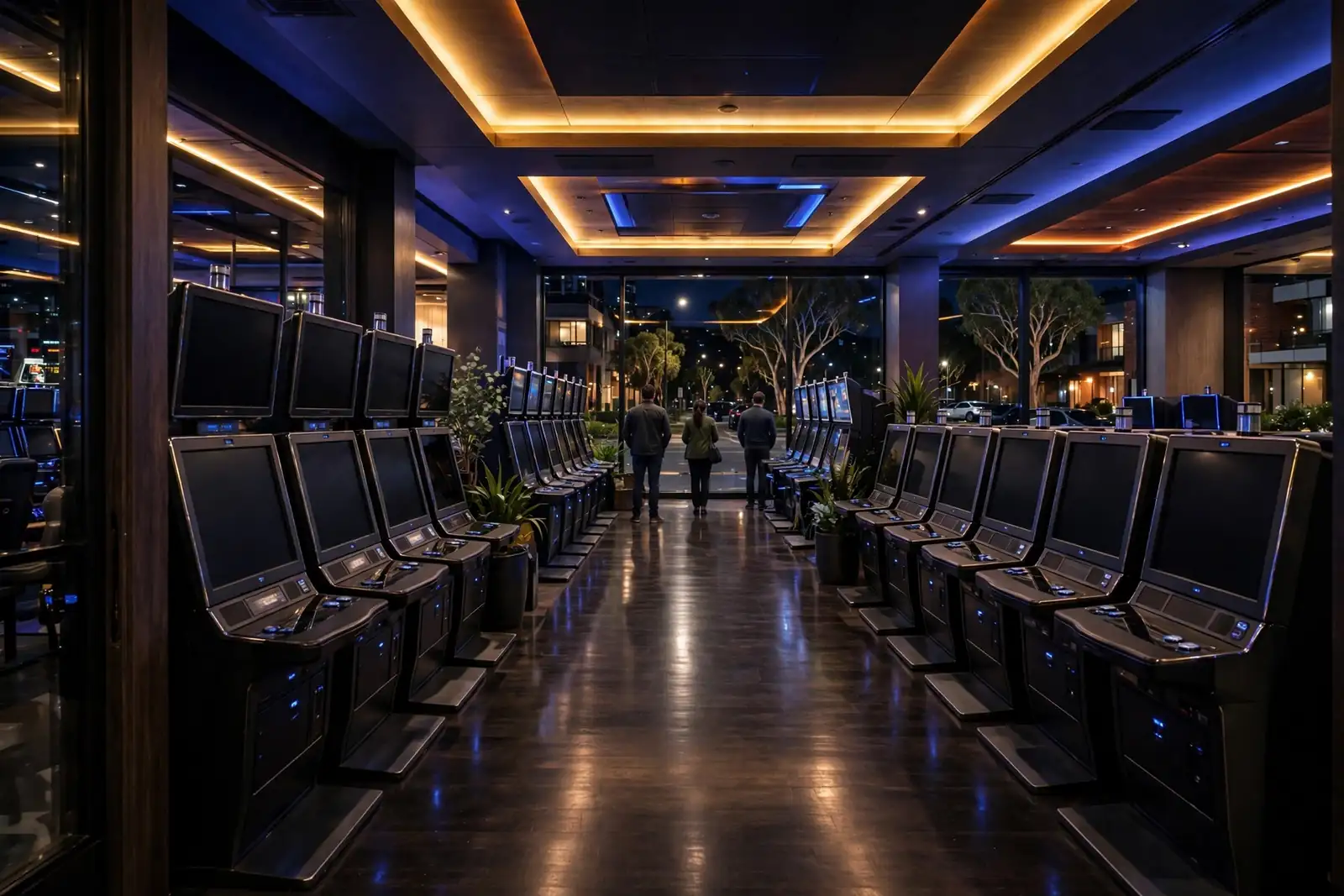
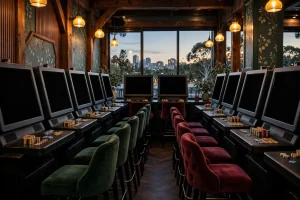
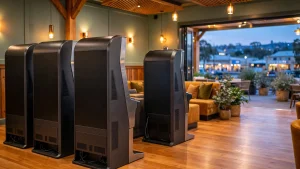
In Australia, “pokies parlour” is informal wording, not a standard name for a separate kind of casino. People may use it to mean a casino gaming area, a venue with electronic gaming machines, or simply a place they associate with that style of gambling. The phrase can sound like the name of a particular business, too, but on its own it identifies no specific venue.
That looseness matters. A land-based casino is a physical venue operating under a licence issued by the state or territory where it is located. Australia’s casino industry is regulated by those local jurisdictions, rather than through one nationwide casino licence. So when someone says “parlour casino”, I would first take it as a casual description and then look for the actual venue name and the jurisdiction responsible for it.
The words can also appear on a website, in an advert or in a page title. That does not turn the site into a local casino parlour. Online wording can borrow familiar Australian terms while describing a service with a very different legal position. Under the Interactive Gambling Act 2001, operators cannot provide real-money online casino games to people physically in Australia. That includes casino-style games such as poker, blackjack, roulette and electronic gaming games. The name on a page does not change that distinction.
If you’re looking for a pokies parlour casino in Australia in 2026, check the available operator details before choosing where to play. This reference card highlights the specific licensing, deposit, and payout information provided for each option.
Roby Casino
You can note that Roby Casino is licensed by Curacao eGaming under Roby Games Ltd.
Wild Tokyo
Wild Tokyo lists a minimum deposit of A$10. Its stated payout times are 30–60 minutes for crypto and 1–5 days for fiat.
Playfina Casino
Playfina Casino is licensed by Curacao eGaming through Hollycorn N.V., which has held the licence since 2017. Its minimum deposit is A$20–30, depending on the offer.
Kingmaker
Kingmaker lists a minimum deposit of A$30. Its stated payout times are around 90 minutes for crypto and 1–5 days for fiat.
MrPacho
MrPacho lists a minimum deposit of A$30. Its stated payout times are 30–120 minutes for crypto and 24–72 hours for fiat.
JustCasino
JustCasino is listed as licensed by the Curacao Gaming Control Board.
Thor Casino
Thor Casino is licensed in Curacao by Antillephone N.V. (Versus Odds B.V.). Its minimum deposit is EUR 20.
SkyCrown
SkyCrown lists a minimum deposit of A$30 and a Tobique Gaming Commission licence. Its stated payout times are around 10–15 minutes for crypto and 1–5 days for fiat.
LuckyVibe
LuckyVibe is listed with a Curacao Gaming Control Board licence, OGL/2023/176/0095, held by Hollycorn N.V.
Uptown Pokies
Uptown Pokies is listed as operating since 2017 under a Curacao licence. Its minimum deposit is A$20.
A quick way to keep the meanings apart is to ask what the phrase is pointing to. If it refers to a physical property, you should be able to identify a real venue and the local jurisdiction that licenses it. If it refers only to a web page, the familiar wording is just wording; it does not establish that the service is a land-based Australian casino or an Australian-licensed online casino. Those are different questions, and the phrase itself answers neither.
There is a practical reason people reach for the word “parlour”. In ordinary conversation, it can suggest a dedicated room or gaming area, rather than the full building and everything else a casino may contain. But that is a loose impression, not a reliable description of a venue’s layout, facilities or entry rules. A casino might have gaming areas alongside restaurants, bars or entertainment spaces; calling it a parlour does not tell you which of those are present.
The scale of the land-based sector can help put the phrase in perspective without making it a formal category. A specialist review describes Australia as having more than 20 full-scale casinos across all eight states. That is a source-specific count, not a permanent definition of what qualifies as a casino or parlour. The terminology can shift between casual conversation, venue descriptions and published counts.
 Best pokies in Melbourne: venue checks and accessLearn how to verify a Melbourne venue’s address and map pin, distinguish airport-area results from city locations, and check details before travelling.
 Pokies in Brisbane: Hours, Venues and Online LimitsLearn why an “open now” listing may cover meals but not an operating gaming area, and what to confirm before travelling or…
There is also a national figure for gaming machines in casinos: 3,308 machines are recorded as both endorsed on venue licences and installed. That figure refers to machines in casino properties, not to every place someone might casually call a pokie parlour. It is a count tied to licensing and installation, while “parlour” remains everyday shorthand. A label and a regulatory count are not the same thing.
When I hear someone use the phrase, I do not assume they mean a small independent venue, a particular room, or an online product. I treat it as a prompt to pin down the subject. Is the person talking about a physical casino? A gaming area within one? Or a website that has adopted the same familiar language? That small pause prevents the first confusion: taking a label as proof of what a business is.
The distinction is especially useful when a web page presents local-sounding language beside an online service. A place name, Australian references or a casino-like label cannot establish that the operator holds a local casino licence. Nor does a site’s apparent resemblance to a physical venue make the legal rules for online gambling disappear. Keep the terms separate: a parlour is a casual description; a land-based casino is a licensed physical property; and a website using similar wording is still a website.
So, in Australian usage, “pokies parlour” is best read as an informal expression whose meaning depends on context. It may point to gaming inside a real casino, but it is not itself a licence category, an official venue type or a guarantee that an online service is lawful. A name can sound local. The distinction is in what the service actually is.
Attention: A local-sounding name or an online service resembling a physical venue does not establish that the operator holds an Australian casino licence.
Australia’s land-based gaming venues are spread across the states and territories, rather than gathered in one casino district. You’ll find them in major cities and in regional locations, so the practical question is often how far you are willing to travel, not whether every city has a large casino nearby.
Sydney is a useful example of the difference between a broad gambling map and a list of casino properties. One specialist review counts 11 gambling facilities in the city; that figure describes facilities, not 11 full-scale casinos. The same kind of review places three casinos across three Northern Territory cities and identifies Alice Springs as the city with the most there, at one casino. Treat those as figures from a review, not as a permanent census. Venue listings and classifications can change.
For a first visit, check the specific property’s current entry information before setting out. Opening hours, access arrangements and event schedules can differ between venues. Major Australian casinos operate around the clock, but that does not mean every restaurant, bar or other part of a complex keeps the same hours. The casino floor’s hours and the rest of the building’s are not interchangeable.
Entry itself is straightforward on the main rule: you must be at least 18 to enter a casino anywhere in Australia. Bring valid photo ID. Major Australian casinos require it for entry, and you may be asked to show it even if you look well over the minimum age. I would not leave ID in the car and hope a phone photo will do; carry the actual document and follow the venue’s entry instructions.
That age rule applies to casino entry, not automatically to every other space in a resort or entertainment complex. A property may have restaurants or entertainment areas with separate access conditions. Check the venue’s own guidance if you are travelling with someone under 18, rather than assuming the casino’s rule covers the whole site—or that a separate area means casino access is allowed.
Some properties also have additional entry arrangements. Crown Sydney, for instance, is a members-only casino, so it should not be treated as an ordinary walk-in venue. Check the relevant property’s access terms before planning a visit; an address alone does not tell you whether you can enter the gaming area.
If you’re travelling from interstate or heading to a regional venue, confirm the location and entry requirements directly with the property. That small check can save a wasted trip. Bring your ID.
If you are looking for a land-based venue rather than a website using parlour-style wording, an exact address makes the distinction practical. Two Australian locations give you a clear starting point: one in Alice Springs and one on the Gold Coast.
Lasseters Casino is at 93 Barrett Drive, Alice Springs, NT 0870, Australia. The full address is useful when entering the venue into a map or arranging a trip; “Alice Springs” alone is less precise. Keep the property name with the street address so you are checking the right destination, not simply a place with a similar label.
Located at 93 Barrett Drive, Alice Springs, NT 0870, Australia.
Located on Broadbeach Island, Gold Coast.
Jupiters Gold Coast Casino & Hotel is located on Broadbeach Island, Gold Coast. That is the listed location rather than a street address, so use the venue’s full name when looking it up. The Gold Coast label gives the broader destination; Broadbeach Island narrows it down.
These details are handy when “pokies parlour” turns out to mean a physical casino, but they are not a directory of every venue in Australia. They also do not tell you what is open on a particular day or what entry arrangements apply. I would treat an address as a way to identify a place, then confirm current travel and venue information before setting out. Simple enough.
The distinction matters if a page or listing borrows casino language: a named property with a physical location is a different thing from an online service. These two examples are specific, identifiable places—not a ranking, and not an endorsement. When you want a nearby venue, start with the city and the property name, then check that the address matches before you go.
Looking for a no-deposit or sign-up bonus can make it seem as though the main question is which offer is available. It is worth separating that from a more basic one: what does an offer actually tell you about the service behind it?
Very little about its legal status. A promotion is a claim made by a website, not proof that the site is authorised to provide online casino games to people in Australia. The same goes for a site that loads, accepts account activity or appears under a different web address. Access is not evidence of Australian licensing.
 Pokies in Canberra: Hours, Venues and Search TipsLearn how to verify a Canberra venue’s gaming-area hours, check current notices, and distinguish general trading hours from machine availability.
 Best Pokies in Tasmania: Venue Checks and HoursLearn how to verify a venue’s gaming-area access and opening hours, and assess casino and online-pokies claims without treating search listings as…
That distinction matters because the rules are not a question of how generous an offer looks. Under the Interactive Gambling Act 2001, operators cannot provide real-money online casino games to people physically in Australia. Casino-style online games, including slots, poker and table games, fall within the prohibited services. A sign-up offer does not change that.
In ordinary promotional language, “no deposit” suggests that a person can receive or use some form of introductory offer without first making a payment. “Sign-up bonus” is broader: it refers to a benefit linked to creating an account or joining a service. Those labels describe how a promotion is presented. They do not establish whether the service is lawful for Australians.
The wording can also leave important details unclear. An offer may be described in a headline while its terms set out restrictions, eligibility rules or conditions for using it. Without reliable, complete terms, the headline alone cannot tell you what the offer amounts to in practice. And even full terms would explain the promotion, not establish Australian authorisation.
I would treat the phrase “no deposit” as a description to examine, not as a safety signal. The absence of an upfront payment does not make an online casino service lawful, nor does it guarantee that an account or promotion will work as advertised. There is no magic in the label.
“Pokies parlour” has a familiar local feel, but a website using that language is still a website. It might borrow words associated with land-based gaming venues to make an online service sound familiar. That wording does not turn the service into a local venue, identify a licensed Australian casino or show that its online games may be offered here.
Likewise, a sign-up page that accepts details is not a regulatory credential. A working registration form, an account dashboard or an address that differs from one seen before can tell you something about the site’s presentation or accessibility. None demonstrates that the operator is permitted to provide real-money online casino games in Australia.
This is an easy point to miss when the offer is placed front and centre. Promotional language is designed to draw attention to the benefit. It is not a substitute for understanding the legal status of the service.
When you encounter a bonus claim, read it as a claim about a promotion. Do not read it as confirmation that the operator has Australian approval. The offer’s wording, the site’s branding and its ability to accept account traffic are separate from the law governing online casino services.
That does not require you to work out whether a particular promotion is attractive. The more important distinction is that a bonus cannot make a prohibited service permissible. Nor does a familiar name or local-sounding phrase establish that an online casino is an Australian-licensed one.
If you came across the phrase “pokies parlour casino no deposit bonus”, the useful takeaway is not that a suitable offer must exist. It is that the wording combines a local gaming term with a promotional claim. Those parts do not verify each other.
 Best Pokies in Perth: Venue Hours and RulesLearn how to confirm a Perth gaming room is operating, what venue hours do and don’t tell you, and what to consider…
 Best RTP Pokies in Australia: What RTP MeansLearn how RTP describes returns across a very large number of plays, why each spin uses an RNG, and why the figure…
A promotion is not a licence. A working website is not one either.
A casino-style website loading on your phone can look like a simple answer to wanting to play from home. It is not. In Australia, the legal position and the technical route to a website are separate things, and a working address tells you only that the page is reachable at that moment.
The federal rule is set by the *Interactive Gambling Act 2001*. It makes it unlawful for operators to provide real-money online casino games to people located in Australia. That covers online slots and table games, as well as poker. The Australian Communications and Media Authority (ACMA) oversees compliance with the federal interactive gambling rules. The law is directed at the service provider; a player’s ability to visit a page does not turn that service into a lawful Australian online casino.
ACMA can ask Australian internet providers to restrict access to sites that offer prohibited interactive gambling services or advertise them here. The regulator says it has blocked more than 1,455 illegal gambling and affiliate websites following enforcement action since November 2019. That is a record of enforcement, not a list of every site a person might encounter today.
Blocking is not always visible as a neat notice explaining what happened. A domain may stop resolving through an Australian provider, while another address may appear later. A specialist review has also described blocking affecting domains and the emergence of alternate addresses over time. That kind of account is useful context, but it should not be mistaken for a current regulatory clearance.
Legal Prohibition
Under the Interactive Gambling Act 2001, it is unlawful for operators to provide real-money online casino games to people physically in Australia.
A specialist review has also reported ACMA action involving alternate domains associated with Fair Go. The practical point is not to follow a changing address from one page to another. An alternate domain is still just an address; it does not demonstrate that the operator is authorised to provide online casino games to Australians. Nor does an account page accepting traffic settle the question. Technical access is not a licence.
That distinction matters when you are looking for a way to play online or to try a free-play mode. A site can present casino-style games and still fall within a category of service prohibited when offered for real money to people in Australia. A free-play label does not establish that the operator is locally authorised, either. Read what the site is actually offering rather than treating its wording or availability as proof of its status.
If an address fails to open, that alone does not tell you whether the cause is an ACMA action, an ordinary connection problem or a change made by the website. Likewise, a page opening successfully does not establish that it is permitted to provide the service. The same caution applies when a link redirects or an alternate domain appears: a change in access is not a change in the law.
For current information about federal enforcement, check ACMA’s own material at acma.gov.au, rather than relying on a site’s claim that it has moved or remains available. Keep the two questions separate: can you reach the page, and may the operator legally offer that service in Australia? Only the first can be answered by your browser. A page loading is no legal green light.
“Free chips” and “free spins” can sound like harmless extras, but the wording alone tells you very little. It does not establish whether an offer is genuinely free, what activity it relates to, or whether the service behind it can lawfully provide online casino games to people in Australia. I’d treat the phrase as a claim to examine, not as a reason to sign up.
The first distinction is between free-play language and the service being offered. An invitation might describe a credit or a play session as free, while still directing you to an online casino-style game. Under the Interactive Gambling Act 2001, operators are barred from supplying online casino games to people located in Australia. That prohibition covers casino-style games such as poker, blackjack, roulette and slots. Calling an offer “free” does not, by itself, answer whether the underlying service is permitted.
Nor does the wording prove that no payment, account activity or other condition is involved. A short headline may leave out the terms that define what “free” means. Without clear details, you cannot tell what is being offered or what, if anything, you would have to do to use it. I would not infer the conditions from a banner or a few words in a page title.
There is a separate question of what kind of play the offer describes. “Free chips” may be used loosely, and “free spins” may refer to a feature on a casino-style website. Those labels do not identify a land-based venue, confirm that the play is only for entertainment, or establish that a service has Australian approval. The label is not the licence.
Free-play phrases or "free chips" labels do not identify a land-based venue or establish that a service has Australian approval.
A website’s appearance can make an offer feel concrete: there may be an account page, a button to claim something, or a familiar casino layout. None of that changes the legal position. A site being reachable or accepting account traffic does not show that it is authorised to offer online casino games in Australia. A polished presentation is still just a presentation.
If you come across such wording, slow down before sharing personal details or following a payment path. Read what the offer actually says, look for the identity of the operator and the terms attached to the claim, and keep those details separate from assumptions about legality. Even clear terms cannot turn a prohibited online casino service into a permitted one.
This is also why a free-play phrase should not be mistaken for evidence that a particular Australian casino has a corresponding online offer. Land-based casinos and online services are not interchangeable, and a name or theme borrowed from a physical venue does not prove a connection. The same goes for a page describing itself as a local parlour: wording can suggest a setting without establishing who runs the service or what it may lawfully provide.
The safe reading is narrow: the words describe a claimed incentive, nothing more. They do not establish that the offer is available, genuinely cost-free, or lawful for an Australian user. Free, in a headline, is a small word with a very limited job.
A useful review should tell you what it actually assessed. “Good atmosphere” is a judgement; the venue’s address, stated opening arrangements or published entry conditions are details you can check elsewhere. Keep those categories separate. A confident tone does not turn an opinion into evidence.
I start by looking for specifics tied to the place being discussed. Does the review name a physical venue, or does it slide between a local casino and an online site using similar wording? Does it describe something the writer observed, or repeat a general claim that could fit anywhere? If the wording stays vague, treat it as a view, not a finding.
For a land-based casino, the regulatory detail should make sense for its location. Australia’s casino industry is overseen at state and territory level, and each property operates under a licence issued by its local jurisdiction. A review that names the relevant jurisdiction gives you a point to check. A bare phrase such as “fully licensed” gives you much less to work with unless it says which property and which authority it means.
That distinction matters because the word “parlour” can be used loosely. Read the whole page, not just its headline. A review may begin by describing a physical venue, then turn to an unrelated website or a generic account of casino play. That shift can make the piece sound more specific than it is. Keep the subject in view.
Look for sentences that describe a concrete feature and ask whether they can be independently confirmed. Then set aside broad praise, predictions and claims about what every visitor will experience. A review can contain both, but they do not carry the same weight.
Look for specific, independently confirmable features and the relevant licensing jurisdiction. Separate these verifiable details from personal impressions and broad promotional praise.
Be wary of sweeping statements about a venue being the best, effortless or perfect for everyone. Those are promotional cues, not useful measures. The same goes for a review that lists advantages without explaining what was checked, or that gives a verdict before identifying the place under review. Dry but useful: details first.
A writer’s point of view is not automatically a flaw. Personal impressions can help you understand what the reviewer valued. The key is whether the piece labels them as impressions rather than presenting them as universal facts. “I found the room busy” tells you about one person’s experience; it does not establish what you will encounter.
Notice whether the page is clear about its purpose. Is it describing a particular venue, discussing casino terminology, or directing readers towards a separate service? If the focus changes, judge each claim in its own context. A review label alone does not tell you what was examined.
I also look for consistency: the venue named at the top should remain the subject throughout, and factual details should not be blurred with opinion. If key claims are repeated without explanation, or the page leaves you unsure whether it concerns a physical casino at all, there is little reason to rely on its verdict.
A careful reader does not need to accept or reject a review as a whole. Keep the verifiable details, treat personal impressions as personal, and leave unsupported praise where it belongs.
A bonus claim can sound precise while leaving the important questions unanswered. “Parlour bonus” is broad wording, not the name of a particular offer or a way to identify who is behind it. On its own, it tells you nothing reliable about eligibility, conditions, or whether the service is lawful for someone in Australia.
I treat the headline as a claim to inspect, not as proof. Look for the operator’s identity and the full terms attached to the offer. Check what the wording actually promises, who can take part, and what obligations follow. If those details are absent, unclear or hard to reconcile with one another, there is little reason to rely on the headline. A large-looking promise is still just a promise.
There is an important Australian distinction here. State and territory authorities license land-based casinos in their jurisdictions. That does not create a local licence for online casino games. Under the Interactive Gambling Act 2001, it is illegal for operators to provide real-money online casino games—including slots, poker and table games—to people physically in Australia. Advertising those prohibited services to Australians is also banned. Calling an inducement a “bonus” does not alter that position.
So, if a promotion is tied to online casino play, do not treat its wording as evidence that the offer is lawful or that the provider is authorised to serve Australians. A polished page, familiar-sounding label or confident claim cannot change the legal status of the service. The distinction is straightforward, even when the marketing is not.
For an in-person venue, the word “bonus” may also be used loosely in promotional material. Read it in context and do not assume that a casino-style phrase refers to a standard benefit available to every visitor. The wording needs to identify what is being offered and by whom; otherwise, it is too vague to support a sensible decision.
I would keep the assessment plain: identify the provider, read the actual terms, and separate promotional language from what can be established. If the claim does not name its conditions clearly, do not fill in the blanks on its behalf. That is not being overly cautious. It is simply refusing to let a headline do the work of evidence.
“VIP” sounds specific, but on its own it tells you very little. It does not identify a particular Australian venue, confirm that the venue has a members-only area, or show that you qualify for special access. It may be a label used in advertising, a page heading, or a description someone has added. The word is not proof of what is available.
For a land-based casino, the meaningful details are the property and the jurisdiction that licences it. Australian casinos are licensed by their state or territory, and the licence applies to the property—not to a phrase such as “VIP parlour.” I would treat the label as a prompt to find out what the venue actually means by it, not as an invitation or a promise. Marketing can be generous with titles.
Nor does the phrase establish that a place is open to the public. A members-only casino is a distinct access arrangement, not something you can infer from “VIP.” The wording alone does not tell you whether membership is required, what access conditions apply, or whether the description refers to a real physical venue at all.
Online, the distinction matters more. A site using VIP language does not thereby become an Australian-licensed casino. Under the Interactive Gambling Act 2001, operators cannot provide real-money online casino games to people in Australia. A polished page, an account area, or special-sounding status does not change that legal position.
So keep the claim and the evidence separate. “VIP” is a description; it is not a licence, a confirmed location, or proof of special access. The label does little work.
A site may load, accept account activity or reappear at a different web address. None of that proves it is an Australian-licensed online casino. In Australia, the Interactive Gambling Act 2001 prohibits operators from providing real-money online casino games, including slots and table games, to people in the country. A new domain is not a change in that legal position.
I would keep two things separate: a website’s claims about real-money play and the facts about land-based casinos. Australian casinos operate under licences issued by their state or territory. That is a different arrangement from an online service presenting itself as available to local players. A polished page, working account area or familiar-sounding name does not turn the latter into a licensed Australian casino.
The Australian Communications and Media Authority enforces federal interactive gambling rules. Its enforcement record also illustrates why a website’s address can be an unreliable guide: authorities have acted against illegal services, and some services have left the Australian market. Published figures disagree on how many withdrew after enforcement began in 2017. One version says more than 210; another says more than 190. The difference is a reason not to treat either figure as an exact, timeless count.
For a real-money offer, the practical distinction is straightforward: accessibility is not authorisation. An alternate address does not establish that a service is lawful for operators to provide in Australia. Nor should online claims be confused with the regulated, physical casino venues found across the country.
If you are assessing what a site says, keep its own wording separate from verifiable regulatory information. The page may make access sound settled. The legal position is not.