Osko's place in Australian payment habits does not establish whether a gambling service supports deposits or withdrawals.
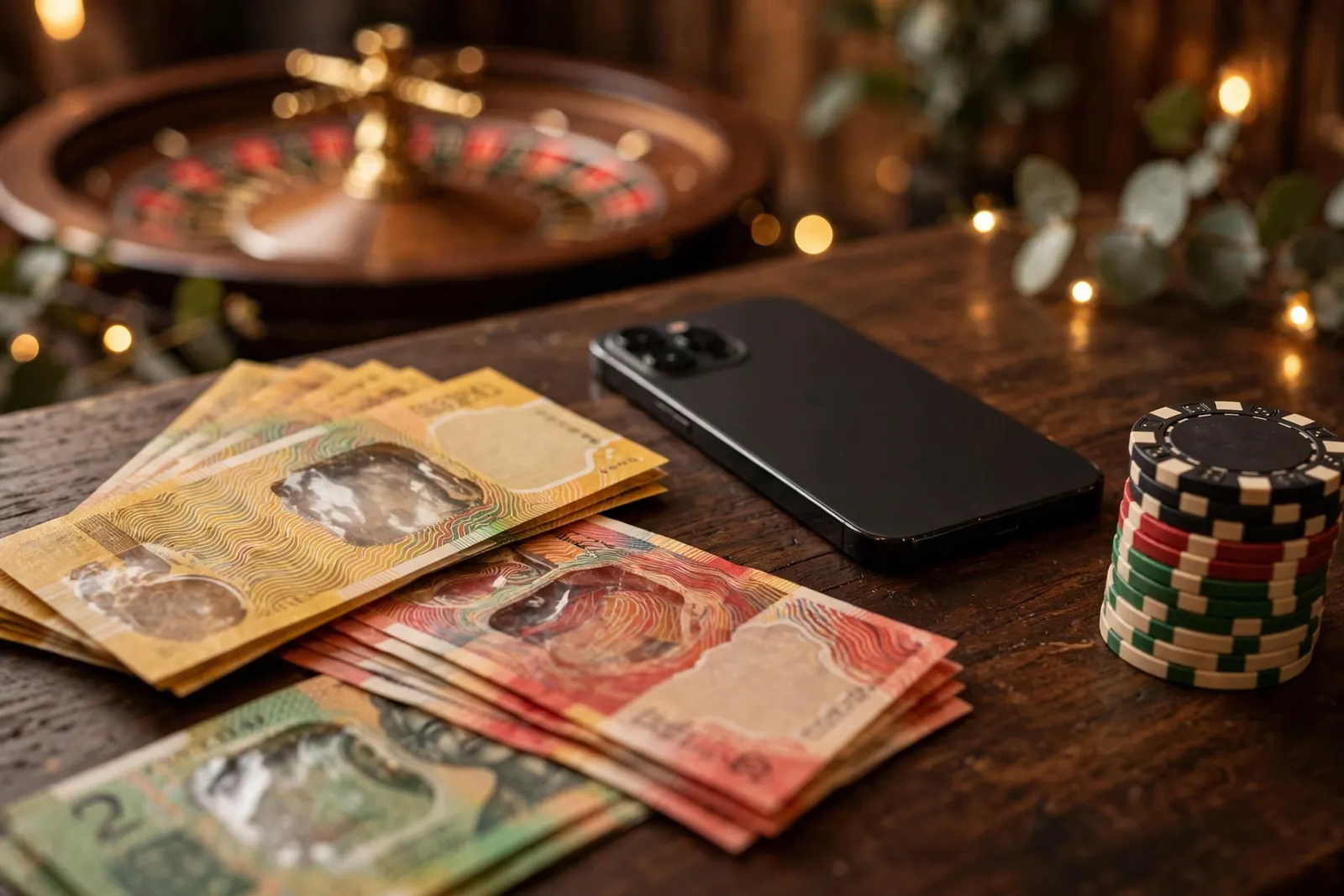
If you’re trying to work out whether an Australian-facing casino accepts Osko, start by separating two things that are easy to blur: how people pay across Australia, and what a particular gambling service actually offers. Familiar payment habits can give you a little context. They cannot confirm a casino’s payment options.
Across Australia, contactless credit and debit card payments are accepted in almost every setting where people shop. Mobile wallets, including Google Pay and Apple Pay, are similarly widespread. Australians are also comfortable moving between cards, phone-based wallets and services connected to bank accounts, such as PayPal. That is a picture of general consumer behaviour, not a directory of casino cashiers.
The distinction matters. A payment method can be familiar in everyday life without being available for online gambling. And a method’s presence in a list of popular Australian payment choices does not establish that any specific casino supports it. For Osko in particular, the general picture of Australian payment habits does not settle whether a casino accepts it. A name appearing beside a casino claim is not the same thing as confirmation from that operator.
If you’re looking for casino sites that accept Osko in Australia, check the available payment methods before you deposit, since the details here don’t confirm Osko acceptance. Use this list as a starting point for reviewing each site’s stated licensing or payment details.
Roby Casino
Roby Casino is listed with a Curacao eGaming license held by Roby Games Ltd.
Wild Tokyo
Wild Tokyo lists a minimum deposit of A$10. Its stated payout speed is 30–60 minutes for crypto and 1–5 days for fiat.
Playfina Casino
Playfina Casino is listed under Curacao eGaming through Hollycorn N.V., with the license stated as dating from 2017. Its minimum deposit is A$20–30, depending on the offer.
Kingmaker
Kingmaker lists a minimum deposit of A$30. Its stated payout speed is about 90 minutes for crypto and 1–5 days for fiat.
MrPacho
MrPacho lists a minimum deposit of A$30. Its stated payout speed is 30–120 minutes for crypto and 24–72 hours for fiat.
JustCasino
JustCasino is listed with a Curacao Gaming Control Board license.
Thor Casino
Thor Casino is listed under Curacao, with Antillephone N.V. and Versus Odds B.V. named in its licensing details. Its minimum deposit is EUR 20.
SkyCrown
SkyCrown is listed with a Tobique Gaming Commission license and a minimum deposit of A$30. Its stated payout speed is about 10–15 minutes for crypto and 1–5 days for fiat.
LuckyVibe
LuckyVibe is listed with a Curacao Gaming Control Board license, number OGL/2023/176/0095, held by Hollycorn N.V.
Uptown Pokies
Uptown Pokies is listed as operating since 2017 under Curacao licensing. Its minimum deposit is A$20.
I’d treat “Australian online casino” carefully, too. The phrase can sound as if it means a locally licensed service, but the legal position is not that simple. The Interactive Gambling Act 2001 prohibits operators from providing real-money online casino games to people physically in Australia. Offshore sites may still be discussed online, but Australian consumer law does not protect players who use offshore casinos. That context matters before weighing any payment claim.
So the practical takeaway from payment habits is modest: Australians are used to having several ways to pay in ordinary transactions. It does not follow that the same choices are available, permitted or suitable in a gambling cashier. A general statement about card or mobile-wallet acceptance should not be read as an invitation to use those methods for online gambling, or as evidence that a casino accepts them.
When you see a claim linking Osko with an Australian casino, keep the claim attached to the exact operator and the exact service being described. A broad statement about Australian payment preferences cannot verify an individual cashier. Nor does a label such as “mobile casino” tell you which payment options are available. Those are separate details, and one cannot stand in for the other.
This is where people can slip: they see a familiar payment name and assume it carries across every kind of transaction. It doesn’t. Widespread acceptance of contactless payments in Australia says something useful about local shopping habits. The same goes for mobile wallets and bank-linked services. None of those broad patterns identifies which casino, if any, accepts Osko.
There is also a difference between a payment method being familiar and a payment route being confirmed for a specific service. A reader might recognise a method from daily life, but that does not tell them what an operator’s cashier currently displays or whether the option applies to the transaction they have in mind. I keep those questions separate rather than treating general popularity as a shortcut to an answer.
That leaves a clear boundary for this topic. Australian payment preferences provide useful background: cards, mobile wallets and bank-linked services are all part of how consumers pay. They do not establish that any Australian-facing casino accepts Osko, and they do not support naming a “best” Osko casino. The relevant claim has to be about the particular operator, not about what Australians generally find convenient.
If you are reading about Osko alongside casino payments, use the general payment picture only as context. It can help explain why people expect a choice of methods, but expectation is not evidence of availability. The cashier and the operator’s own current terms would need to establish what is actually offered; a broad description of Australian habits cannot do that work.
In short: familiar payment culture, yes. Casino-specific confirmation, no. Keep those apart.
A payment option shown in a search result or mentioned on a casino page is not, by itself, proof that an Osko deposit is available to you. So if you’re weighing up a casino deposit by Osko, don’t treat the label as a promise that a payment will work.
That distinction matters before money leaves your account. A cashier is where an operator presents its payment choices, but a name or logo alone does not explain the conditions attached to a transaction. Nor does it establish that a particular option is available to Australian residents, works for a specific account, or can be used for the purpose you have in mind. If the terms are unclear, the sensible move is to stop rather than send money and hope the details sort themselves out later.
A displayed deposit method can tell you what an operator says it supports at that moment. It cannot, on its own, tell you whether the service is lawful for people in Australia or whether you have the protections you might expect from a local financial service. Those are separate questions, and the payment screen does not answer them.
Be wary of wording that blurs a payment method with a guaranteed outcome. “Osko available” would not, by itself, establish a minimum, a fee, a processing window, or what happens if a transfer is rejected. If an operator’s terms do not state a condition plainly, don’t fill the gap with a guess based on another site or a general description of payments.
The same goes for claims that a deposit is instant or effortless. A payment can involve steps and conditions beyond the label used to describe it. Without clear terms that apply to your situation, a headline is not enough to make a money decision. Marketing copy is not a receipt.
Before considering any online gambling payment, check what the operator is actually offering and what the terms say. Look for a clear explanation of the method, the relevant conditions, and what support is available if a transaction fails. If those details are missing, inconsistent, or difficult to understand, do not send funds to test the claim.
Also be careful about where payment instructions come from. Details supplied in a message, forum post, or unofficial page may not match the operator’s own terms. A request to transfer money to account details that you cannot independently verify is a reason to stop, not a reason to act quickly. This is ordinary financial caution; it does not make an offshore gambling service lawful or protected.
For Australian residents, there is a more basic issue. The Interactive Gambling Act 2001 prohibits operators from providing real-money online casino games to people in Australia. Australian consumer law does not protect players who use offshore casinos. A payment route does not change either point. The absence of player liability for using an offshore site is not the same thing as having a lawful, locally protected service.
Legal Risk
Under the Interactive Gambling Act 2001, providing real-money online casino games to people in Australia is prohibited, and Australian consumer law does not protect players using offshore casinos.
That is why searches for the best casino sites accepting Osko deposits should not be treated as a usable shortlist. A polished cashier or a familiar payment name does not resolve the legal position or establish the practical terms of a transfer.
Keep your bank’s own information separate from a gambling operator’s claims, too. A payment service being available in a general setting does not show that it is accepted by a casino, and a casino’s claim does not prove that your bank will process a particular payment. Don’t share banking credentials or verification codes with anyone claiming they are needed to make a deposit. If you have already shared sensitive details, contact your bank through its official channel.
Don’t use a small test transfer as a workaround: even a modest payment is still money at risk, and it cannot establish that the service is lawful or protected. Better to leave the transfer unmade.
A promise of an instant Osko withdrawal sounds clear, but the wording alone cannot establish that a real-money casino supports Osko or will send a payout immediately. I would not treat “instant” as a dependable timeframe unless the service’s terms explain exactly what it means and apply to the account in question.
It also helps to separate the question of timing from the question of payment method. A fast-sounding claim does not prove that a payment will be sent through Osko; nor does a mention of Osko, by itself, tell you when funds would arrive. Those are separate details, and neither should be inferred from a headline, a search snippet or a general claim about quick payouts. Read the wording carefully. If it does not clearly describe the withdrawal itself, it is not a clear answer.
A withdrawal can involve more than one step: a request is made, the account is checked, the request is handled, and a payment may then be sent. Without specific terms, you cannot tell which part a claim calls “instant”—or whether the phrase is just promotional wording. A statement about how quickly a request is handled does not necessarily establish when money reaches a recipient.
Account checks matter too. Online casinos commonly ask customers to complete identity checks before carrying out financial transactions. That means a claim about speed should not be read as proof that every withdrawal is immediate, regardless of account status. If a provider’s wording leaves out the conditions that could affect a request, you are left without a reliable expectation.
I’d look for an explanation that distinguishes processing from receipt, identifies any conditions, and says which withdrawal methods are actually available to the account holder. If those details are absent or hard to find, do not fill the gaps with assumptions. “Instant” is not a timetable.
A page using the phrase “instant Osko withdrawal” may be describing a feature, repeating an outside claim, or simply drawing attention to popular payment wording. Those possibilities are not equivalent to a confirmed service. A useful check would need to establish that the operator offers Osko for withdrawals—not merely that Osko is mentioned somewhere—and clarify what the operator means by the stated speed.
Attention: An "instant" label does not prove Osko support or establish a guaranteed payout timeframe; always check the operator's specific terms.
Even then, information can change. A payment method listed in one place may not be available to every customer or in every situation. Treat vague wording as uncertain rather than as a promise. Do not send money or share financial details on the strength of an unsupported payout claim.
I would rather leave that blank than turn an appealing phrase into a money claim. That is the honest answer, even if it is less satisfying than a shortlist.
There is a more fundamental issue than payout speed. Under the Interactive Gambling Act 2001, operators are prohibited from providing real-money online casino games to people physically located in Australia. That covers casino-style services rather than creating a safe category for a particular payment method. An Osko label would not change the legal position of the underlying service.
Australian consumer law does not protect people who use offshore casinos. So a claim about a rapid payout should not be mistaken for a guarantee of recourse if a withdrawal is delayed or disputed. The absence of local consumer protection is important when weighing any promise about access to funds; it is not a small-print detail.
For someone trying to assess a payout claim, the sensible conclusion is narrow: an “instant” label does not prove Osko support, establish how quickly money would arrive, or remove the risks attached to an offshore casino. No shortcut here.
A page describing a casino as “Osko-friendly” may sound definitive, but the phrase alone tells you little. It could mean the operator names Osko as an available option, that a third party has mentioned it, or simply that the page has attached a popular payment term to a casino listing. Those are not equivalent claims.
I treat acceptance as something that needs to be stated clearly by the operator, not inferred from a logo, a search result snippet or a generic list of payment methods. A brand name appearing beside Osko is not enough to establish that the service is available to Australian users. Nor does a broad statement about bank-linked payments prove that Osko itself is supported.
Look for a precise, current statement and ask who is making it. An operator’s own published terms carry a different weight from an independent directory or an affiliate page. Even then, wording matters: “bank transfer” is a broad category, not a synonym for Osko. A page that groups several payment types together may leave the actual options unclear.
Watch for claims that slide from possibility to certainty. “May be available” does not mean it is available to you; “supported payments include bank services” does not identify which service. A logo or a short promotional label can be easy to scan and hard to interpret. Details matter. Not the badge.
The same care applies to claims about a “best” option. A ranking can look authoritative while offering no clear basis for its order. If the description does not explain what was checked, when it was checked and what “accepts Osko” means in that context, the position on the page is not proof. I would not treat a confident heading as evidence.
A site may be described as popular, well known or convenient without those qualities establishing anything about Osko. Likewise, a list of payment methods does not prove that every method works for every user or remains available over time. General reputation and a specific acceptance claim are different things.
There is also a legal distinction worth keeping in view. Under the Interactive Gambling Act 2001, operators cannot provide real-money online casino games to people physically located in Australia. Australian consumer law does not protect people who use offshore casinos. A payment label does not change either point, and a claim about Osko should not be read as an endorsement or assurance of lawful service.
When you encounter a statement that an Australian casino accepts Osko, read it as a claim that needs clear attribution and careful wording, not as a guarantee. If the page blurs the difference between Osko and bank transfers, or between a general payment category and a named service, it has not made the point clearly. If it presents a ranking without explaining its basis, the ranking cannot settle the question either.
That is a useful standard for any claim about casinos accepting Osko in Australia: identify who is making the statement, check that it names Osko rather than a broader category, and do not let confident presentation stand in for clear evidence. A polished page can still leave the important distinction unresolved.
“Best” sounds useful until you ask what the ranking is based on. For an Osko-focused comparison, the central question would be whether a particular service supports Osko for Australian users. Without a reliable, current basis for comparing operators on that point, a list of recommended sites would be guesswork dressed up as guidance. I wouldn’t treat a polished ranking as proof.
A useful comparison would need to distinguish confirmed payment support from a page that merely mentions Osko. It would also need to make clear what the word “best” refers to: payment availability, the terms attached to an account, or something else. Those are different claims, and one does not establish the others. A site’s name appearing beside Osko in a headline is not, by itself, a reason to regard it as a sound choice.
Be wary of rankings that lean on labels such as “top,” “trusted” or “best” without explaining their basis. Bonus language deserves particular caution. A casino bonus is a promotion, not evidence that a payment method is available or that the service is suitable for you. I would not let a bonus claim stand in for a clear, independently checkable explanation of what is being offered.
The same goes for pages presenting a long list of Osko casino websites. More names do not make a comparison more reliable. If the page does not explain how its claims were checked, you have little to go on beyond the wording of the page itself. Keep the distinction simple: a recommendation requires more than repetition.
There is also a bigger Australian context that matters more than any “best site” badge. Under the Interactive Gambling Act 2001, operators cannot provide real-money online casino games to people in Australia. The law targets the operators; it does not make a player criminally liable merely for using an offshore site. But Australian consumer law does not protect players who use offshore casinos. That is not a small footnote.
So I would not use “best Osko casino Australia” as a shortcut to a recommendation. Treat any ranking or bonus pitch as a claim to scrutinise, not as an endorsement. If you cannot establish what a label is based on, don’t let the label make the decision for you. Better no ranking than false confidence.
Osko belongs in the payment conversation, not the game description. A game has rules and features; a payment method is about moving money. Putting both terms together can make it sound as if Osko changes how a game works. It does not.
That distinction matters when you see wording that links casino games with Osko. It may simply be referring to a payment option associated with a gambling service, rather than describing a special type of game. The wording alone does not tell you whether a payment method is available, how it would be used, or what conditions might apply.
I’d keep the two questions separate. First, what does the game involve? Separately, what payment methods does a service say it supports? A label that combines the two is not enough to answer either question clearly. Nor does calling something an “Osko game” make Osko a game feature.
The same goes for references to online slots or other casino-style games alongside Osko. The payment term does not establish anything about the games themselves, and a game name or category does not establish anything about payment arrangements. Read the wording narrowly; don’t infer a connection beyond what it actually says.
When a page describes a payment option, look for the precise context in which it is mentioned. Is it describing a general payment service, or making a specific claim about a gambling operator? Those are different statements. A broad description should not be read as confirmation that a particular service accepts that method.
It is easy to let a joined-up phrase do too much work. “Payment option” and “game feature” are not interchangeable, even when they appear in the same sentence. Keep that boundary clear and you are less likely to mistake a payment label for information about gameplay—or to treat a game-related phrase as proof of a payment route.
Plain distinction. No magic involved.
An Australian-facing website can make an offshore casino sound local, but that wording does not change the law. Under the Interactive Gambling Act 2001, operators are prohibited from providing real-money online casino games to people in Australia. That includes casino-style games such as poker and table games. The Act does not explicitly make it a criminal offence for an individual to use an offshore site, but that is not the same as saying the service is lawful.
The Australian Communications and Media Authority (ACMA) oversees enforcement of the Act. Its role matters when you come across claims about an Australian casino accepting Osko: a payment option, an Australian audience or an Australian dollar balance does not establish that an operator may lawfully provide online casino gambling here. Payment details and legal status are separate questions.
There is another practical limit. Australian consumer law does not protect players who use offshore casinos. If a dispute arises, you should not assume that the protections available for ordinary local consumer transactions will apply. That uncertainty is easy to overlook when a site presents its services in familiar language. Less reassuring in practice.
I would treat claims about offshore services with care, especially if they make the operation sound officially Australian. A reference to Osko says nothing by itself about the operator’s legal position, and a polished cashier does not change it either. Nor does the absence of an explicit offence for players amount to an endorsement of using the service.
The useful distinction is between what a payment claim says and what Australian law permits an operator to offer. The Interactive Gambling Act sets the boundary for providers; ACMA is the regulator responsible for enforcing it. For anyone researching an Australian casino with Osko, that legal context comes before assumptions based on branding or payment language.
A payment name beside a withdrawal claim is not enough to show where a payout will actually go. If an offshore gambling site says it offers Osko withdrawals, that wording alone does not establish that Osko is an available route, that a payment can be sent to your bank account through it, or that the option applies to Australian customers.
I’d treat a payout method as confirmed only when the operator’s own current terms and account information clearly describe it. Look for the precise method offered for withdrawals, any conditions attached to it, and whether the information applies to your location. A logo or a broad “fast payments” label does not answer those questions. Nor does seeing a payment method mentioned for deposits prove it can be used to receive funds.
That distinction matters with any online casino withdrawal claim, not just one mentioning Osko. Operators can set different rules for money going in and money coming out. A method shown in a general payment list may not be available for payouts, and a bank-linked service should not be assumed to work as a direct withdrawal route without clear, current confirmation.
There is also a more important point than the payment label. Under Australia’s Interactive Gambling Act 2001, operators may not provide real-money online casino games to people physically in Australia. Australian consumer law does not protect players who use offshore casinos. A polished cashier does not change that position.
So if you encounter a claim about an Osko casino withdrawal, don’t read it as proof that a payout route is established or that using the service is protected. I would not make a financial decision based on a payment badge, a copied list, or a vague promise. The route needs clear operator terms—and even then, the legal and consumer-protection risks remain.
Australians are comfortable moving between cards, mobile wallets and bank-linked services such as PayPal. That flexibility is useful context when you’re thinking about how people pay online, but it doesn’t tell you whether a particular gambling operator accepts Osko. Familiarity with one payment option is not evidence that another is available.
Osko is often discussed alongside bank payments, so it can be tempting to assume that a service accustomed to digital payments will support it. I wouldn’t make that leap. Payment choices are set by the business and its payment arrangements; general Australian habits can’t confirm an Osko option at any casino. The same goes for a claim that you can pay with Osko and then use that balance to gamble: the wording alone doesn’t establish how a transaction works or whether it is supported.
If you’re comparing ways Australians pay, keep the categories separate. Cards, mobile wallets and services linked to banks are distinct options, even when people switch between them readily. Osko should be treated as its own payment question, not folded into a broad claim that Australians are comfortable with digital payments. Convenient inference, not proof.
There is also a more important distinction than payment preference. Under the Interactive Gambling Act 2001, operators cannot provide real-money online casino games to people in Australia. Offshore casino use does not bring Australian consumer-law protection for the player. Payment familiarity does not change that legal position or make an operator’s service lawful for the Australian market.
So, if you’re asking whether a casino accepts Osko, the general pattern of Australians moving among payment types won’t settle it. Nor does a broad reference to bank-linked payments establish that Osko is included. Treat those as separate claims, and don’t take a familiar payment habit as confirmation of a casino payment method.
When a search for Osko turns up alongside online slots, it can make the payment method and the game sound like one product. They are separate things: Osko is a payment service, while “slots” describes a type of gambling game. That wording does not establish that a particular operator accepts Osko, or that any game has a special connection to it.
There is also an important Australian distinction. Under the Interactive Gambling Act 2001, operators cannot provide real-money online casino games, including slot-style games, to people located in Australia. That rule concerns the service being offered; a payment method does not change the legal status of the game.
So I would not treat a page that pairs Osko with slots as proof of either availability or suitability for Australian players. The wording alone tells you nothing reliable about an operator’s payment arrangements. More importantly, it should not be read as an invitation to access real-money casino games from Australia.
Australian consumer law does not protect players using offshore casinos. Keep that in view when assessing claims built around a payment brand and a game category. A familiar payment name can make a page look straightforward, but it cannot supply protections that are not there. That distinction matters.
If you are looking at Osko as a general payment option, separate that question from game descriptions and promotional claims. Neither a game label nor a payment logo is enough to establish what is legally available to someone in Australia.
Check the casino cashier for American Express and confirm the option is available for your account before paying. A deposit may be declined if Amex blocks payments to that website.
Amex limits are set by each casino and can vary. Check the operator’s cashier or terms for the limits that apply to your account.
Yes, some Australian-facing online casinos accept Amex deposits, including Jackpot City Casino, Spin Palace and Ruby Fortune. Not all casinos accept it, and some do not allow withdrawals to Amex.
Amex deposits typically have no fee, but a casino may charge a 1.5% surcharge, and currency conversion can incur a 3% fee. Withdrawal fees may also apply.
Amex casino deposits are processed instantly. Withdrawals can take up to five days to clear.