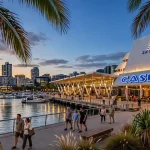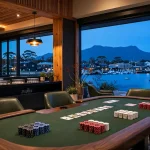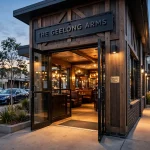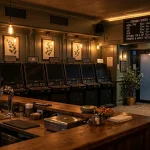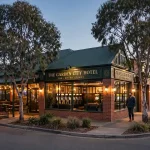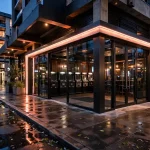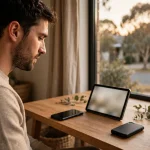
Search rankings and map listings are only a starting point; venue updates and a direct call can help confirm access and opening hours.
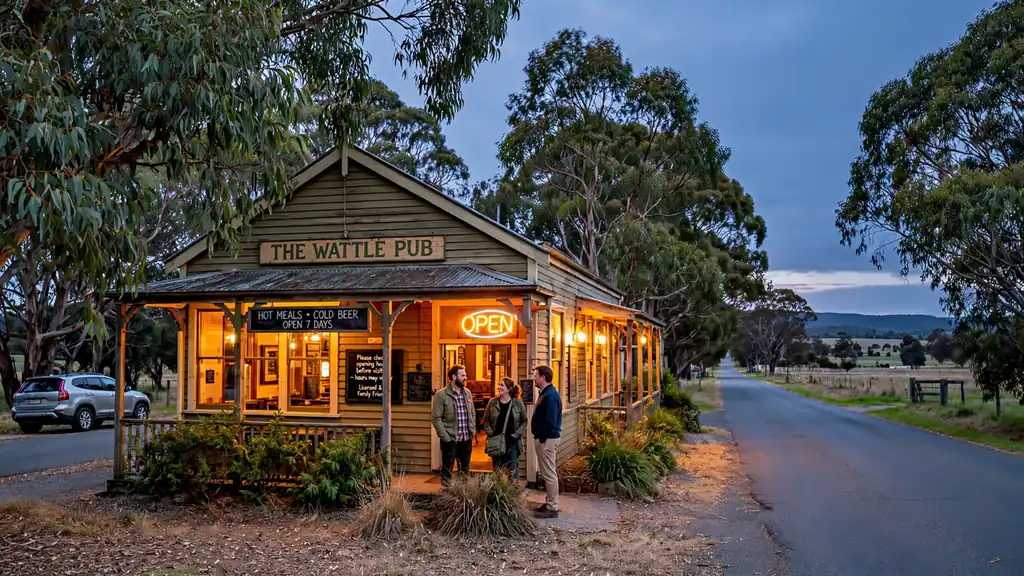
If you want to play pokies today, confirm that the particular venue is open before you leave. A search result can look reassuring and still be out of date; it may show a usual schedule rather than what is happening now. I treat it as a starting point, not a green light.
Start with the venue’s own website or its official social media page. Look for a current notice about a temporary closure, a changed service, or an interruption that could affect access. Check that the page refers to the exact venue you intend to visit. Similar names and old listings can send you in the wrong direction, especially if you are relying on a map pin and a short preview rather than the venue’s own information.
If there is no recent update, call the venue. It is the simplest way to ask whether it is open at the moment and whether the area with pokies is accessible. A venue might be operating while a particular service or part of the premises is unavailable, so be clear about what you mean. You do not need to explain your plans; just ask whether you can use the gaming area now.
I would not rely on a third-party listing alone. Map services and directory pages can be useful for finding a phone number or an official website, but their displayed status may not reflect a short-notice change. Even a label such as “open” is not the same as confirmation from the venue. If the listing links to a venue page, follow that link and check the latest notice there. If it gives a phone number, verify that it belongs to the venue you mean before calling.
Be careful with early-morning searches. Typing a particular time into a search does not establish that pokies are available then, and a general venue listing may not make clear whether the gaming area follows the same schedule as the rest of the premises. Check directly rather than assuming that a result mentioning early access applies to the machines. The same goes for late-night plans: a venue’s general presence online does not tell you whether it is open at the moment you plan to arrive.
For a same-day visit, check close to when you intend to set off. Information you saw earlier may no longer answer the question if the venue has posted a fresh update or circumstances have changed. If you are making a longer trip, call before leaving and again if there has been a substantial delay. That is less exciting than trusting the first result, but it is a better use of the drive.
Keep the details simple: identify the venue, ask whether it is open now, and confirm that pokies are available to patrons. If you reach voicemail, find a current official update or try again rather than treating silence as confirmation. An old post, a cached page, or a schedule copied onto another site may still be visible long after it stopped being useful.
If different sources disagree, give more weight to a direct answer from the venue or a recent notice on its own channel. A map listing can be wrong without being obviously wrong; it may show a normal pattern and miss a one-off change. When the venue’s page has no clear update and nobody answers, you do not have a reliable confirmation. Decide whether the trip is still worthwhile without it.
There is also a difference between checking whether a place is open and choosing where to go. For this quick check, you only need to establish the status of the specific venue you have in mind. Avoid treating a broad search for pokies in Tasmania as proof that any particular venue is open nearby or ready to admit you. A result can point you toward a place to investigate; it cannot confirm the door is open today.
Once you have a clear answer, save the venue’s contact details or official page so you can check again if plans change. If you are travelling with someone else, pass on the confirmation rather than a screenshot of an old listing. A screenshot captures what a page said at one moment, not what the venue is doing now.
The useful habit is straightforward: identify the exact venue, check its own current information, and contact it if anything remains unclear. That takes less time than arriving to find the answer for yourself. The first result is not a promise.
Choosing pokies in Tasmania for 2026 means checking the practical details that matter to you, such as licensing, deposit minimums and payout methods. Use these operator notes as a concise reference while deciding where to play.
Roby Casino
Roby Casino is listed with a Curacao eGaming licence held by Roby Games Ltd. This gives you a stated licensing detail to consider.
Wild Tokyo
Wild Tokyo lists a A$10 minimum deposit and a Curacao licence. Its stated payout times are 30–60 minutes for crypto and 1–5 days for fiat.
Playfina Casino
Playfina Casino lists a Curacao eGaming licence held by Hollycorn N.V., which it has had since 2017. Its minimum deposit is A$20–30, depending on the offer.
Kingmaker
Kingmaker lists a A$30 minimum deposit. Its stated payout times are around 90 minutes for crypto and 1–5 days for fiat.
MrPacho
MrPacho lists a A$30 minimum deposit. Its stated payout times are 30–120 minutes for crypto and 24–72 hours for fiat.
JustCasino
JustCasino lists a Curacao Gaming Control Board licence. That licensing information is a key detail for you to check when considering the casino.
Thor Casino
Thor Casino lists a Curacao licence from Antillephone N.V. (Versus Odds B.V.). Its stated minimum deposit is EUR 20.
SkyCrown
SkyCrown lists a Tobique Gaming Commission licence and a A$30 minimum deposit. Its stated payout times are around 10–15 minutes for crypto and 1–5 days for fiat.
LuckyVibe
LuckyVibe lists a Curacao Gaming Control Board licence, OGL/2023/176/0095, held by Hollycorn N.V. This gives you a specific licensing detail to review.
Uptown Pokies
Uptown Pokies lists a Curacao licence, has operated since 2017, and has a A$20 minimum deposit. These details provide a concise starting point for your checks.
“Best” sounds like a clear verdict, but it can mean different things to different players. One person may be thinking about how often a pokie produces a win; another may care about its features or how long a session feels. None of those preferences tells you that a particular game will pay you more on your next visit. I’d treat any claim to have found the best-paying pokies in Tasmania with care: a confident label is not a promise about your result.
The key point is that each spin is generated independently. A Random Number Generator (RNG) determines the outcome, so a previous win or losing run does not make a particular result due on the next spin. A pokie that has not paid recently is not necessarily closer to a win, and a string of wins does not mean another one is coming. The machine has no memory of your session in the way a player might.
That makes short-term impressions a poor way to judge how generous a game is. A run of outcomes can look like a pattern, especially when you are watching or playing for a while, but it cannot reliably tell you what the next spin will do. Nor can a story from another player establish what you should expect. They may describe what happened to them; they cannot forecast your result.
Return to player, or RTP, is a separate idea. It describes the share of wagers a game is designed to return over a very large number of plays, rather than predicting what one person will win during a session. It is a long-run statistical measure, not a personal payout schedule. You should not read an RTP figure as a guarantee that you will receive that proportion back, or as a forecast for a particular visit.
There is another wrinkle when comparing the same game in different places. A specialist review reports that some game providers let casinos choose between multiple RTP configurations for a pokie. If that applies, the same title may have a different return setting at one casino than it does at another. So recognising a game’s name is not enough to know which setting is in use. You would need reliable information about the specific version and its configuration before making that comparison.
That distinction matters whether you are thinking about pokies in Tasmania generally or comparing what you have seen at different venues. A game’s appearance, name or familiar features do not establish its RTP setting. And a list of titles labelled “best” does not become useful evidence simply because it is presented as a ranking. Without sound, specific information about the version being compared, the ranking may leave out the very detail that would matter.
The same caution applies to claims about “hot” games, frequent wins or a machine being ready to pay. Those descriptions can be memorable, but they do not change how the RNG produces an outcome. A past result is not a signal about the next one. That is easy to forget in the moment.
A Random Number Generator (RNG) ensures each spin is independent; previous wins or losses do not influence the outcome of the next spin.
If you are comparing claims, separate what can be checked from what cannot. A stated RTP setting, where it is documented for the exact game version, is information about the game’s long-run design. It is not evidence that a particular player will win, or that one session will be better than another. A claim based on a lucky story or recent results is much weaker: it describes an outcome that has already happened.
So the phrase “best pokies in Tasmania” can help express what you are looking for, but it cannot by itself identify a game that will pay you best. The meaningful questions are narrower: what does “best” mean to you, what information is available about the exact version, and are you mistaking a long-run statistic for a short-term promise? Keep those distinctions clear, and a bold label has less chance of doing your thinking for you.
No spin is owed.
If you’re trying to find pokies close to an airport, in a CBD or near where you’re staying, start with the place you actually need to reach. “Near the airport” can mean a venue beside a terminal, somewhere in the surrounding area, or simply one that is easier to reach from the airport than from your accommodation. Those are different trips, so a map pin alone is not enough to judge the fit.
For an airport-based search, put the airport name and the destination area into your map app, then look for a venue’s own listing or website. Check that the address shown there matches the map pin. If the listing gives only a broad area, or the name appears in several places, confirm the address directly before setting out. A familiar-looking result is not much use if it points to the wrong suburb.
CBD searches need the same small bit of care. “CBD” may describe a central district rather than the exact street or building you have in mind. Compare the venue’s listed address with the part of the centre you’re visiting, and check the route from your starting point. Walking distance, a short drive and “somewhere in the same city” are not interchangeable. I’d rather confirm the pin than assume that a central label means it is around the corner.
For a “near me” result, make sure your device is using the location you intend. If location access is off, the map may use a previous location or a broad area instead. You can also enter a suburb, landmark or accommodation area manually. That is especially useful when you are planning ahead from outside Tasmania and do not want results based on where you are sitting now.
Regional wording can be slippery, too. A search for northern Tasmania, for instance, describes a broad part of the state, not a precise destination. Narrow it to the town or area you will be in, then compare the address and route shown for each result. If a search includes “Tasmania” and “Victoria” together, decide which state you mean before relying on the results; the terms can point in different directions.
Finding a Venue
Choose the area
Identify the specific town, district, or landmark you will be visiting.
Find the address
Locate the venue's exact street address using their own official website.
Compare the route
Check the distance from your starting point to ensure it is actually within your desired range.
Confirm details
Contact the venue directly to resolve any remaining uncertainty about the location.
Before leaving, use the venue’s own contact details if the address or location remains unclear. Ask for the street address and, if useful, a nearby landmark. Keep the question about where the venue is; checking whether it is open is a separate step. A map can help you plan the route, but it cannot resolve a confusing listing on its own.
A simple order works well: choose the town or district, identify the venue’s exact address, compare it with your starting point, then confirm any unclear details with the venue. That keeps “near the airport” or “near the CBD” from doing more work than it should. Close enough is a route, not a label.
When you’re weighing up a pokies venue, look beyond the room and the machines. The useful question is how the venue handles situations where someone may be struggling, and whether staff can explain the safeguards without making you hunt for them.
One reported requirement concerns venues operating more than 20 gaming machines. A report published by regionriverina.com.au says that, from 1 July, those venues are required to have a dedicated responsible gambling officer (RGO) on duty while the machines are running. The same report describes a one-month grace period for venues to appoint officers and remove certain signage. Because that account is a report rather than a Tasmania-specific confirmation, check with the venue or the relevant local regulator before assuming the rule applies to a particular Tasmanian site.
If an RGO is required, you should be able to ask who is on duty and how to contact them. The point is not to turn your visit into an inspection. It is simply useful to know whether there is a named person responsible for responding when a patron shows signs of gambling harm, rather than leaving the matter to chance or an informal handover.
A related measure is a gambling incident register. The reported requirement is for venues to record occurrences, including behaviour that suggests a patron may be at risk of harm or already affected by it. You do not need access to private records; instead, notice whether staff can describe how concerns are handled and whether they know who takes responsibility. Clear answers matter. So does a calm, private response if someone asks for help.
Pay attention to the way the venue directs people around the gaming area. Signage encouraging patrons towards gaming lounges should not be positioned within sight of ATMs or EFTPOS terminals. Signs pointing patrons towards ATMs should not be visible from gaming machines. These are practical safeguards, not decoration: where a sign sits can influence what a person sees while deciding whether to keep playing or access more cash.
You can also check whether the venue makes responsible-gambling tools easy to find and use. Deposit limits, loss limits, session time limits and self-exclusion are recognised tools. Ask where the information is displayed and who can explain the options. A venue should not make it hard to find basic support information.
For a newcomer comparing pokies venues in Tasmania, I would treat staff responses as part of the picture, not as proof that one venue is “best”. A polished room tells you little about how concerns are handled. Look for visible information, staff who can explain the process, and safeguards that are practical rather than merely printed on a wall. Small details count.
When a trip to Tasmania, the Spirit of Tasmania and pokies appear together in a plan, it is easy to read more into a phrase than it can support. A mention of pokies alongside the ferry does not establish that gaming machines are available on board. Treat the ferry and any pokies venue as separate parts of your travel planning, and confirm any onboard facilities through the ferry operator’s own current information rather than assuming they exist.
Casino names can create a similar muddle. A result that pairs Tasmania with a casino brand does not, by itself, verify that the named casino operates in Tasmania or that a particular venue has pokies. Search wording can blend location, brand and game terms into one line; that is not proof of a physical venue. I would not plan a stop, or travel expecting to play, on the strength of a name appearing beside “Tasmania”.
Online offers need a different kind of caution. Phrases promising real-money pokies or a no-deposit bonus are promotional claims, not evidence of an Australian-licensed online casino. There is no Australian-licensed online casino. That distinction matters even when an offer is written for Australian players or uses familiar local language.
A “no deposit” label also tells you little about what an offer requires or whether winnings could be withdrawn. The full terms may carry conditions, and the wording alone cannot answer those questions. More importantly, a bonus headline does not change the legal status of the service behind it. Don’t treat it as a safe shortcut to playing online.
I keep these three ideas separate: the ferry is a transport service; a casino name is not proof of a Tasmanian venue; and an online offer is not evidence of a locally licensed casino. When a page appears to combine all three, check what it actually identifies before relying on it. Look for a clearly stated physical address if you are trying to find a venue, or authoritative ferry information if you are asking about onboard facilities. If it instead invites you to claim an online bonus, recognise that as a separate offer—not confirmation of a local casino.
The point is not that every result is false. It is that the wording cannot verify the thing you are looking for. A search result can put ferry travel, a casino name and an online promotion side by side without establishing any connection between them. Keep the claims distinct, and don’t let a familiar name or a tempting bonus do the work of proof.
A venue that stays open late is not automatically a place where pokies run through the night. If you are trying to work out whether a Tasmanian venue operates around the clock, check that specific venue’s published information rather than relying on a general impression or an old listing.
Start with the venue’s own website or its verified social media page. Look for hours that clearly apply to the gaming area, not just the bar, restaurant or building. A single “open” label can be unhelpful if it does not say which part of the venue it refers to. If the hours are missing, unclear or out of date, contact the venue directly before setting off.
I would also check the date attached to the information. A listing may have been correct when it was posted but not reflect a later change. Public holidays, private functions or temporary operational changes can make a routine schedule a poor guide. That does not mean hours have changed; it means an old timetable is not a promise.
Be precise about what you need to confirm. Ask whether the pokies area is operating at the time you plan to arrive, and whether it has a separate closing time from the rest of the venue. If you are travelling late, ask again close to your departure rather than treating a search result or third-party directory as final confirmation. Small detail, long drive avoided.
“Open now” can also mean different things depending on the listing. It may reflect the venue’s general trading hours, not the availability of every facility inside. Read the wording carefully, and if it leaves room for doubt, use the venue’s own contact details. An unanswered phone call is not confirmation either; try an official online channel or wait for a clear response.
I would not plan a trip around the phrase “24-hour pokies” unless the particular venue explicitly confirms continuous operation of its gaming area. Nor should you infer that a venue runs all night because it is open late on one occasion. Published hours are a starting point; direct confirmation is more useful when the timing matters.
There is no single timetable you can safely apply to every pokies venue in Tasmania. Check the place you intend to visit, make sure the hours refer to the pokies themselves, and verify them for the day you are going. That is less exciting than a confident answer, but it is better than arriving to find the machines closed.
A confident claim about a pokie can sound like a promise: a game is “best”, pays more often, or has a bigger maximum payout. I’d read those words as claims to check, not as a forecast of what your next session will bring. A label alone tells you little about the settings or rules behind it.
Every spin is an independent event generated by a Random Number Generator (RNG). A run of losses does not make a win due, and a recent win does not mean the next spin is less likely to pay. That can be easy to forget when a screen gives a game a hot streak or a player describes a lucky session. Neither changes the next random result.
Return to player (RTP) needs similar care. A specialist review reports that some providers allow casinos to choose between different RTP settings for the same pokie. So a published percentage for a game may not describe its setting at every casino. Check whether the figure is tied to the specific version or setting you are considering, and where that information comes from. If those details are absent, the number is not enough to compare two places reliably.
The same habit helps with claims about maximum bets or cash payouts. Look for the game’s own rules and paytable, and check that they refer to the exact version in front of you. A headline maximum does not, by itself, tell you what a particular spin will return or how often that outcome occurs. Don’t treat a large advertised figure as a likely result.
Place names can muddy the picture too. A reference to Parkes alongside Tasmania does not, by itself, confirm that a game or venue is in Tasmania. Check the actual location rather than relying on a label assembled from several terms.
When you assess claims about pokies in Tasmania, separate three things: the game’s stated rules, the RTP setting that applies at a particular casino, and the random outcome of an individual spin. They are related, but they are not interchangeable. I’d trust a claim more when it states exactly what it measures and identifies the relevant game version and setting. If it blurs those details, keep your expectations modest. Claims are not results.
A pokie in a physical venue and a real-money game accessed online are not treated the same under Australian law. The Interactive Gambling Act 2001 prohibits companies from providing online casino games, including pokies, to people in Australia unless they hold a domestic licence. No domestic licences for these services have been issued. So a website offering real-money online pokies to people here is not made lawful by calling it a Tasmanian casino or by using local-sounding wording.
The law is directed at the operator, not the individual player. Australians are not prosecuted simply for playing on an offshore site. That distinction matters, but it is not an endorsement of those sites or a sign that they are protected by Australian rules. Offshore operators may accept Australian customers, yet the service remains outside the domestic licensing framework.
The practical risk is clearest if there is a dispute. If an offshore casino refuses to pay winnings, an Australian player has no legal recourse in Australia to compel payment. There is no local online-casino licence behind the service to provide the kind of domestic route for resolving that complaint. A site’s own terms cannot change that position.
Words such as “near Tasmania” can also blur the difference between a physical venue and a website. A website may be reachable from Tasmania, but that does not make it a local venue or an Australian-licensed online casino. Likewise, a claim about high-limit play or a game being among the best paying does not alter the legal status of the service. Those are separate issues from whether a company may lawfully offer real-money online pokies here.
If you are looking for pokies in Tasmania, keep the distinction plain: physical venues and online casino services sit on different sides of the law. A land-based venue is not evidence that an online version is authorised, and a site describing itself as a casino does not establish Australian approval. I would not treat an offshore site’s promises as a substitute for Australian protections. That protection is absent.
So the short version is this: the law prohibits companies from supplying real-money online casino games to people in Australia without a domestic licence, and none has been issued. The player is not the target of that prohibition, but if an offshore operator withholds winnings, Australian legal recourse is not available. Don’t confuse “a player is not prosecuted” with “the service is locally protected.”
Legal Risk
There are no Australian-licensed online casinos. If an offshore operator refuses to pay winnings, you have no legal recourse within Australia.
When you are looking at clubs or venues in a city centre, the machines are only part of the picture. I’d also pay attention to what happens if someone appears to be struggling. A responsible-gambling process should be more than a poster near the entrance; staff need a way to respond and record concerns.
A report by regionriverina.com.au describes a requirement for venues with more than 20 gaming machines to have a dedicated Responsible gambling officer (RGO) on duty while those machines are operating, with the change taking effect from 1 July. The report also describes a one-month grace period for venues to remove signage and introduce the required officers. Treat that as a reported requirement, not proof that every venue you visit has an RGO on duty. If you need help, ask staff who the RGO is and how to speak with them.
The same report says venues will be required to keep a gambling incident register. It is intended to record occurrences, including situations where a patron’s behaviour suggests they may be at risk of, or affected by, gambling harm. That kind of record can help a venue recognise and respond to incidents; it is not a public scorecard for comparing clubs.
If you are trying to find pokies in a Tasmanian club or CBD venue, these safeguards are more useful to consider than the word “best” on its own. A search result cannot tell you how staff handle a concern on the floor. You can ask what support is available, how a person can request a break from gambling, and whether staff can explain the venue’s self-exclusion process. Policies and procedures can differ, so get the details directly from the venue rather than assuming one club’s approach applies elsewhere.
Self-exclusion is one responsible-gambling tool, alongside deposit, loss and session-time limits. If you choose to use it, ask exactly what it covers and how it takes effect. Don’t assume it automatically applies to every venue or to online services. For Australian online gambling, BetStop applies only to Australian-licensed operators; it does not bind offshore sites.
These checks won’t tell you which pokie will pay, and they shouldn’t be treated as a promise of safety. They do give you a practical way to judge whether a venue can explain its safeguards clearly. Clear answers matter.
“Cashless” can mean different things at a venue: paying electronically rather than with notes, or using a system that moves funds between a payment method and a machine. Those are not automatically the same arrangement. If you are considering a particular venue, ask it directly how payment works, what methods it accepts and whether any conditions apply. A label alone does not tell you how the system operates.
PayID is a way to transfer money through Australia’s New Payments Platform, using an email address, mobile number or ABN linked to a bank account. That describes a payment mechanism; it does not establish that a venue uses cashless pokies, or say anything about the machines themselves. I would not assume a payment option is available just because it is familiar elsewhere.
The Newcastle wording needs care, too. It does not identify a confirmed Tasmanian venue by itself. Before making plans, pin down the exact place you mean and check that venue’s own information. A name appearing in a listing or conversation is not enough to establish that it is in Tasmania or offers pokies.
Keep the two questions separate: where a venue is, and how it handles payments. Confirm the location with the venue, then ask about its payment arrangements directly. If you mean online play rather than paying at a physical venue, that is a different matter: the Interactive Gambling Act 2001 prohibits operators from providing real-money online casino games to people in Australia. PayID does not change that legal position.
No shortcut here. Verify first.
Yes, Australian players can legally use offshore sites that accept them, but offering real-money online pokies to Australians without a domestic licence is illegal for operators. No Australian online casino licences have been issued, and players have no legal recourse in Australia if an offshore casino refuses to pay.
You must be at least 18 years old to gamble online in Australia.
There is no strategy that can predict a winning spin: each outcome is random and independent of previous spins. Set deposit, loss or session limits to help manage your play.
Yes. Some game providers let casinos choose among multiple RTP settings for a game, so check the RTP listed for that game at the casino you are considering.