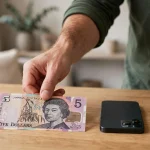
The offer may arrive as bonus cash or spins, and an activation step or code can determine whether it reaches the account.

A no-deposit offer is meant to be attached to a new account without you first putting money in. It may appear as free cash or as free spins. So a promotion described as a $5 no-deposit offer is not necessarily a cash amount sitting in your balance: the offer may instead be presented as spins on a game. Check what the promotion actually says it provides before treating the headline as money credited to your account.
The basic sequence is account creation, then any activation step the offer requires. The offer might be applied automatically, or it might require a bonus code during registration or in the cashier. A specialist review describes both methods, but that does not establish which one a particular casino uses now. Treat the wording on the offer itself as the guide, and check that the offer is attached to your account rather than assuming that creating an account was enough.
Free cash and free spins are different forms of an offer. With free cash, the account may show a bonus balance or another separate cash-bonus entry. With spins, the account may show a number of spins or make them available through the named game. The display can differ, so focus on the stated reward and where the account says it has been credited.
If you’re looking for a $5 PayID casino no-deposit bonus in Australia, use this list as a starting point and check the current offer terms before you sign up. The details below can help you assess the available operator information without assuming a particular bonus is available.
Roby Casino
Roby Casino is listed with a Curacao eGaming license held by Roby Games Ltd.
Wild Tokyo
Wild Tokyo lists a minimum deposit of A$10, with crypto payouts taking 30–60 minutes and fiat payouts 1–5 days.
Playfina Casino
Playfina Casino is licensed by Curacao eGaming through Hollycorn N.V., which has held the license since 2017. Its minimum deposit is A$20–30, depending on the offer.
Kingmaker
Kingmaker lists a minimum deposit of A$30. Its stated payout times are around 90 minutes for crypto and 1–5 days for fiat.
MrPacho
MrPacho lists a minimum deposit of A$30, with crypto payouts taking 30–120 minutes and fiat payouts 24–72 hours.
JustCasino
JustCasino is listed with a license from the Curacao Gaming Control Board.
Thor Casino
Thor Casino is licensed in Curacao by Antillephone N.V. (Versus Odds B.V.) and lists a minimum deposit of EUR 20.
SkyCrown
SkyCrown is licensed by the Tobique Gaming Commission. Its stated payout times are around 10–15 minutes for crypto and 1–5 days for fiat, with a minimum deposit of A$30.
LuckyVibe
LuckyVibe is listed with a Curacao Gaming Control Board license, OGL/2023/176/0095, held by Hollycorn N.V.
Uptown Pokies
Uptown Pokies is listed as operating since 2017 under a Curacao license and has a minimum deposit of A$20.
That distinction matters when the headline says “$5”. It could describe a cash bonus, while a spins offer may be advertised using a value but delivered as spins rather than cash. Do not infer the format from the amount alone. The offer description should tell you whether you are receiving cash or spins; if it does not, the value is unclear until the operator confirms it.
I would check the account’s bonus area after registration and compare it with the promotion’s wording. If a code was required, check whether it was entered in the right place. If the offer was meant to apply automatically, check whether the account shows it. A welcome message by itself is not the same thing as confirmation that the reward has been credited.
An automatically credited offer means no separate code entry is described as necessary for that promotion. It does not mean every new account receives every advertised offer. The promotion may be limited to a particular route or set of sign-up steps, and the account still needs to show the reward before you can tell whether it applied.
A code-based offer works differently: the code is part of the activation process. It may be requested during sign-up or in the cashier. If you see a code field, do not assume it is compulsory for every promotion; equally, do not assume a code is optional when the offer instructions say to enter one. The key is to follow the instructions attached to that specific offer, not a process remembered from another site.
 $100 No-Deposit Casino Bonus in AustraliaLearn how a $100 no-deposit offer may mean bonus funds or free spins, and why wagering requirements and cashout caps shape what…
 100 Free Spins No Deposit in Australia: How They WorkLearn how no-deposit spins work, why 100 spins are not cash, and how offer terms affect the game you can play and…
Keep the offer wording visible while you create the account. That makes it easier to check whether the reward was described as cash or spins and whether a code was specified. If the account balance does not match the stated offer, pause and ask the operator to clarify before treating the reward as available. A missing credit is easier to query while the offer details are in front of you than from memory later.
A $5 no-deposit sign-up offer, then, describes a possible reward after account creation without a deposit; it does not tell you by itself how the reward is delivered or activated. Those details depend on the individual promotion. Check the stated reward, look for any code instruction, and verify that the account reflects what was offered. Headline first, mechanics second.
The word “$5” can describe two different things on a casino page: money you send from your bank, or promotional credit the operator offers. They are not interchangeable. If an offer says you need to make a $5 PayID deposit, that is a payment from you. It is not a no-deposit bonus, even if the promotion adds extra credit after the payment arrives.
Attention: A $5 PayID deposit is a payment from your own bank account, not a no-deposit bonus, even if it triggers additional promotional credit.
That distinction matters when you are checking what a balance represents. A deposit is your money transferred into an account. A bonus is promotional value attached under the operator’s terms. A page may mention both, but the word “bonus” does not change the source of the deposit. Read the trigger carefully: does the offer require you to pay first, or is the promotional amount available without a payment?
PayID is a way to send a bank transfer using an email address or mobile number instead of entering BSB and account numbers. Transfers are described as settling in seconds, and Australian banks describe PayID deposits as instant and free. Those details concern the movement of funds. They do not make a payment free money, nor do they establish that a casino offer is a genuine no-deposit promotion.
For a $5 PayID deposit at a casino, the practical question is whether the operator is asking you to fund your account before a promotion can be activated. If so, the $5 remains a deposit, regardless of whether a separate bonus appears afterwards. Check the offer wording and the cashier screen before authorising a transfer; a payment method and a bonus condition are separate parts of the transaction.
PayID also does not promise that money will travel in both directions through the same route. At most offshore casinos serving Australian players, withdrawals are made by bank transfer rather than PayID. So the speed associated with a PayID deposit should not be read as a promise about getting funds back. Deposit and withdrawal methods can differ.
A no-deposit offer does not always mean you can withdraw without ever making a payment. A specialist review reports that some operators may ask for a minimum PayID deposit to link a bank account before releasing no-deposit bonus winnings. Treat that as a condition to verify for the specific offer, not as a standard rule across casinos.
This is a different issue from a deposit being required to qualify for a promotion. In the first case, the offer may be available without an initial payment, but the operator may later ask for a deposit as part of linking or verifying the bank account for a withdrawal. In the second, the promotion itself is triggered only after you deposit. The wording can look similar on a page, but the order and purpose of the payment are not the same.
Before sending money, look for the exact condition attached to the offer: whether a deposit is needed to activate it, whether PayID is accepted for that step, and whether a separate deposit may be required before a withdrawal. If the terms only say “deposit bonus” without making the trigger clear, do not assume the bonus is free or that PayID settles the withdrawal question.
A small deposit can still be a real payment. The amount being low does not turn it into a no-deposit chip, and a promotional label does not remove the need to understand where your funds go. Check the cashier instructions against the promotion terms, and make sure you can tell your own deposited balance apart from any added promotional value.
I would also avoid treating “instant” as shorthand for “risk-free” or “withdrawable.” It describes the transfer timing, not the offer’s conditions or the operator’s handling of a later payout. PayID can make sending money straightforward; it cannot resolve unclear bonus wording for you.
If you are comparing a $5 deposit offer with a no-deposit offer, first identify who supplies the $5. If it comes from your bank through PayID, it is a deposit. If the operator grants promotional value without requiring an initial payment, that is the no-deposit structure. Any extra steps before withdrawal need to be checked separately. The payment route is only one piece.
A bonus balance can look like one pool of money, but the game you choose may determine whether your bets count towards its wagering requirement. Pokies generally contribute the full amount of each eligible bet. Blackjack, baccarat and roulette, by contrast, commonly contribute only 0–10%. A bet on a table game can therefore move the wagering total much less than the same-sized bet on an eligible pokie.
That difference matters if you are looking at an online casino bonus advertised alongside PayID or a small deposit. The payment method does not decide which games qualify; the promotion’s terms do. A game can be available in the casino and still be excluded from bonus play, or contribute at a reduced rate. Availability is not eligibility.
Before playing, look for the promotion’s eligible-games list and contribution table. Check the exact title, not just its category: terms can distinguish between pokies, table games and live dealer games, and may exclude particular titles even when others in the same category count. Progressive jackpots are also commonly excluded from no-deposit offers.
If you cannot find a clear rule for a game, do not assume its bets will count. A balance changing after a bet does not necessarily mean the wagering meter moved by the same amount. The relevant detail is the contribution rate stated for that game, if one is provided.
The figures show why the distinction is worth checking. If a pokie contributes 100%, its eligible bets count in full. If a table game contributes somewhere between 0% and 10%, most of the stake may contribute nothing toward the requirement. Live dealer titles may have separate restrictions; they are often excluded from no-deposit offers altogether. Playing a game outside the permitted list can put the bonus balance at risk, so switching titles on a hunch is a poor trade.
Pokies typically contribute 100% toward wagering requirements, while table games often contribute only 0–10%, and live dealer titles may be excluded entirely.
A free-spin offer is not necessarily a set of spins you can use on any pokie. A specialist review describes free spins as being tied to a specific pokie; treat that as a detail to verify in the offer itself, not as a rule that applies to every promotion. The title may be named in the terms or shown beside the spin balance.
That restriction affects more than choice. If the spins are attached to a particular game, playing another title will not use them, and the results from the designated game may be handled under the offer’s own conditions. Read the wording beside the spins before opening a game. A familiar-looking bonus label is not a substitute for checking which title is covered.
Free-chip offers can work differently: a specialist review says they may be usable on selected slots. Again, “selected” is the important part. It does not mean every game qualifies, and the available selection should be confirmed in the terms.
I look for three things before treating a game as bonus-eligible:
If the wording says that only selected games qualify, use the named list rather than guessing from the lobby. If a game is excluded or contributes nothing, betting on it will not help satisfy the wagering requirement. That is easy to miss when the interface shows your bonus and cash balance together.
For Australian readers, there is a further point: real-money online casino games are prohibited from being provided to people physically in Australia under the Interactive Gambling Act 2001. This explanation is not a recommendation to use an offshore offer. Regardless of how a promotion describes its eligible games, its terms do not change that legal position.
The amount shown beside a welcome offer is only the starting point. Before you decide whether a small no-deposit bonus is worth claiming, look at the wagering requirement and the rules that apply to any resulting winnings. Those terms determine how much qualifying play is required and whether a cashout is limited.
A specialist review of AU-facing no-deposit offers describes wagering requirements in the 40× to 60× range. Treat that as a reported range, not a promise about every casino: the operator’s own terms for the specific promotion are what matter. Check whether the multiplier applies to the bonus amount, the bonus plus any winnings, or another stated figure. The same multiplier can produce a very different target depending on that base.
Here is a clear calculation: a $10 bonus with 50× wagering requires $500 in total bets before withdrawal. That is the amount wagered across qualifying bets, not a requirement to lose $500. Still, a large wagering target can be difficult to complete without your balance running down, and completing it does not by itself guarantee that every resulting dollar can be withdrawn.
For a $5 welcome offer, do not assume that the requirement is low just because the starting amount is small. Read the multiplier and its calculation base together. If the terms are unclear about what counts toward the target, or the operator does not explain how it tracks progress, that uncertainty is part of the offer’s cost. A small headline figure can sit beside demanding conditions.
Bonus Wagering Calculation
Identify the base
Determine the bonus amount, such as a $10 bonus.
Apply the multiplier
Multiply the bonus by the requirement, for example, 50× wagering.
Calculate total bets
Determine the final target, which in this case would be $500 in total bets before withdrawal.
Then look for a maximum cashout cap. A specialist review of AU-facing offers reports caps in the A$50–A$200 range, but the limit for an individual promotion may differ. The cap can restrict the amount you are allowed to withdraw from bonus winnings even after you have met the wagering requirement. Check whether it applies only to winnings generated by the bonus or to the full balance, and whether reaching the cap changes what happens to any excess.
The terms may also include game restrictions and an expiry period. Those details can affect whether you have a realistic chance to complete wagering, so read them alongside the multiplier rather than treating them as minor footnotes. A requirement that looks manageable on paper is less useful if your play does not qualify or the offer expires before you finish.
I read the conditions in this order: wagering base, multiplier, qualifying play, cap, then expiry. That makes the actual trade-off easier to see than focusing on the advertised bonus amount. If a page displays a $5 sign-up offer but leaves these conditions hard to find, do not fill in the blanks yourself. The promotion is defined by its terms, not by the number in its headline.
One last distinction matters: wagering is a calculation, while a cashout cap is a ceiling. Meeting the first does not remove the second. Check both before you claim a no-deposit offer, and keep the operator’s wording for that promotion in view while you play. Small print, large consequences.
A free $5 pokies offer can look straightforward until you find that the account setup and the offer’s expiry clock are working against you. Before registering, check what you must do to activate it, whether you need to verify your email, and when the bonus or spins stop being available. A small offer is easy to miss if you leave those details until later.
Some no-deposit offers require email verification. A specialist review reports that the verification link for an offer it examined had to be used within 24 hours. Treat that as a condition to check on the specific offer, not a deadline that applies to every casino. If verification is required, look for the email promptly, check your junk folder, and follow the operator’s instructions. An unverified account may not be able to use the promotion.
The clock may keep running even while you are dealing with setup. Read the promotion’s terms before you create an account, and make a note of any deadline stated there. If the offer has a code or another activation step, check whether you must complete that as well; a bonus that expires before you finish setting things up is no use.
Expiry periods can depend on the form of the offer. One specialist review reports that the cash bonuses it assessed had a seven-day validity period, while free spins in those offers expired after 72 hours. Those are reported terms, not a promise about every current promotion. The casino’s own offer details should tell you the deadline that applies to the bonus you are considering.
These may have a longer validity period, such as seven days.
These often have shorter deadlines, sometimes expiring after 72 hours.
That difference matters in practice. With free spins, you may have less time to log in, find the specified pokie and use them. If you leave them sitting in your account, they may expire before you get around to playing. For cash, check whether the stated period is a deadline to use the bonus or a broader expiry condition. Do not assume that an offer remains available just because the balance still appears on screen.
I’d check the expiry before signing up, not after. Keep the offer’s terms handy, then verify your email and complete any required setup without delay. If the deadline is unclear, ask the operator before relying on the promotion; a vague date is not something to guess at.
A free $5 offer is only useful if you can access it within its stated window. Check the clock first.
A first-deposit promotion is not a no-deposit offer. The first one is tied to putting your own money into the account; the second is advertised as available after account creation without a deposit. A small bonus headline can blur that distinction, so check what action actually activates the offer before treating it as free credit.
The trigger may be a qualifying deposit, rather than simply opening an account. One specialist review reported a listed promotion that required a minimum deposit of A$5 to activate. Treat that as a detail of the offer described in that review, not a standard rule for every casino or every welcome promotion. If an offer is presented as requiring no deposit but its terms say otherwise, the terms describe a deposit-based promotion.
Also separate the amount you deposit from the bonus amount you receive. “A$5 first deposit” can refer to the minimum payment that unlocks an offer; it does not, by itself, tell you the bonus value. A percentage match is another piece of the calculation: it describes how the bonus relates to an eligible deposit, but the percentage alone does not show how much you must wager before you can request a withdrawal. Read the trigger, the credited bonus and the wagering condition as separate parts.
A worked figure makes the last point clearer. If a promotion awards a A$10 bonus and sets wagering at 40 times that bonus, you would need to place A$400 in bets before withdrawal. That calculation is based on the bonus amount, not the deposit. It is not a prediction of what a A$5 deposit will earn, nor a basis for assuming a particular match percentage.
I would check the offer terms before making a payment: confirm whether the deposit is mandatory, what amount qualifies, and whether wagering is calculated on the bonus or on a different base. A “$5” label can describe the entry requirement, the bonus, or both; those are not interchangeable. If the page does not make the trigger and bonus value clear, pause rather than depositing to find out. A small entry point can still lead to a much larger wagering obligation.
A no-deposit offer may appear on your account without any action, but some promotions require a code. A specialist review describes both routes: the code may need to be entered during sign-up or in the cashier. That detail can be easy to miss if you move straight through registration, so check the offer’s own instructions before completing the relevant step. If a code box appears, don’t assume the offer has been attached unless the account or promotion screen confirms it.
The same care applies to an offer labelled a match. The label alone doesn’t tell you what qualifies or how the promotion is applied. Read the terms for the qualifying deposit, the amount or limit being matched, and whether the offer is added automatically or needs a code. Check which balance the wagering requirement applies to, too. That can change how much play is required; the word “match” does not settle it.
Then find the maximum bet while bonus funds are active. A specialist review reports limits ranging from A$5 to A$6.50, but the figure for an individual offer is the one that matters. Do not treat that reported range as permission to stake at its upper end. The operator’s terms set the limit, and exceeding it even once can void the bonus and winnings attached to it. Keep your stake below the stated maximum on every spin.
I’d check these points before opting in:
A code is just an activation step; it does not make the offer worthwhile or change its conditions. If the terms are unclear about the trigger or the stake limit, don’t guess. A small bonus can still come with a strict rule.
A $5 match bonus sounds simple: the casino adds bonus funds in relation to a qualifying deposit. But the label does not tell you how much you must wager, or even which balance the wagering requirement is calculated against. The terms do.
Check whether wagering applies to the bonus alone or to a combined amount. Then find the stated multiplier and work out the required bets using the calculation the terms specify. A specialist review reports no-deposit wagering requirements ranging from 40x to 70x; that range is a guide to what one review found, not a promise about any particular offer. A match promotion may use different terms, so don’t assume the range applies to yours.
The word “match” also does not tell you what happens to winnings after wagering. Look for a maximum cashout cap and confirm whether it applies to bonus-derived winnings. For no-deposit bonuses, reported caps commonly fall between $50 and $100. That can matter even if your balance grows beyond the cap: the amount you can withdraw may still be limited by the offer’s rules.
Limited Protection
Offshore casinos are not regulated in Australia, meaning you have no local consumer protection or recourse through the Australian Financial Complaints Authority if a dispute arises.
I’d read the terms in this order: the wagering base, the multiplier, the cashout cap, and any conditions that can void the offer. Make sure the promotion actually says it is a match offer, rather than a no-deposit bonus with a similar headline. A small figure in the title is not enough to tell you the real cost of clearing it.
Treat the advertised amount as one part of the offer, not its full value. If the wagering base or cap is unclear, you cannot calculate what completing the promotion would mean for your balance. No guesswork needed.
A casino welcome bonus of $5 can look like cash in your account, but the balance displayed on screen may include bonus funds that are not yet eligible for withdrawal. Even if play turns that credit into winnings, the operator may apply a cashout cap: no-deposit offers at casinos facing Australia commonly cap bonus winnings between A$50 and A$200. That cap is a ceiling, not a promise that you can withdraw that amount.
The other figure to check is the minimum withdrawal. A specialist review reported minimums of A$25 to A$100 at many offshore casinos serving Australians. If your eligible balance falls below the operator’s threshold, you may not be able to request a payout yet. A small bonus can therefore leave you with winnings on screen but no practical way to cash them out.
I would check both limits before treating a $5 offer as money you can keep. Look for the cap on winnings from that specific promotion, then compare the minimum withdrawal with the balance you could realistically reach. They do different jobs: the cap limits how much you may take from the bonus, while the minimum sets the smallest payout request the cashier will accept.
Read the terms for the actual offer, not just the headline amount. A welcome bonus can be useful for trying a pokie, but the number beside your balance is not the same as cleared cash. A small distinction. It matters.
A bonus does not change the legal position. Under the Interactive Gambling Act 2001, providing real-money online casino games—including pokies, poker and table games—to people physically in Australia is prohibited. The rule is directed at operators offering those services, not at residents who access or play on an offshore site. Australian residents face no criminal or civil penalty simply for registering or playing.
That distinction is not an endorsement or a guarantee that a site will remain accessible. Offshore casino services are actively blocked and enforced against in Australia, and advertising them to Australian audiences is also prohibited. A $5 promotion does not make an otherwise prohibited service lawful.
There is a practical risk beyond access. If an offshore operator refuses a withdrawal, cancels a win or disputes your account, you do not have Australian consumer protection for that dispute. You also cannot rely on BetStop or local complaint channels to make the operator pay. The Australian Financial Complaints Authority is not a substitute for recourse against an offshore casino.
I would treat a small welcome offer as a reason to pause, not as reassurance. The amount on the promotion says nothing about whether you can recover money or resolve a disagreement. Check what protections actually apply before sharing personal or payment details; a site’s own claims about its terms are not the same as Australian oversight.
In short, the law targets the provider, while the resident is not penalised for playing. The gap between those points matters: no player penalty does not mean an offshore casino is locally regulated, protected or reliably accessible.
Usually, withdrawals from offshore casinos serving Australians are made by bank transfer, not PayID. Before withdrawing, you generally need to meet the bonus terms: for example, a $10 bonus with 40× wagering requires $400 in bets, and the operator may also require a minimum PayID deposit to link your bank account.
It is the amount you must bet before bonus winnings can be withdrawn. For example, 40× wagering on a $10 bonus means placing $400 in bets.
You may need to verify your email, and bonus winnings are generally subject to verification before withdrawal. If email verification is required, the link is usually valid for 24 hours.
Australian law prohibits operators from offering real-money online casino games to people in Australia, but Australian residents face no criminal or civil penalties for accessing or playing at offshore casinos. A bonus does not change the rules that apply to the operator.
Offshore casinos serving Australian players typically use bank transfer for withdrawals, even when PayID was used for a deposit.